Developing a community-informed sexual and gender minority health research training program in the Deep South
Emma Sophia Kay, Gabe H. Miller, Frank Puga, Josh Bruce, Bridge Hill Kennedy, Gregory M. Pavela, Erin Densley, Trevis Smith, Mallie Froehlich, Sarah MacCarthy

TL;DR
This paper describes the development of a training program for SGM health researchers in the Deep South, addressing health inequities and lack of legal protections for SGM individuals in the region.
Contribution
The paper introduces GenderS, a community-informed training program for SGM health research in the Deep South, with a national toolkit for adaptation.
Findings
GenderS combines online and in-person training with community input to address SGM health disparities in the Deep South.
Despite legal challenges, the program received applications from 20 individuals across the U.S. and Africa, showing strong interest.
The program's toolkit aims to help other organizations adapt the training to their local contexts.
Abstract
The largest sexual (e.g., lesbian, gay and bisexual) and gender (e.g., transgender, nonbinary, gender diverse) minority (SGM) population in the United States resides in the Deep South; however, this area has no legal protections for SGM individuals, who experience substantial health inequities. Researchers from the Deep South are consistently overlooked in national dialogs on SGM health, with few SGM health training programs located in this area of the country. In response to these health and sociopolitical disparities and the dearth of regional SGM health training programs, we developed GenderS (Education on Gender and Sex), an innovative research education program led by a community-academic partnership that provides experiential and didactic training in SGM health in the Deep South via an online asynchronous curriculum; a one-week in-person residency in Birmingham, Alabama; and…
Genes, proteins, chemicals, diseases, species, mutations and cell lines named across the full text — each resolved to its canonical identifier and authoritative record.
Click any figure to enlarge with its caption.
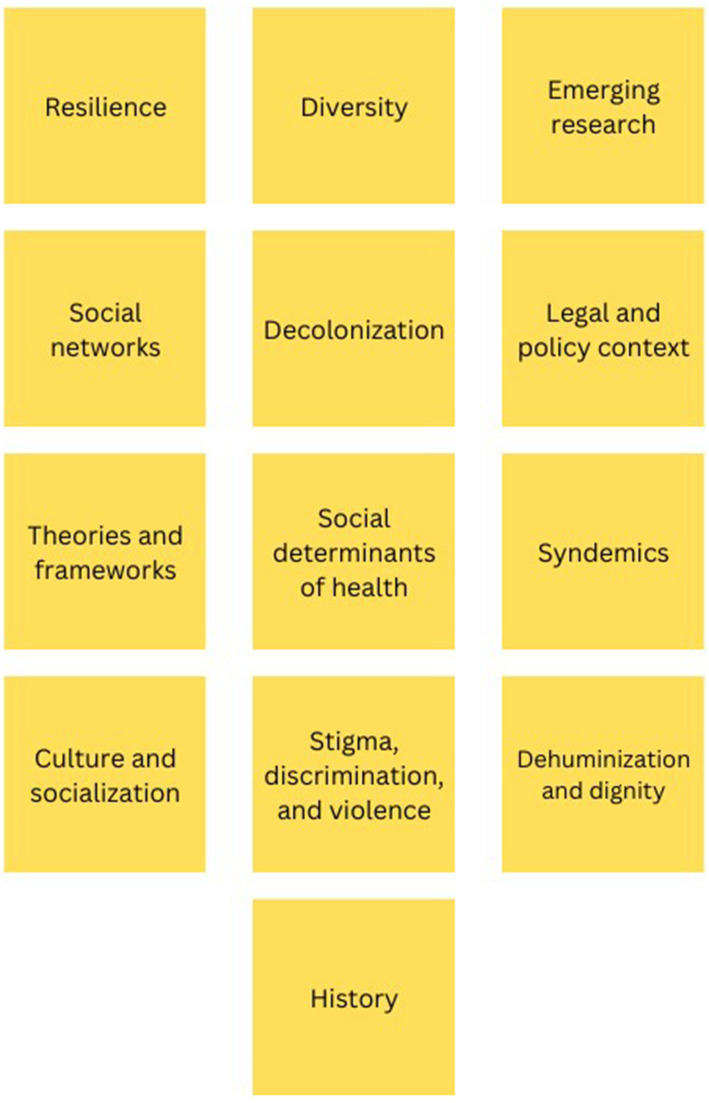 Figure 1
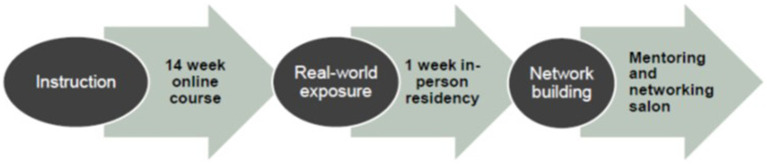 Figure 2
Peer Reviews
No public reviews on file for this paper yet. If you reviewed it on a platform where reviews are public (OpenReview, ICLR, NeurIPS, ICML), you can paste yours below so the community can read it here.
Videos
No videos yet. Explain this paper in a talk, walkthrough, or lecture? Add one.
Taxonomy
TopicsEthics in Clinical Research · LGBTQ Health, Identity, and Policy · Sex and Gender in Healthcare