Application of Levi’s Muscle Index in frailty assessment: comparison of bioimpedance measures among older adults
Kworweinski Lafontant, David H. Fukuda, Estefania Zamarripa, Abigail L. Tice, Jethro Raphael M. Suarez, Chitra Banarjee, Dahee Kim, Jeffrey R. Stout, Joon-Hyuk Park, Rui Xie, Ladda Thiamwong

TL;DR
This study compares bioimpedance measures in older adults to assess frailty and finds that reactance/height is most strongly linked to frailty status.
Contribution
The study identifies Xc/Height as a novel bioimpedance index for detecting frailty in older adults.
Findings
Xc/Height significantly differs across frailty categories (F = 6.39, p = 0.002).
LMI and PhA are strongly correlated (ρ = 0.76, p < 0.001).
PhA and Xc/Height are significantly associated with FRAIL scores.
Abstract
Frailty is prevalent among older adults and is characterized by reductions in physical function and muscle quality. Despite the emerging clinical utility of bioelectrical impedance analysis (BIA) and phase angle (PhA) as a bioimpedance index, little is known about how bioimpedance indices such as Levi’s Muscle Index (LMI), reactance/height (Xc/Height), and resistance/height (R/Height), relate to physical function and frailty. This cross-sectional study examined 208 community-dwelling older adults (female, n = 183; age = 74.2 ± 6.9 years; BMI = 30.4 ± 6.4 kg/m2) to compare physical function measures and bioimpedance indices across frailty categories determined by the FRAIL questionnaire. PhA, LMI, Xc/Height, and R/Height were all assessed at 50 kHz using a direct segmental multi-frequency InBody s10 BIA device. Physical function was assessed using handgrip strength, postural sway,…
Genes, proteins, chemicals, diseases, species, mutations and cell lines named across the full text — each resolved to its canonical identifier and authoritative record.
Click any figure to enlarge with its caption.
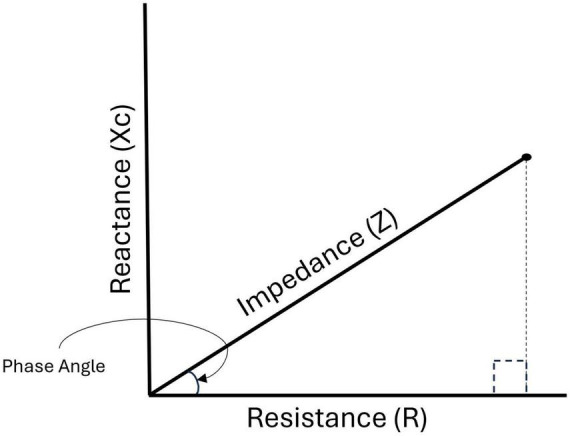 Figure 1
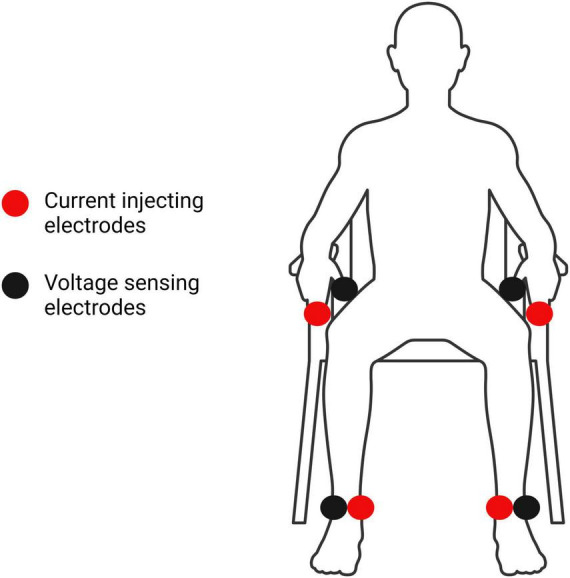 Figure 2
Peer Reviews
No public reviews on file for this paper yet. If you reviewed it on a platform where reviews are public (OpenReview, ICLR, NeurIPS, ICML), you can paste yours below so the community can read it here.
Videos
No videos yet. Explain this paper in a talk, walkthrough, or lecture? Add one.
Taxonomy
TopicsBody Composition Measurement Techniques · Nutrition and Health in Aging · Frailty in Older Adults