Actin-Like Protein 6A as an Oncogene and Therapeutic Target in Cancer
Guo-Bin Song, Lin Xiang, Tian Peng, Ya-Nan Li, Hou-Qun Ying, Xue-Xin Cheng

TL;DR
This paper reviews how ACTL6A, a protein involved in chromatin remodeling, acts as an oncogene in various cancers and explores its potential as a therapeutic target.
Contribution
The paper systematically integrates evidence across multiple cancer types to clarify ACTL6A's oncogenic mechanisms and therapeutic potential.
Findings
ACTL6A overexpression promotes tumor progression and metastasis through chromatin remodeling and signaling pathway crosstalk.
ACTL6A correlates with poor prognosis and therapy resistance in cancers like hepatocellular carcinoma and breast cancer.
Strategies to inhibit ACTL6A, such as siRNA and small-molecule inhibitors, are discussed for therapeutic development.
Abstract
ACTL6A, a core subunit of the SWI/SNF chromatin remodeling complex, has emerged as a critical oncogenic driver across multiple malignancies. Recent studies reveal that aberrant ACTL6A overexpression promotes tumor initiation, progression, and metastasis by orchestrating chromatin remodeling, transcriptional reprogramming, and crosstalk with key signaling pathways (e.g., Hippo/YAP, Notch, and PI3K/AKT). This review systematically synthesizes evidence from in vitro, in vivo, and clinical studies spanning hepatocellular carcinoma, breast cancer, glioblastoma, and 10 other cancer types, highlighting ACTL6A's dual role as a chromatin remodeler and an independent oncogenic effector. Key mechanisms include sustaining cancer stemness, suppressing apoptosis, enhancing DNA repair, and driving metabolic reprogramming. Clinically, ACTL6A overexpression correlates with advanced tumor stage, therapy…
Genes, proteins, chemicals, diseases, species, mutations and cell lines named across the full text — each resolved to its canonical identifier and authoritative record.
Click any figure to enlarge with its caption.
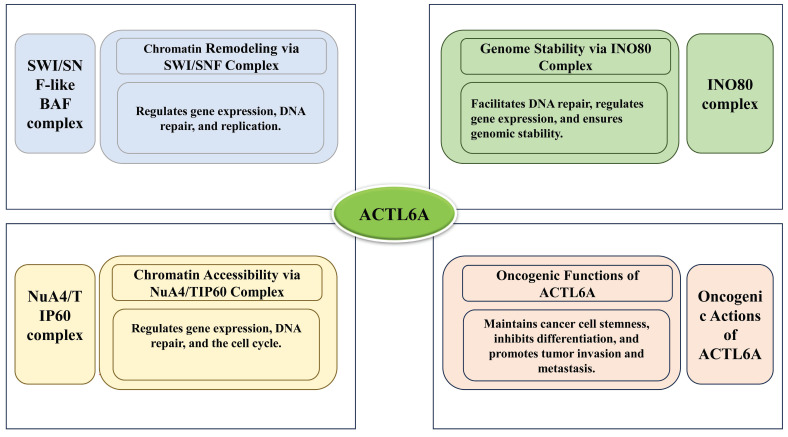 Figure 1
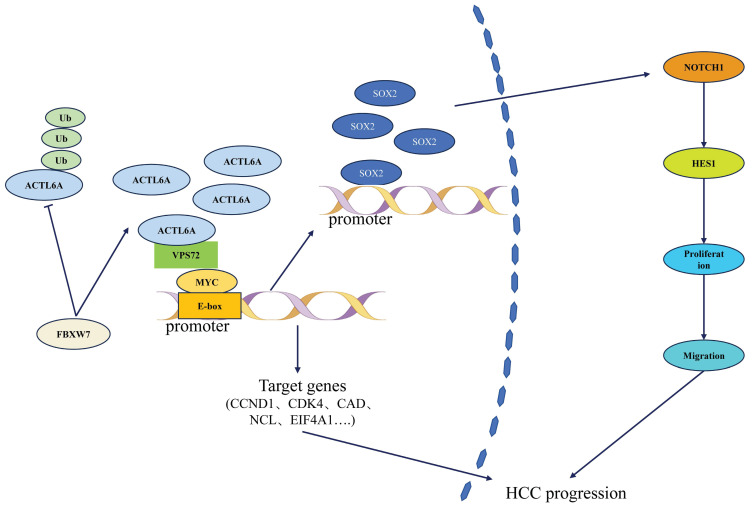 Figure 2
Peer Reviews
No public reviews on file for this paper yet. If you reviewed it on a platform where reviews are public (OpenReview, ICLR, NeurIPS, ICML), you can paste yours below so the community can read it here.
Videos
No videos yet. Explain this paper in a talk, walkthrough, or lecture? Add one.
Taxonomy
TopicsCellular Mechanics and Interactions · Cell Adhesion Molecules Research · S100 Proteins and Annexins