CircRNA Sequencing Analysis Reveals the Regulatory Role of circ_CDR1as in Penile Squamous Cell Carcinoma via the ceRNA Network
Lin Du, Shanshan Lv, Zhenzhen Jiang, Xiaohong Song, Leping Liu, Rong Huang, Xinmin Nie, Rong Gui, Jian Li, Junhua Zhang, Jie Guo, Jian Cao, Zhizhong Liu, Zhaojian Gong, Yanwei Luo

TL;DR
This study explores how a specific circular RNA, circ_CDR1as, influences penile squamous cell carcinoma through a regulatory RNA network.
Contribution
The study identifies circ_CDR1as as a key regulator in PSCC and proposes GATA6 as a potential therapeutic target.
Findings
circ_CDR1as and GATA6 are significantly downregulated in PSCC tumor samples.
A ceRNA network involving 11 circRNAs, 14 miRNAs, and 33 mRNAs was constructed.
Downregulated mRNAs are linked to leukocyte activation and cell adhesion processes.
Abstract
Penile squamous cell carcinoma (PSCC) is a malignant reproductive tumor, and circRNAs are essential regulators in the progression of cancers. However, their specific roles in PSCC have not been adequately investigated, which are available to function via the competing endogenous RNA (ceRNA) network. We collected 5 normal and 6 PSCC tissue samples for bulk RNA sequencing and obtained differentially expressed circRNAs (DE-circRNAs) and differentially expressed mRNAs (DE-mRNAs). Then we conducted a correlation analysis between them, followed by the prediction and intersection of their target miRNAs and mRNAs by online databases. We constructed a ceRNA network of 11 circRNAs, 14 miRNAs, and 33 mRNAs. The enrichment analysis showed that the positively circRNA-related mRNAs are mainly involved in the positive regulation of leukocyte activation and cell adhesion. It was revealed that…
Genes, proteins, chemicals, diseases, species, mutations and cell lines named across the full text — each resolved to its canonical identifier and authoritative record.
Click any figure to enlarge with its caption.
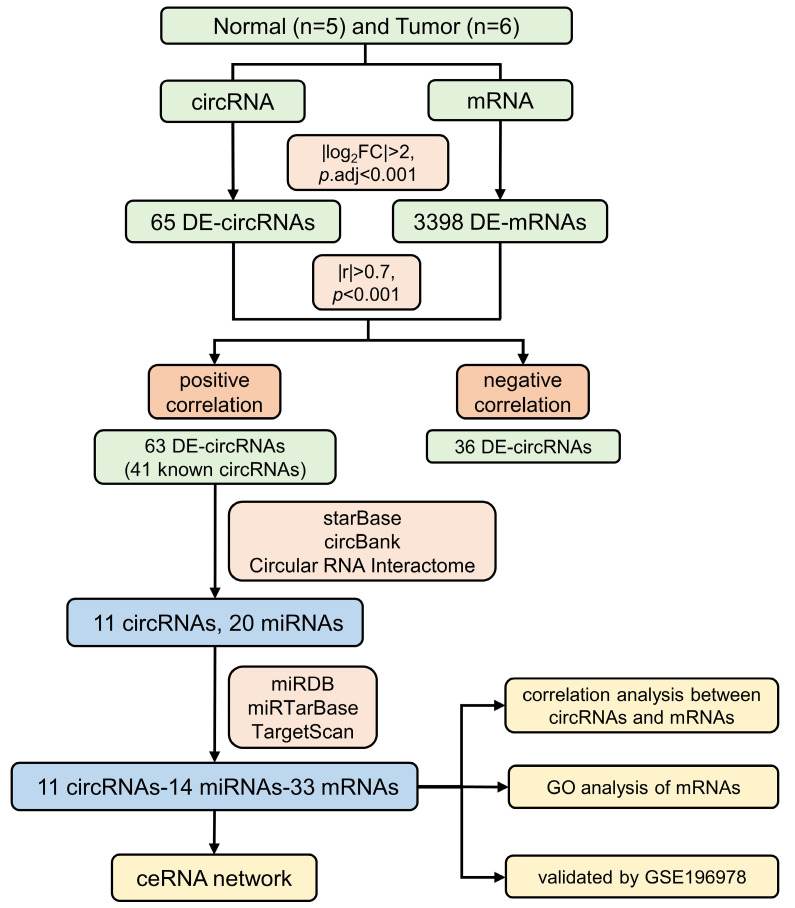 Figure 1
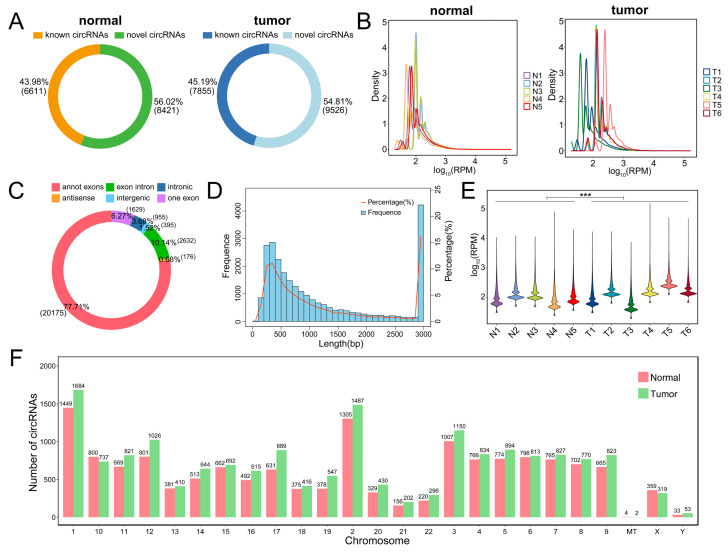 Figure 2
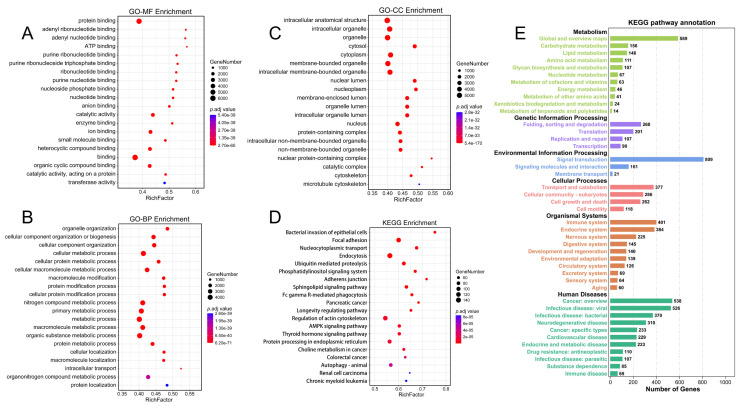 Figure 3
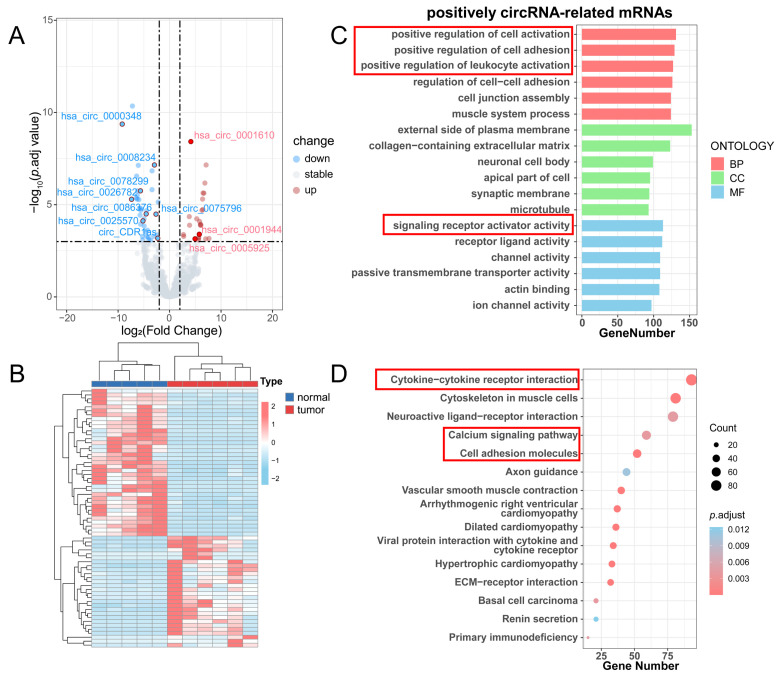 Figure 4
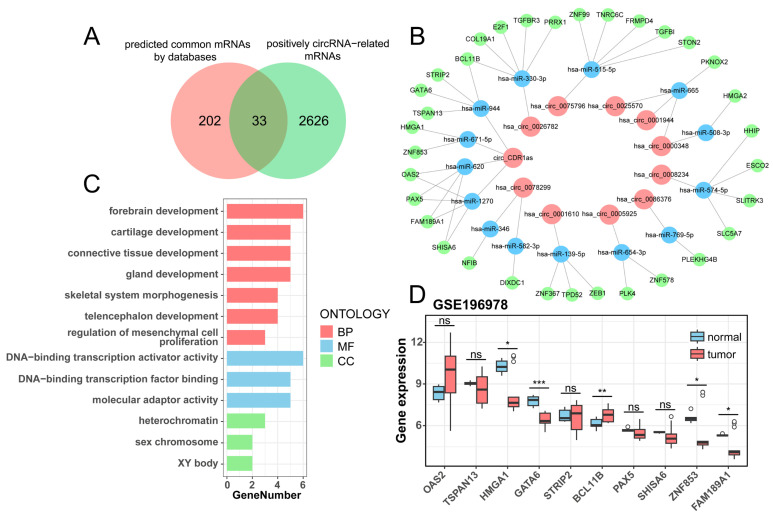 Figure 5
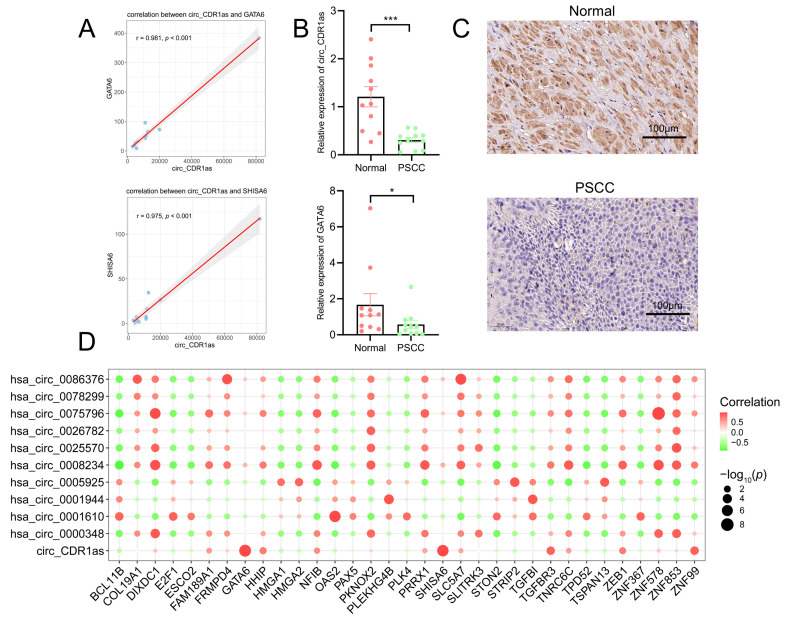 Figure 6
Peer Reviews
No public reviews on file for this paper yet. If you reviewed it on a platform where reviews are public (OpenReview, ICLR, NeurIPS, ICML), you can paste yours below so the community can read it here.
Videos
No videos yet. Explain this paper in a talk, walkthrough, or lecture? Add one.
Taxonomy
TopicsGenital Health and Disease