Relationship Between Hepcidin, Iron Metabolism, Inflammation and Hypersplenism in Anaemia of Kala‐Azar
Alyne Ferreira De Almendra Freitas, Adelino Soares Lima Neto, Camila Maria Coelho de Moura, Giovana Dias Silva, Marília de Sousa Araújo Barbosa e Silva, Keline Medeiros de Araújo Vilges, Francisco Mateus Alves de Morais Ferreira, Dorcas Lamounier Costa, Carlos Henrique Nery Costa

TL;DR
This study explores how hepcidin, inflammation, iron metabolism, and an enlarged spleen contribute to anemia in kala-azar, a parasitic disease.
Contribution
The study reveals elevated hepcidin levels and complex correlations with inflammatory markers in kala-azar-related anemia.
Findings
95.2% of patients had anemia, with elevated hepcidin levels in 97.6% of cases.
Inflammatory markers like IL-6, CRP, and ferritin showed weak to moderate negative correlations with hepcidin.
Splenomegaly plays a central role in anemia, with other factors like erythropoietin and erythroferrone possibly involved.
Abstract
Kala‐azar, or visceral leishmaniasis (VL), is a parasitic disease caused by Leishmania spp., characterised by fever, weight loss, splenomegaly, hepatomegaly, and anaemia. This study evaluated the relationship between hepcidin, inflammation, iron metabolism, and hypersplenism in VL‐associated anaemia. In this cross‐sectional study, confirmed VL patients without recent transfusions were assessed. Haematological and inflammatory parameters were analysed using correlation and multivariate regression tests. Anaemia was present in 95.2% of the sample, predominantly normocytic (59.5%) and normochromic (76.2%), or microcytic (40.5%) and hypochromic (23.8%). Inflammatory markers were markedly elevated in most patients, particularly hepcidin, which was increased in 97.6% of cases (median: 351.46 ng/mL), suggesting persistent inflammation and impaired iron bioavailability. However, IL‐6, CRP, and…
Genes, proteins, chemicals, diseases, species, mutations and cell lines named across the full text — each resolved to its canonical identifier and authoritative record.
Click any figure to enlarge with its caption.
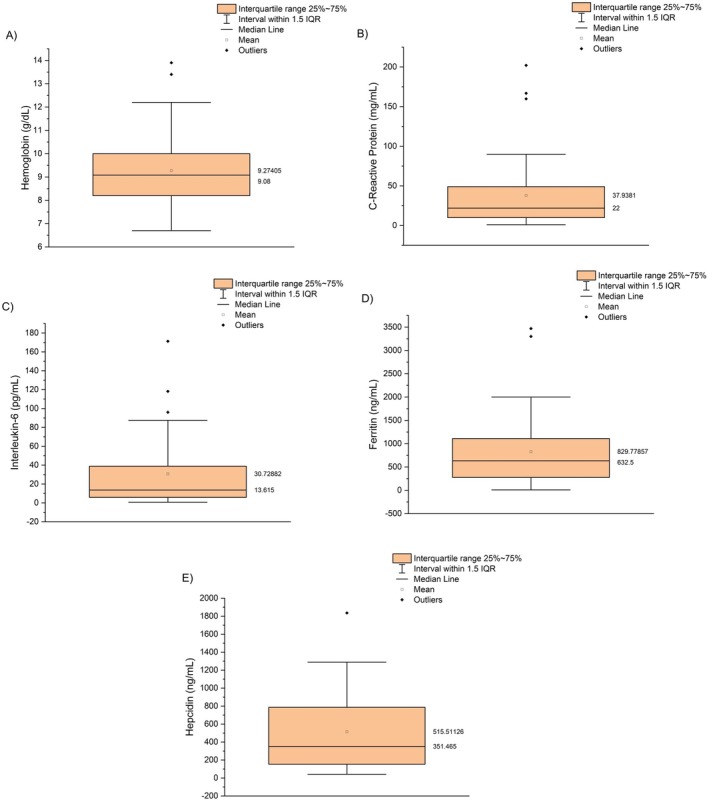 Figure 1
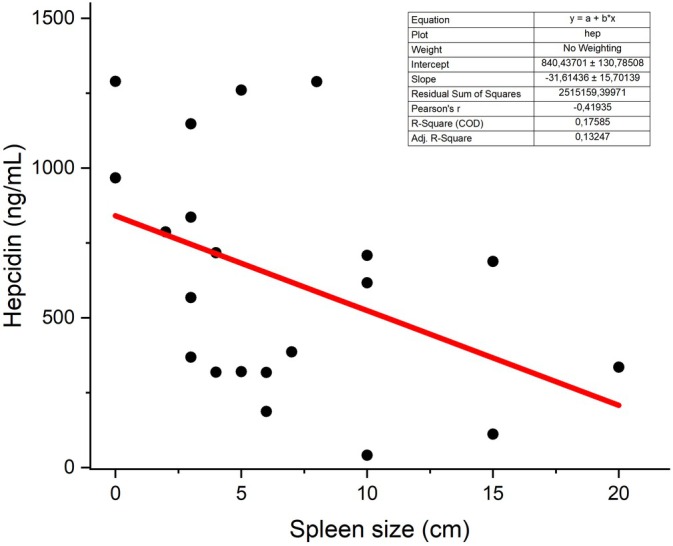 Figure 2
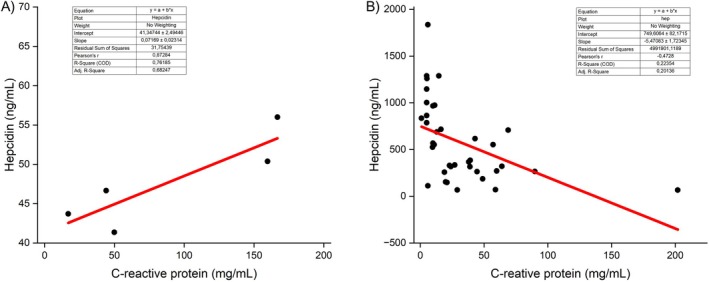 Figure 3
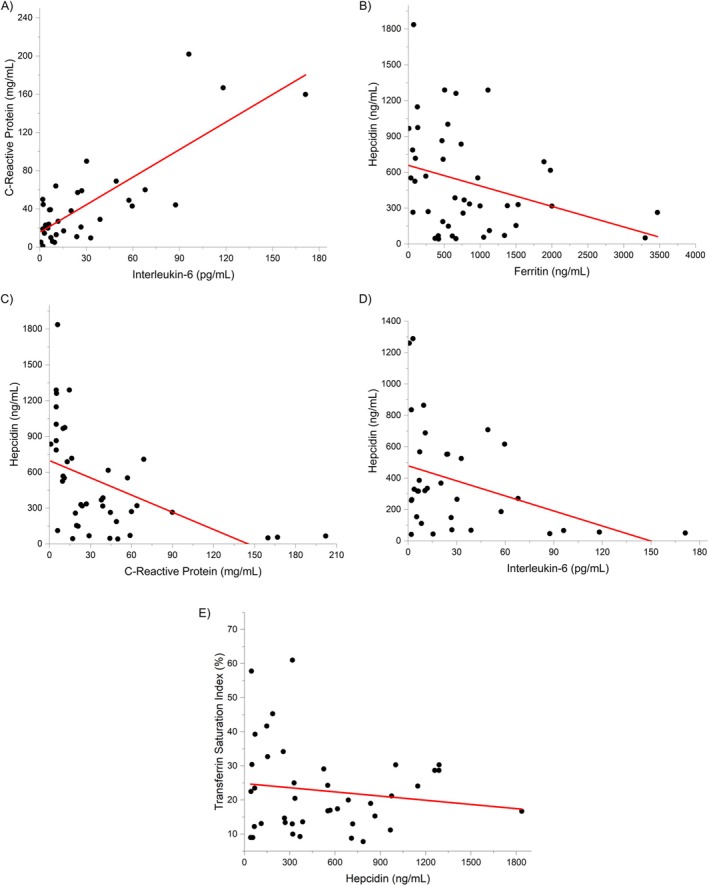 Figure 4
Peer Reviews
No public reviews on file for this paper yet. If you reviewed it on a platform where reviews are public (OpenReview, ICLR, NeurIPS, ICML), you can paste yours below so the community can read it here.
Videos
No videos yet. Explain this paper in a talk, walkthrough, or lecture? Add one.
Taxonomy
TopicsResearch on Leishmaniasis Studies · Trypanosoma species research and implications