Psychometric properties of technology-assisted matching paradigms in post-stroke upper limb proprioceptive assessment: a scoping review
Guiyi Gu, Ruixuan Lin, Roy Rongyue Zeng, Tiev Miller, Jack Jiaqi Zhang

TL;DR
This review evaluates how well technology-assisted methods assess upper limb proprioception in post-stroke patients, finding moderate validity and good reliability.
Contribution
The study systematically reviews psychometric properties of technology-assisted matching paradigms for post-stroke proprioception assessment.
Findings
Seven studies showed moderate concurrent validity of the paradigms.
Five studies reported moderate to high test–retest and inter-rater reliability.
Most studies demonstrated good responsiveness when comparing stroke patients to healthy individuals.
Abstract
Proprioceptive impairments affect 34–64% of post-stroke patients, impacting motor recovery and daily activities. Technology-assisted matching paradigms offer precise, quantitative assessment of upper limb proprioception, but their psychometric properties require evaluation. The search was conducted using PubMed, Web of Science, EMBASE, and MEDLINE to identify studies on technology-assisted matching paradigms for assessing upper limb proprioception in post-stroke patients. Studies were selected based on the inclusion and exclusion criteria, and relevant data were extracted. A total of 13 articles were included. Upper limb robots for active mirror-matching tasks were the most used technology among our included studies (9 out of 13 studies). Seven studies showed a moderate level of concurrent validity, and four studies showed a moderate level of convergent validity. Seven studies…
Genes, proteins, chemicals, diseases, species, mutations and cell lines named across the full text — each resolved to its canonical identifier and authoritative record.
Click any figure to enlarge with its caption.
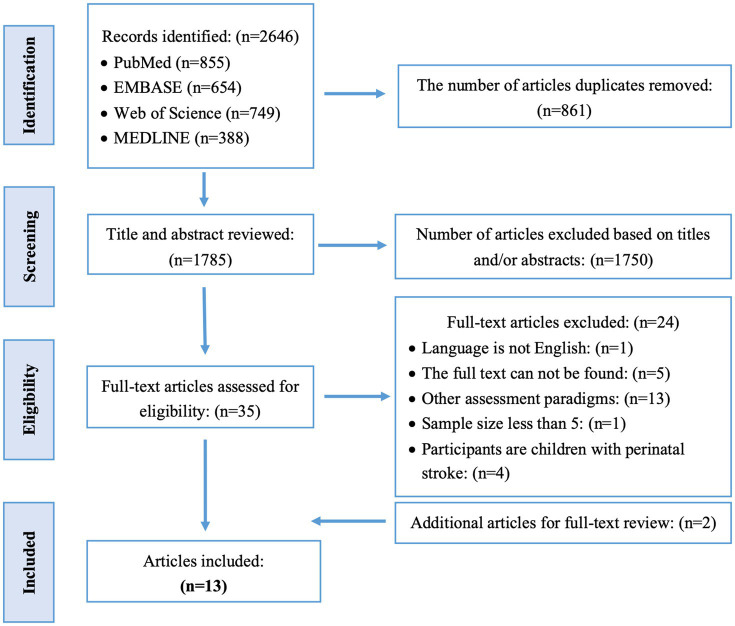 Figure 1
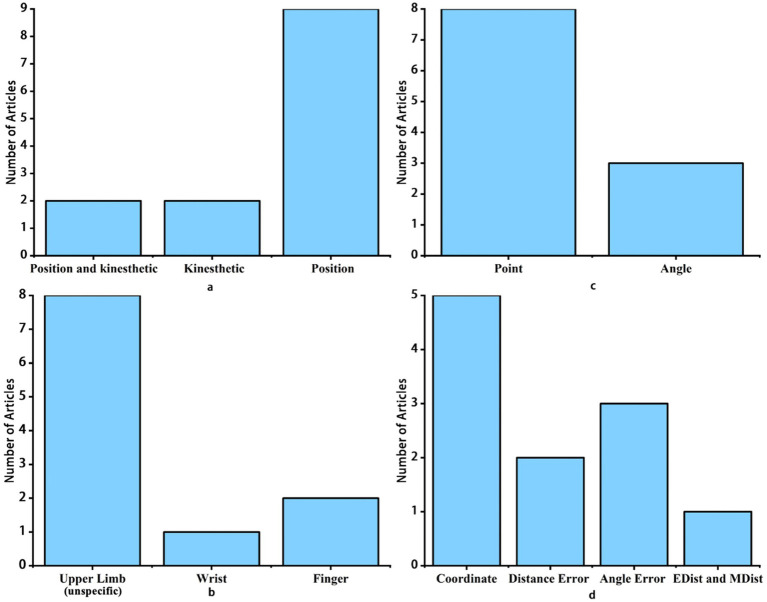 Figure 2
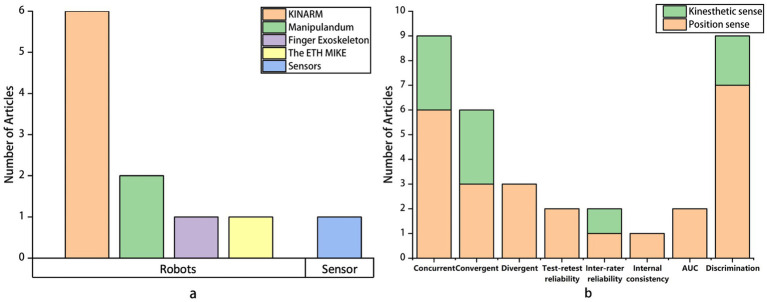 Figure 3
Peer Reviews
No public reviews on file for this paper yet. If you reviewed it on a platform where reviews are public (OpenReview, ICLR, NeurIPS, ICML), you can paste yours below so the community can read it here.
Videos
No videos yet. Explain this paper in a talk, walkthrough, or lecture? Add one.
Taxonomy
TopicsStroke Rehabilitation and Recovery · Cerebral Palsy and Movement Disorders · Musculoskeletal pain and rehabilitation