Fractionated stereotactic radiotherapy in people with drug-resistant focal epilepsy: first-in-human experience with a healthy tissue-preserving dose-fractionation concept
Cas Stefaan Dejonckheere, Attila Rácz, Gustavo Renato Sarria, Julian Philipp Layer, Younèss Nour, Lara Caglayan, Molina Grimmer, Victoria Volkenborn, Fabian Kugel, Thomas Müdder, Tobias Baumgartner, Valeri Borger, Alexander Radbruch, Hartmut Vatter, Frank Anton Giordano

TL;DR
This paper reports on a new radiotherapy approach for drug-resistant epilepsy that reduces side effects and shows promising results in early human trials.
Contribution
A novel radiobiologically substantiated dose-fractionation regimen for radiosurgery in focal epilepsy is introduced and tested in humans.
Findings
Three patients showed improved seizure control and quality of life after treatment.
No symptomatic radiation necrosis was observed, and side effects were mild and transient.
One patient achieved complete seizure freedom, and all regained functional independence.
Abstract
Stereotactic radiosurgery (SRS) emerges as a non-surgical treatment option for drug-resistant non-neoplastic focal epilepsy. Previous studies have reported that in about 20% of patients treated with radiotherapy, however, subsequent salvage surgery is required, among other because of symptomatic radiation necrosis (RN). We propose a novel and radiobiologically substantiated dose-fractionation regimen which minimizes the RN risk while aiming to preserve efficacy and report our first-in-human experience. From February 2021 to April 2024, three patients (aged 42, 45, and 47 years) with different underlying etiologies were treated, including a post-hemorrhagic lesion, Rasmussen encephalitis, and focal cortical dysplasia. We applied linac-based frameless fractionated stereotactic radiotherapy (fSRT) to a total dose of 50 Gy in 10 fractions over 2 weeks. Each epileptogenic zone was defined…
Genes, proteins, chemicals, diseases, species, mutations and cell lines named across the full text — each resolved to its canonical identifier and authoritative record.
Click any figure to enlarge with its caption.
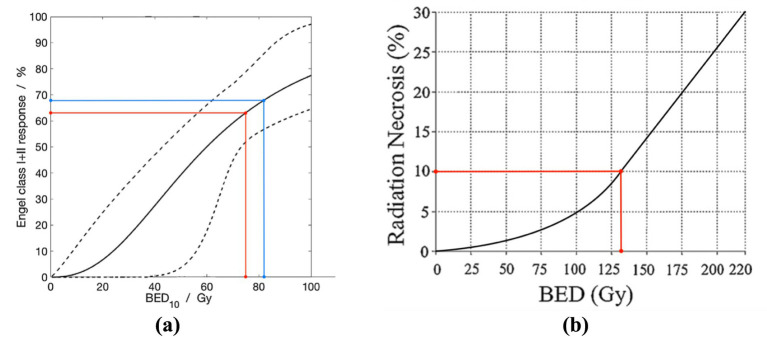 Figure 1
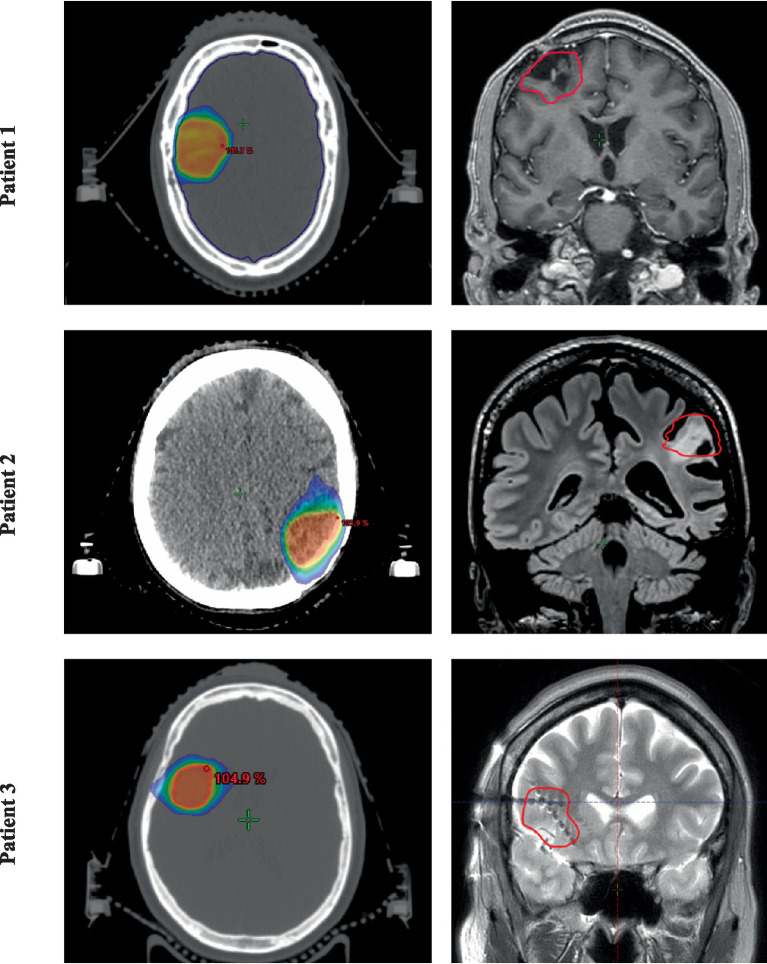 Figure 2
Peer Reviews
No public reviews on file for this paper yet. If you reviewed it on a platform where reviews are public (OpenReview, ICLR, NeurIPS, ICML), you can paste yours below so the community can read it here.
Videos
No videos yet. Explain this paper in a talk, walkthrough, or lecture? Add one.
Taxonomy
TopicsEpilepsy research and treatment · Glioma Diagnosis and Treatment · Brain Metastases and Treatment