Tracking antibiotic resistance in the environment: whole-genome sequencing of seven bacteria from the soil and water
Danae K. R. Bardaji, Girish Kumar, Kamaria J. McFadden, Malik T. Jett, Kiyonna N. Jones, Malasia Berry, Ceonna Justin, Alexa Pedraza, André O. Hudson

TL;DR
Researchers used whole-genome sequencing to study antibiotic-resistant bacteria from soil and water samples, highlighting the need for environmental monitoring.
Contribution
The study provides whole-genome sequencing data for seven diverse antibiotic-resistant bacterial isolates from environmental samples.
Findings
Seven bacterial isolates with varied resistance patterns were identified from campus soil and water.
Whole-genome sequencing revealed genetic features linked to antibiotic resistance in these isolates.
The results emphasize the importance of tracking antimicrobial resistance in natural environments.
Abstract
Soil and water samples collected from the Rochester Institute of Technology campus were analyzed for antibiotic-resistant bacteria. Whole-genome sequencing and annotation were conducted on seven isolates that show a diverse range of resistance patterns, underscoring the urgent need for ongoing surveillance of antimicrobial resistance in the environment.
Genes, proteins, chemicals, diseases, species, mutations and cell lines named across the full text — each resolved to its canonical identifier and authoritative record.
Click any figure to enlarge with its caption.
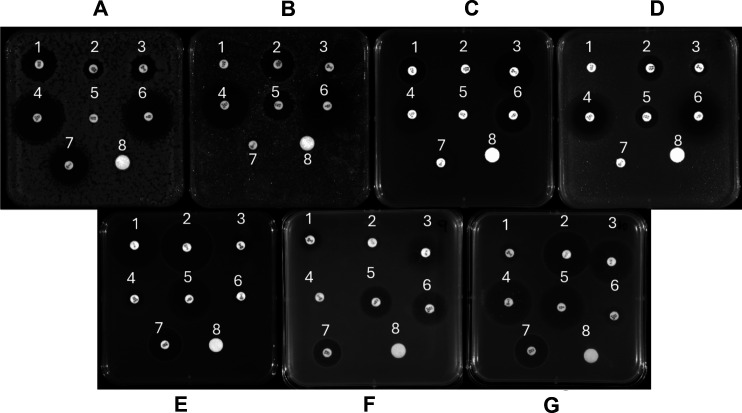 Figure 1
Peer Reviews
No public reviews on file for this paper yet. If you reviewed it on a platform where reviews are public (OpenReview, ICLR, NeurIPS, ICML), you can paste yours below so the community can read it here.
Videos
No videos yet. Explain this paper in a talk, walkthrough, or lecture? Add one.
Taxonomy
TopicsPharmaceutical and Antibiotic Environmental Impacts · Antibiotic Resistance in Bacteria · Bacterial Identification and Susceptibility Testing