Draft genome sequence of biosurfactant-producing strains Rhodococcus sp. IITD102, Lysinibacillus sp. IITD104 and Paenibacillus sp. IITD108, isolated from oil-contaminated soil
Nidhi Patil, Preeti Srivastava

TL;DR
This paper presents the draft genome sequences of three bacteria that produce biosurfactants useful for oil recovery.
Contribution
The study provides new genomic data for three biosurfactant-producing bacterial strains.
Findings
The draft genomes of Rhodococcus sp. IITD102, Lysinibacillus sp. IITD104, and Paenibacillus sp. IITD108 are reported.
The genomes may help understand genes and regulators involved in biosurfactant biosynthesis.
Abstract
We report the draft genome sequence of three biosurfactant-producing strains Rhodococcus sp. IITD102, Lysinibacillus sp. IITD104 and Paenibacillus sp. IITD108. They produce a glycolipid type of biosurfactant useful in enhanced oil recovery. The nucleotide sequence will provide insights into the various genes and regulators involved in the biosynthesis of biosurfactant.
Genes, proteins, chemicals, diseases, species, mutations and cell lines named across the full text — each resolved to its canonical identifier and authoritative record.
Click any figure to enlarge with its caption.
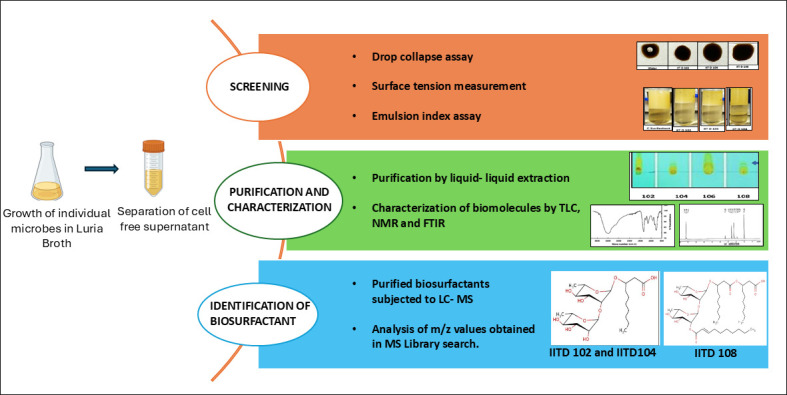 Figure 1
Peer Reviews
No public reviews on file for this paper yet. If you reviewed it on a platform where reviews are public (OpenReview, ICLR, NeurIPS, ICML), you can paste yours below so the community can read it here.
Videos
No videos yet. Explain this paper in a talk, walkthrough, or lecture? Add one.
Taxonomy
TopicsMicrobial bioremediation and biosurfactants · Genomics and Phylogenetic Studies · Microbial Metabolic Engineering and Bioproduction