Fluoroscopy-assisted identification of the individual optimal antegrade entry point of the anterior column fixation corridor in pelvic and acetabular surgery: a novel perspective
Vedat ÖZTÜRK, Mustafa Gökhan BİLGİLİ

TL;DR
This study introduces a new fluoroscopic method to identify the best entry point for screws in pelvic and acetabular surgery, improving precision and safety.
Contribution
A novel axial fluoroscopic technique for individualized antegrade entry point identification in anterior column fixation.
Findings
Axial fluoroscopic imaging successfully visualized the anterior column fixation corridor in all 500 pelvis models.
Gender differences were observed in corridor diameter, length, and coronal plane inclination, but not in sagittal plane inclination.
Virtual screw placement through the OAEP was feasible in all models without breaching the corridor boundaries.
Abstract
This study aims to describe a novel axial fluoroscopic imaging technique for visualizing the anterior column fixation corridor (ACFC) of the acetabulum in the supine position, define the patient-specific optimal antegrade entry point (OAEP), and evaluate the feasibility of screw placement using this approach. Pelvic computed tomography (CT) data from 500 healthy adults (250 men and 250 women) were collected. Using Fujifilm-Synapse 3D software, 3D reconstructions of the pelvis were created. Through fluoroscopy simulation, the axial view of the ACFC and OAEP was obtained for each individual. To simulate screw placement radiologically, a cylinder was placed through the OAEP, completely filling the corridor without protruding. The position was verified using both fluoroscopic simulations and three different CT sections (axial, coronal, sagittal). The corridor’s diameter (ACFC-R), length…
Genes, proteins, chemicals, diseases, species, mutations and cell lines named across the full text — each resolved to its canonical identifier and authoritative record.
Click any figure to enlarge with its caption.
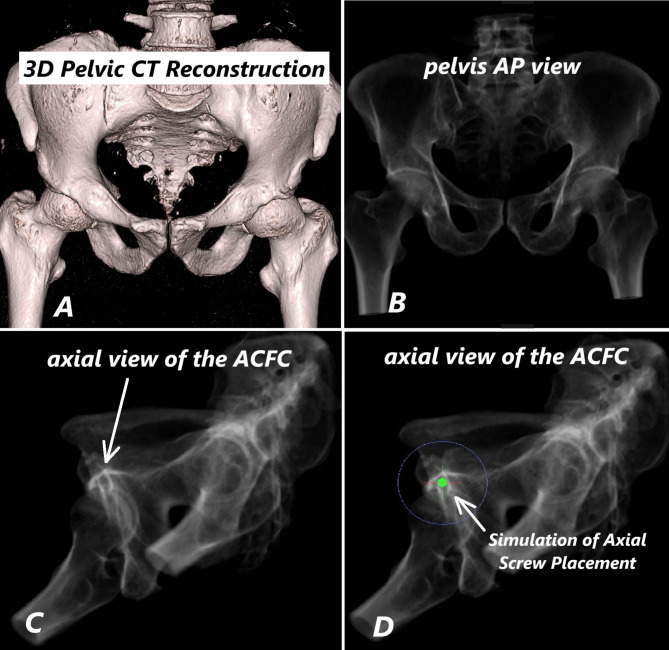 Figure 1
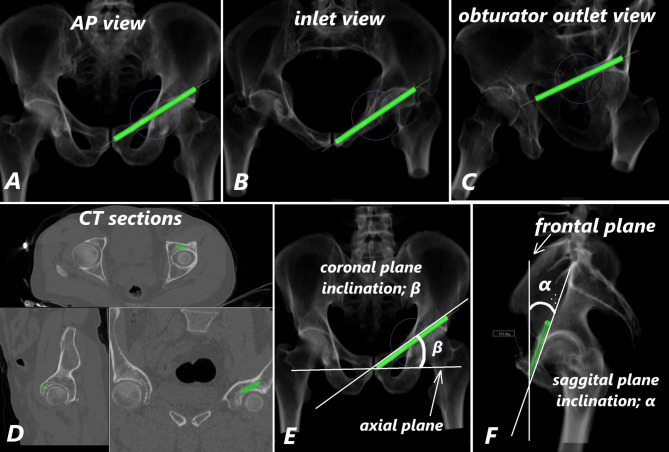 Figure 2
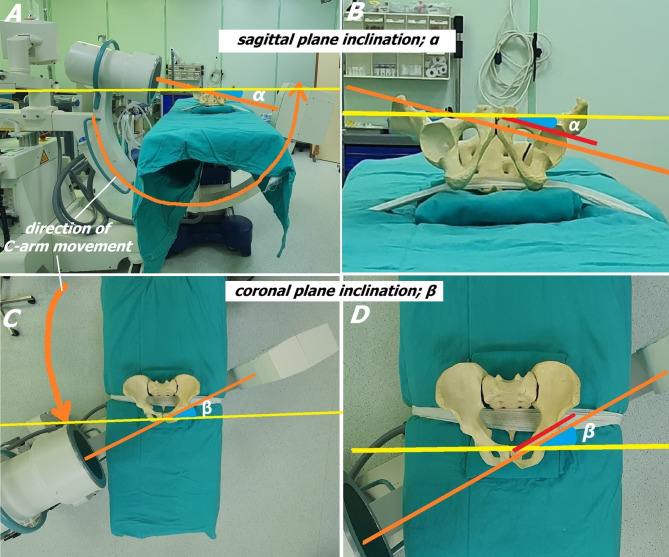 Figure 3
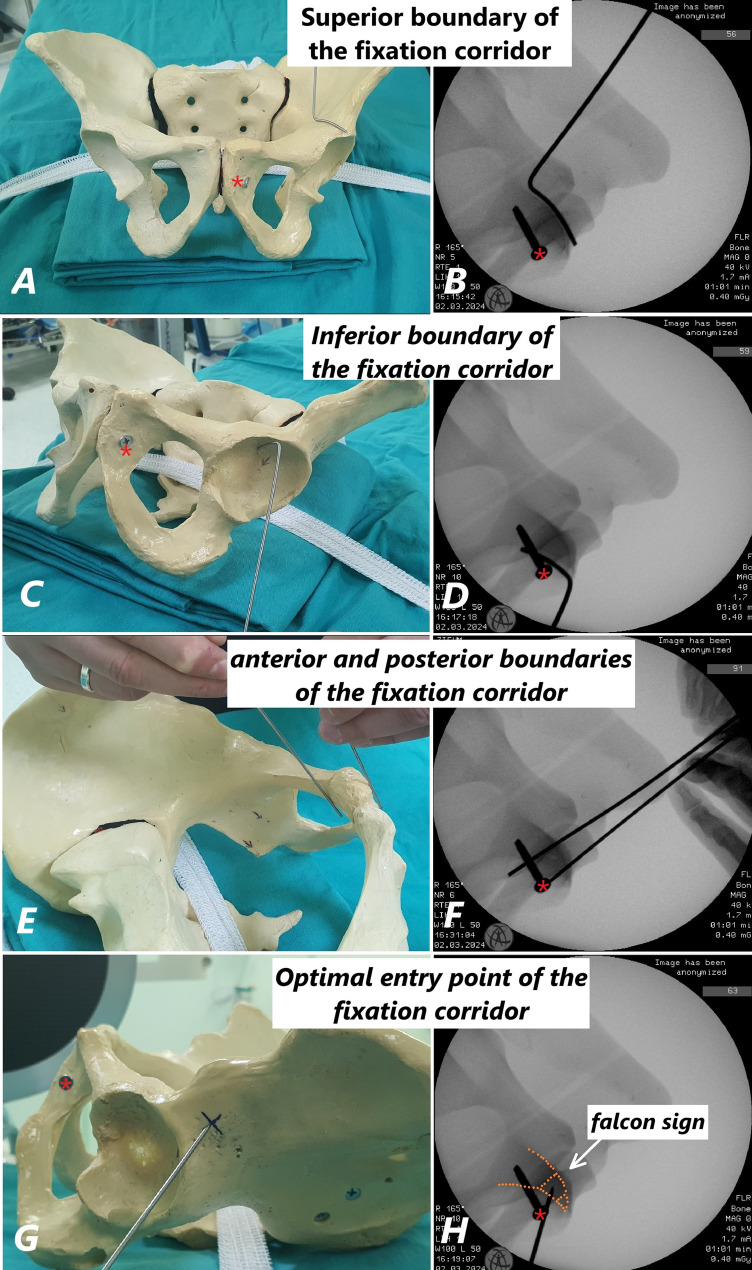 Figure 4
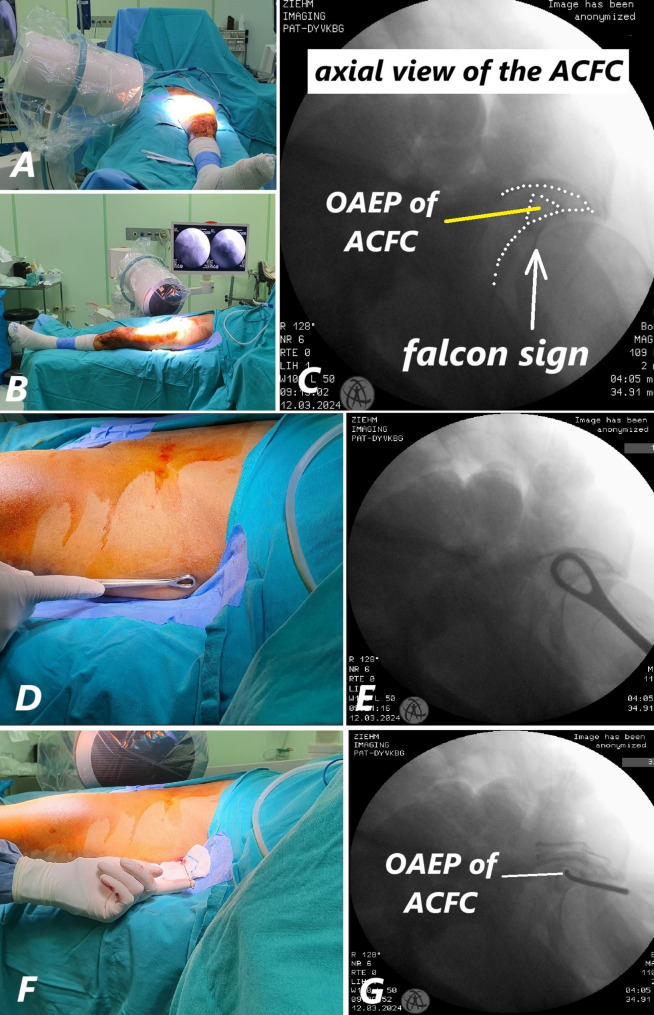 Figure 5
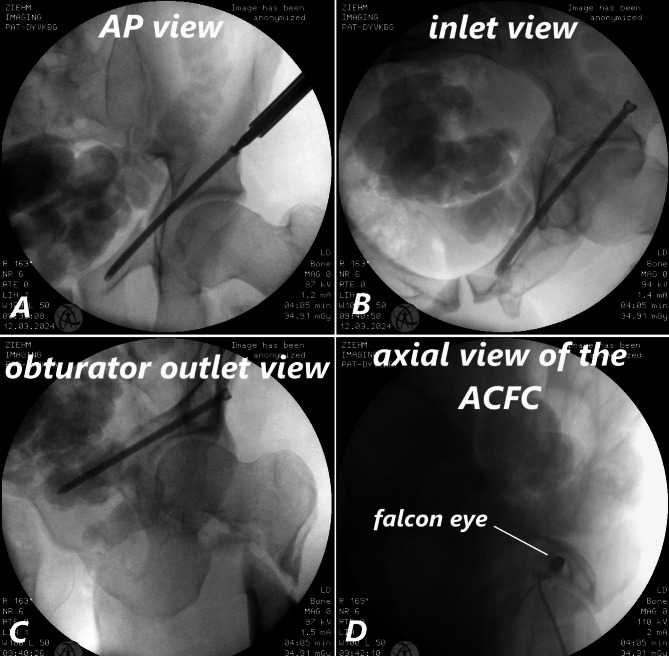 Figure 6
Peer Reviews
No public reviews on file for this paper yet. If you reviewed it on a platform where reviews are public (OpenReview, ICLR, NeurIPS, ICML), you can paste yours below so the community can read it here.
Videos
No videos yet. Explain this paper in a talk, walkthrough, or lecture? Add one.
Taxonomy
TopicsPelvic and Acetabular Injuries · Spine and Intervertebral Disc Pathology · Hip and Femur Fractures