Chinese Character Features Facilitate Working Memory Updating: Evidence From the EEG
Hongli Li, Decai Ren, Yihang Ouyang

TL;DR
This study shows that Chinese characters help improve working memory performance compared to pseudo-characters, based on brain activity measurements.
Contribution
The study reveals how Chinese character features influence working memory updating through neural mechanisms.
Findings
Real Chinese characters led to better working memory performance and different brain activity compared to pseudo-characters.
Real characters showed smaller P200 and P300 amplitudes and reduced alpha oscillation desynchronization during memory tasks.
Language knowledge in Chinese characters appears to enhance verbal working memory efficiency.
Abstract
According to the multicomponent model of working memory (WM), the phonological loop serves to protect WM representations from interference through its phonological storage and rehearsal mechanisms, thereby enhancing performance on WM tasks. However, the neural mechanisms by which language knowledge facilitates WM remain unclear. The present study aims to explore how Chinese character features influence WM and to uncover the underlying mechanisms involved. Using the 2‐back task paradigm with both real and pseudo characters, we recorded behavioral and electroencephalogram (EEG) data from 33 participants (aged 18–24 years; 16 males). By employing a combination of event‐related potential (ERP) and time—frequency analysis (TFA) techniques, we investigated differences in neural activity among participants as they engaged in the real character and pseudo‐character 2‐back tasks. Behavioral…
Genes, proteins, chemicals, diseases, species, mutations and cell lines named across the full text — each resolved to its canonical identifier and authoritative record.
Click any figure to enlarge with its caption.
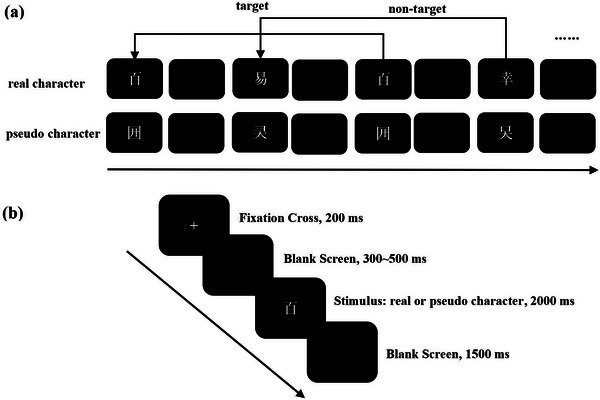 Figure 1
 Figure 2
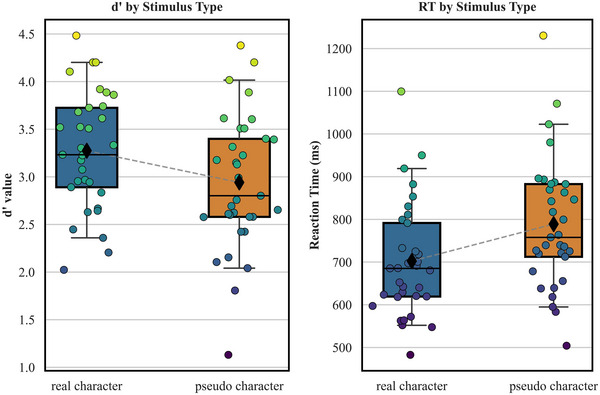 Figure 3
 Figure 4
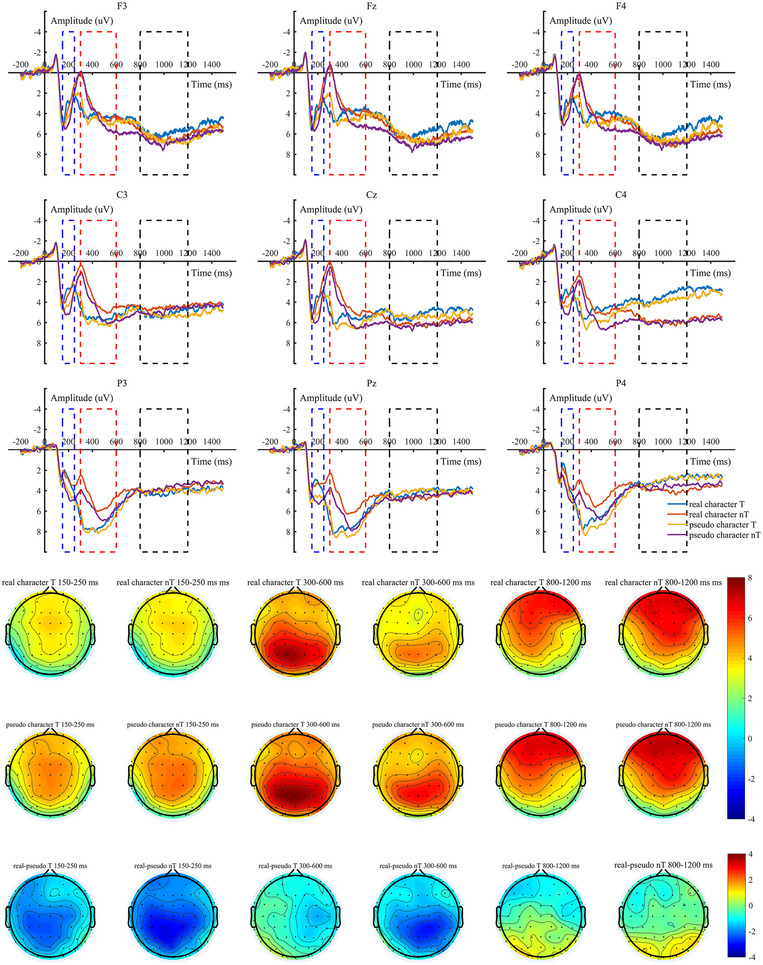 Figure 5
 Figure 6
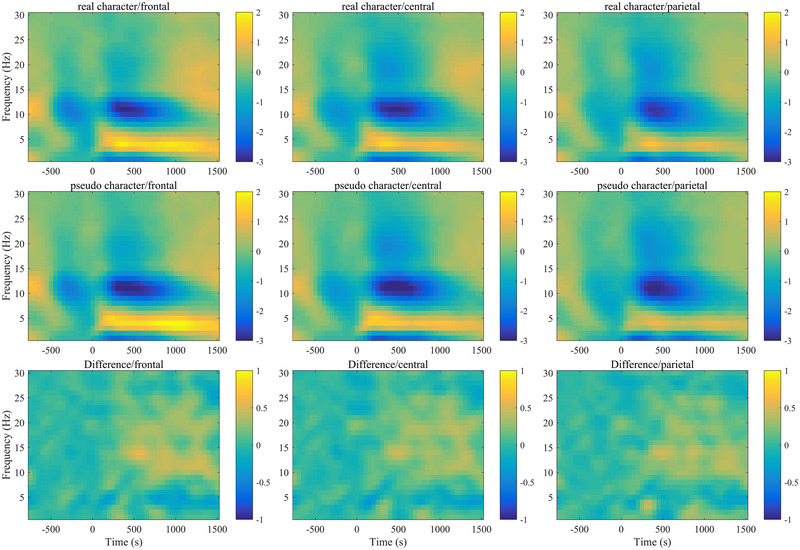 Figure 7
Peer Reviews
No public reviews on file for this paper yet. If you reviewed it on a platform where reviews are public (OpenReview, ICLR, NeurIPS, ICML), you can paste yours below so the community can read it here.
Videos
No videos yet. Explain this paper in a talk, walkthrough, or lecture? Add one.
Taxonomy
TopicsEEG and Brain-Computer Interfaces · Neural and Behavioral Psychology Studies · Neural dynamics and brain function