Towards net zero land biotechnology: an assessment of biogenic feedstock potential for selected bioprocesses in Germany
Adrian Tüllinghoff, Heike Sträuber, Flávio Cesár Freire Baleeiro, Andreas Aurich, Micjel Chávez Morejón, Kathleen Meisel, Karl-Friedrich Cyffka, Falk Harnisch, Katja Bühler, Daniela Thrän

TL;DR
The paper explores how biogenic residues in Germany can be used in bioprocesses to produce valuable chemicals, supporting a circular bioeconomy.
Contribution
A resource matrix and material flow analysis are introduced to assess biogenic residues for bioprocesses, estimating their production potential and land use savings.
Findings
Using 20–30% of biogenic residues could meet national demands for polymer bricks, carboxylates, and platform chemicals.
Cluster approaches are essential to manage side streams in bioprocess development.
Legal, acceptance, and residue availability challenges hinder full utilization of biogenic residues.
Abstract
To stay within the planetary boundaries circularizing economy by utilizing residues is key. Bioprocesses can use abundant, but complex biogenic residues, giving access to various value-added products. To advance circularization, the feasibility of exploiting diverse biogenic residues as feedstocks for different, yet specific, bioprocesses needs to be assessed. Exemplifying the national level in Germany, we categorized biogenic residues compiled in the DE Biomass Monitor regarding their composition and feedstock potential in a resource matrix, detailing their constituents and the quality of available data. Three biotechnological processes, making use of lignin, non-fibrous carbohydrates, and oil, respectively, served as model processes to assess the biogenic production potential. By developing material flows based on state-of-the-art conversion routes, we found that residue-based…
Genes, proteins, chemicals, diseases, species, mutations and cell lines named across the full text — each resolved to its canonical identifier and authoritative record.
Click any figure to enlarge with its caption.
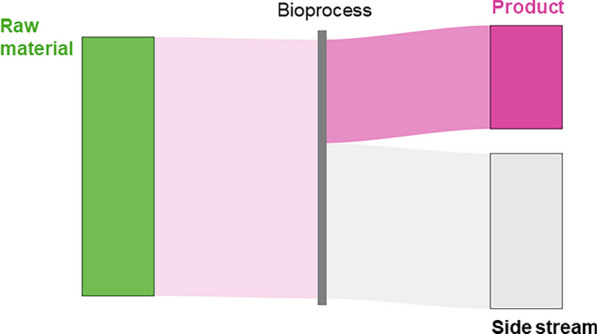 Figure 1
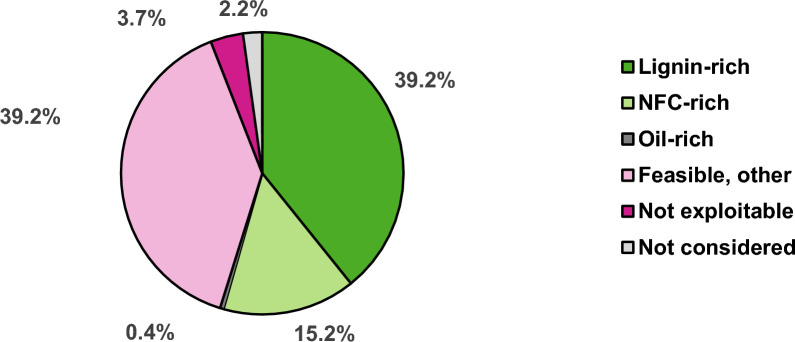 Figure 2
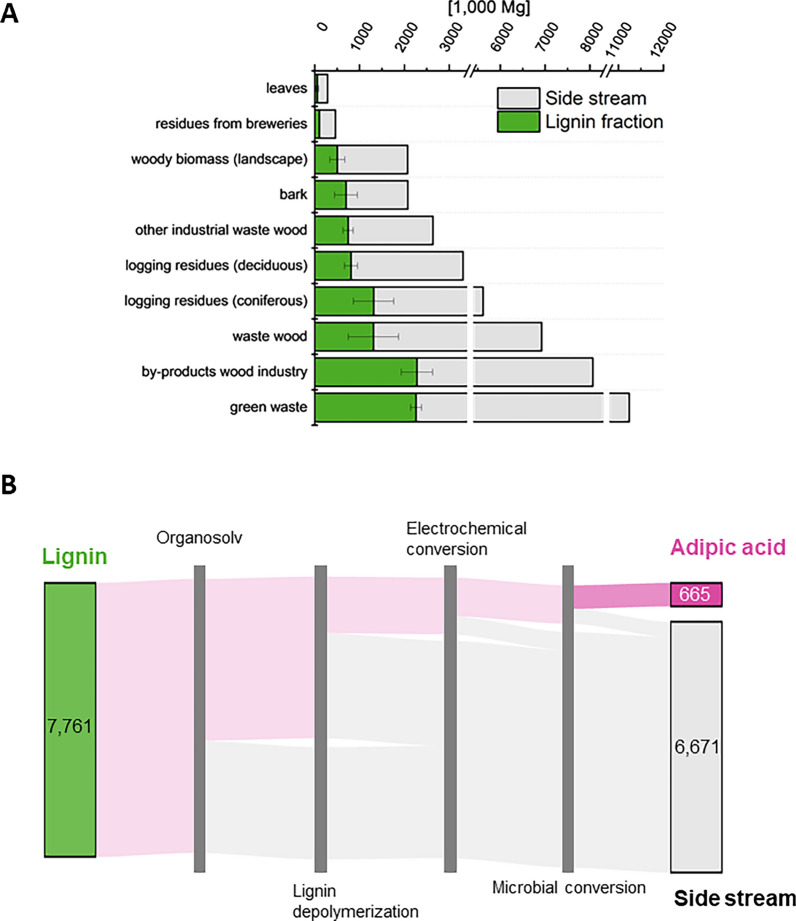 Figure 3
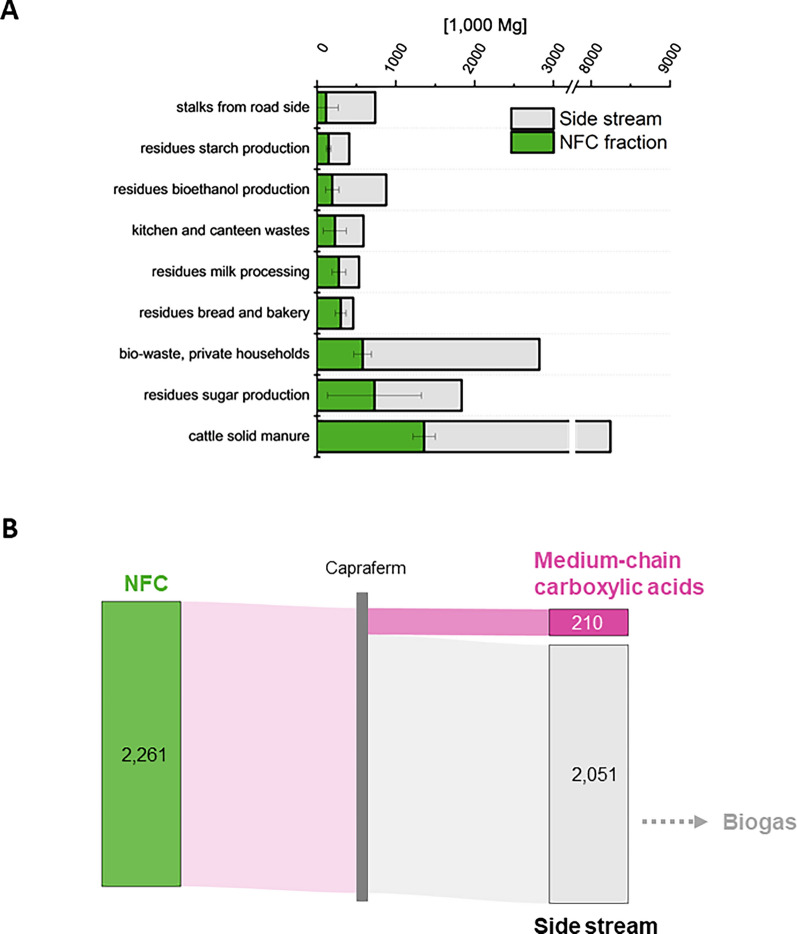 Figure 4
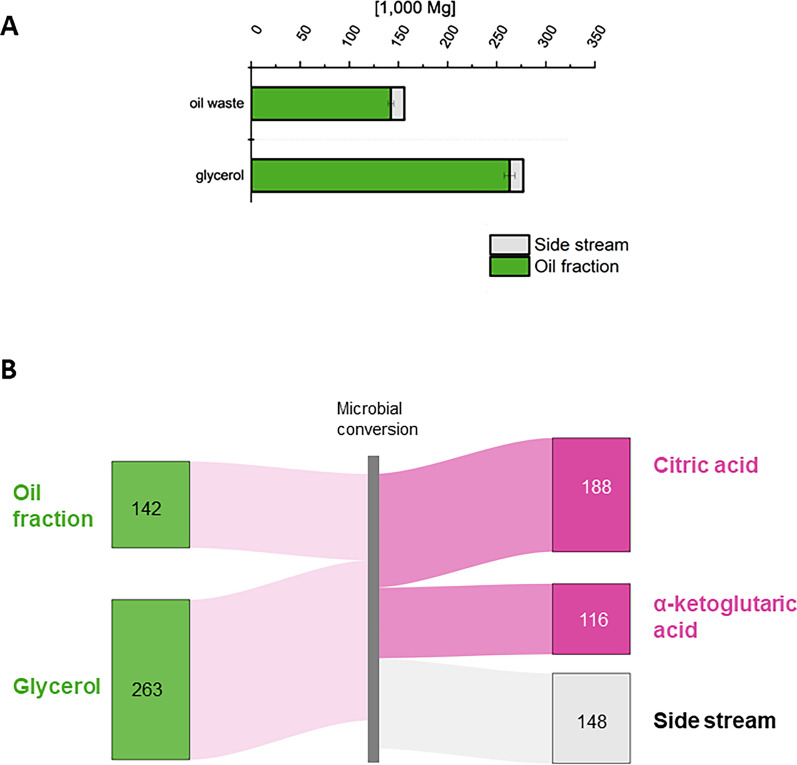 Figure 5
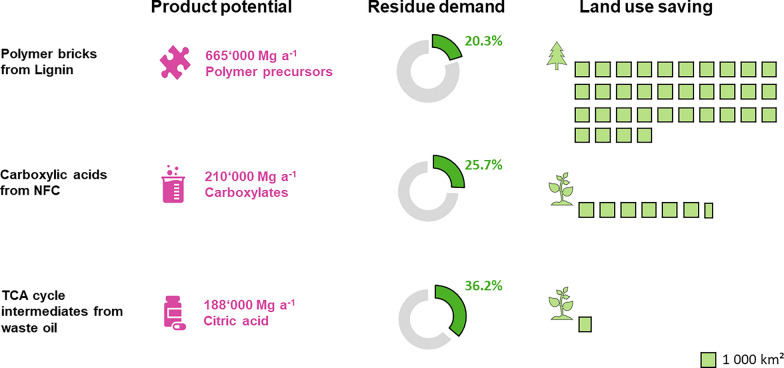 Figure 6
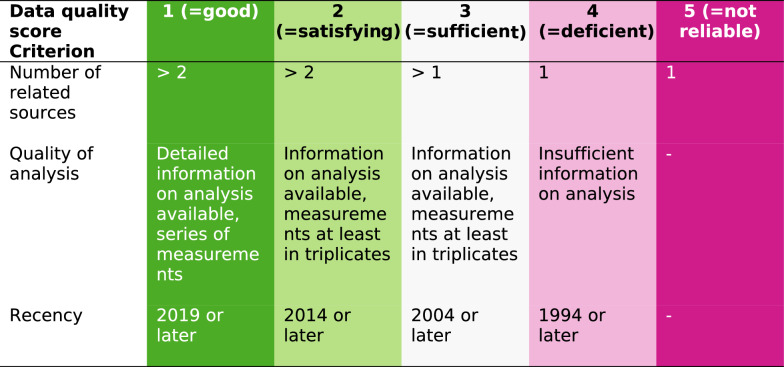 Figure 7
Peer Reviews
No public reviews on file for this paper yet. If you reviewed it on a platform where reviews are public (OpenReview, ICLR, NeurIPS, ICML), you can paste yours below so the community can read it here.
Videos
No videos yet. Explain this paper in a talk, walkthrough, or lecture? Add one.
Taxonomy
TopicsBiofuel production and bioconversion · Microbial Metabolic Engineering and Bioproduction · Transgenic Plants and Applications