The development and excretion of Toxoplasma gondii oocyst manipulate the gut microbiota in its definitive host
Gui-Hua Zhao, Bei-Bei Zhou, Zhi-Heng Cao, Ting Xiao, Ya-Nan Li, Wen-Ju Zhu, Hang Sun, Huan-Huan Xie, Xiao-Man Xie, Jun-Mei Zhang, Qi Wang, Xin Zhang, Jin-Jing Xie, Hong-Jie Dong, Chao Xu, Kun Yin

TL;DR
This study shows how Toxoplasma gondii oocyst development affects the gut microbiome of cats, potentially offering new ways to control the spread of the parasite.
Contribution
The study identifies specific bacterial changes and pathways linked to oocyst excretion, highlighting Bacteroides stercoris as a key player.
Findings
Oocyst development alters gut microbiota function and diversity, with significant changes in KEGG pathways and CAZymes.
Bacteroides stercoris is significantly upregulated and may influence oocyst excretion through CBMs and GHs.
Probiotics and LA-related bacteria are dominant during oocyst development, suggesting potential for intervention strategies.
Abstract
Oocysts serve as the primary source of Toxoplasma infection. Therefore, understanding oocyst development and exploring effective strategies to prevent oocyst excretion are crucial for controlling toxoplasmosis. In this study, shotgun metagenomics was employed to characterize the functional and compositional changes in the gut microbiota of cats during oocyst development. The Spearman correlation test was utilized to analyze the correlation between differential Kyoto Encyclopedia of Genes and Genomes (KEGG) pathways and carbohydrate-active enzymes (CAZymes) in key bacteria regulating oocyst excretion. The results revealed that group A (sexual initiation stage) displayed a lower number of functional genes, which were restored to normal levels in group B (oocyst excretion stage), compared with group C (Toxoplasma-uninfected samples). The abundance of 39 KEGG pathways, 106 CAZymes, and 98…
Genes, proteins, chemicals, diseases, species, mutations and cell lines named across the full text — each resolved to its canonical identifier and authoritative record.
Click any figure to enlarge with its caption.
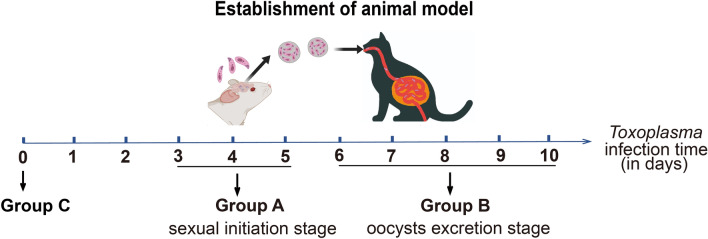 Figure 1
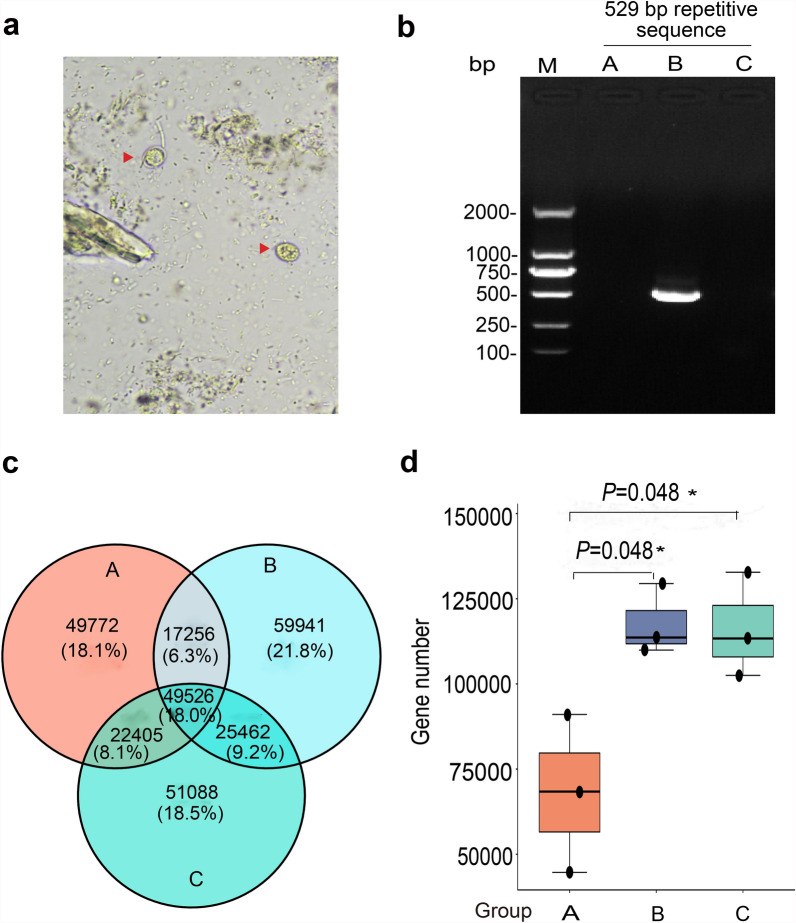 Figure 2
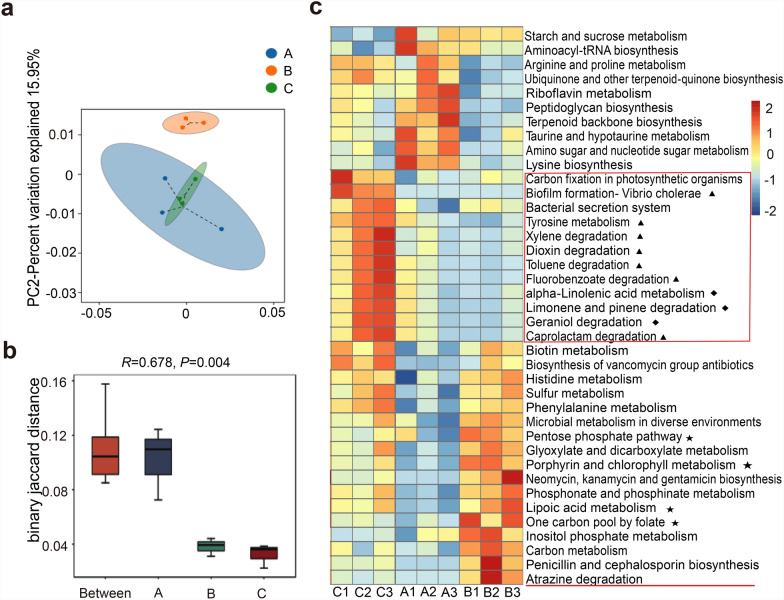 Figure 3
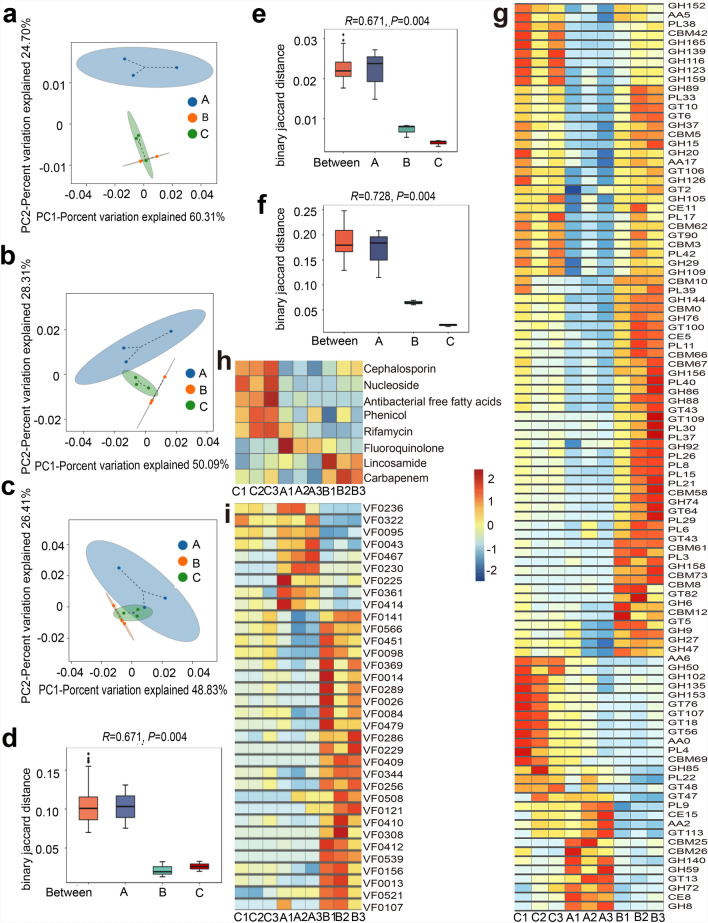 Figure 4
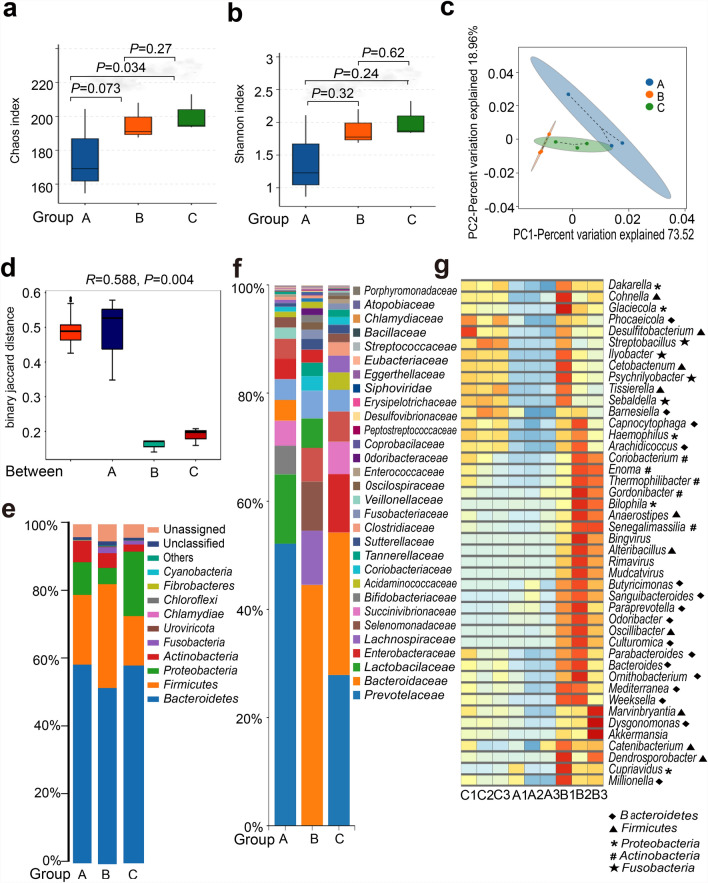 Figure 5
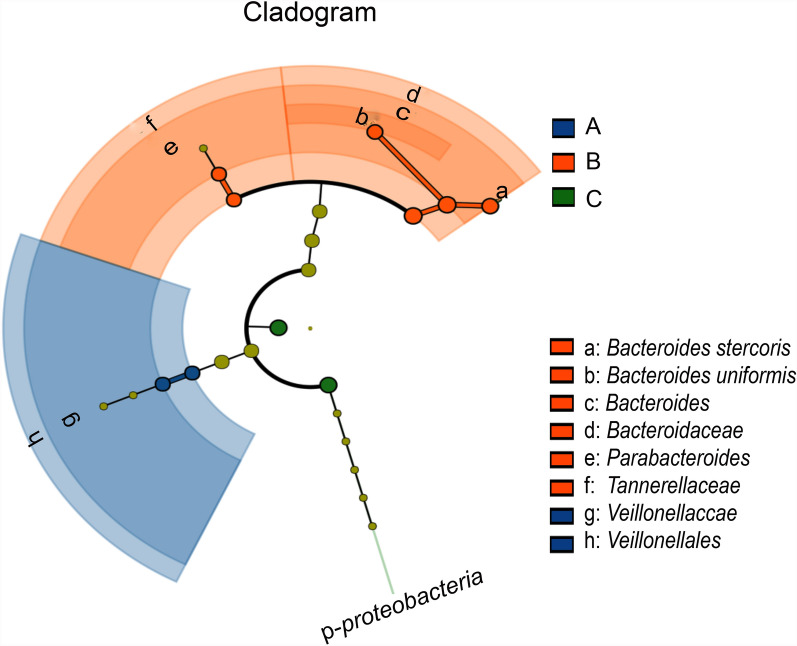 Figure 6
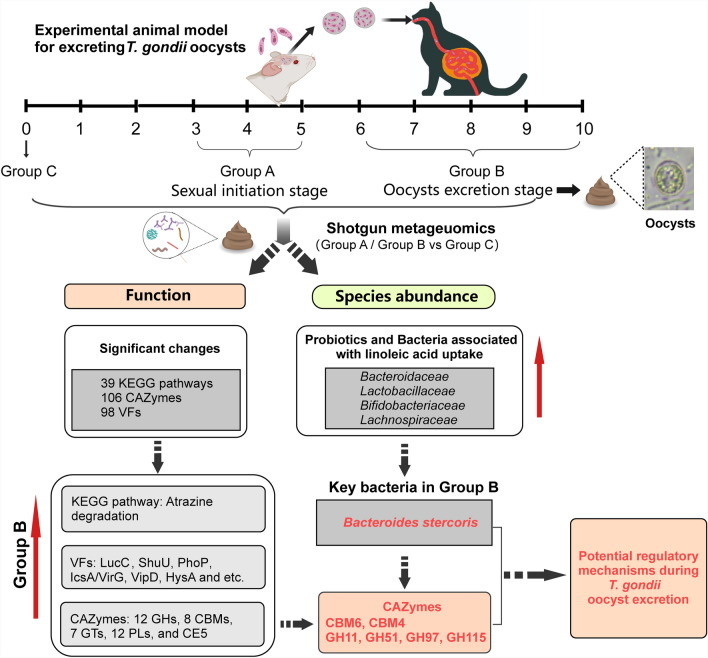 Figure 7
Peer Reviews
No public reviews on file for this paper yet. If you reviewed it on a platform where reviews are public (OpenReview, ICLR, NeurIPS, ICML), you can paste yours below so the community can read it here.
Videos
No videos yet. Explain this paper in a talk, walkthrough, or lecture? Add one.
Taxonomy
TopicsToxoplasma gondii Research Studies · Cytomegalovirus and herpesvirus research · Parasitic Infections and Diagnostics