Bicyclic anionic receptors for carboxylates in water
Xudong Ren, Anthony P. Davis

TL;DR
This paper presents a new method to create receptors that can bind carboxylates in water, with potential applications in biology and medicine.
Contribution
A general approach to synthesize water-soluble carboxylate receptors using a bicyclic system and Cu(i)-catalyzed reactions.
Findings
Three receptors were synthesized and showed Ka up to ∼400 M−1 for carboxylates in water.
The receptors can bind both carboxylates and polar inorganic anions at near-neutral pH.
The method allows for versatile synthesis of receptor variants for potential medical use.
Abstract
The selective recognition of carboxylates in water, the biological solvent, could have various applications in biology and medicine. Of particular interest is the design of antibiotics which mimic the glycopeptides such as vancomycin through binding C-terminal peptide units involved in bacterial cell wall synthesis. Here we report a general approach to carboxylate receptors with structures capable of encapsulating and interacting with all parts of their substrates. The synthesis involves elaboration of a diamino bridge unit into a bicyclic system incorporating a tetralactam anion binding site. Water-solubility can be achieved in a final step which introduces two dendrimeric nonacarboxylate units via Cu(i)-catalysed azide–alkyne cycloaddition. Three examples have been prepared and found to bind simple carboxylates and polar inorganic anions with Ka up to ∼400 M−1 in water at near-neutral…
Genes, proteins, chemicals, diseases, species, mutations and cell lines named across the full text — each resolved to its canonical identifier and authoritative record.
Click any figure to enlarge with its caption.
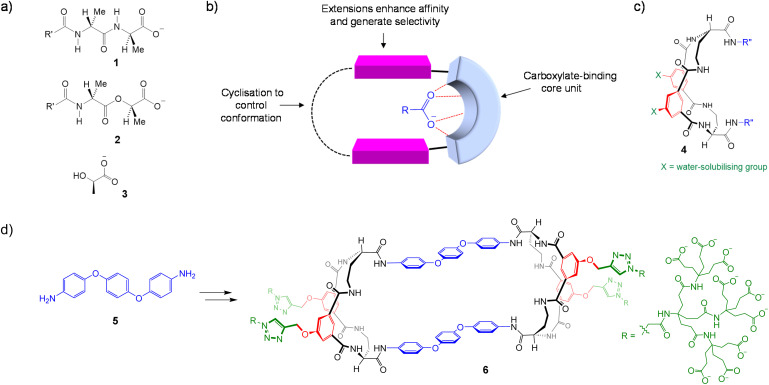 Figure 1
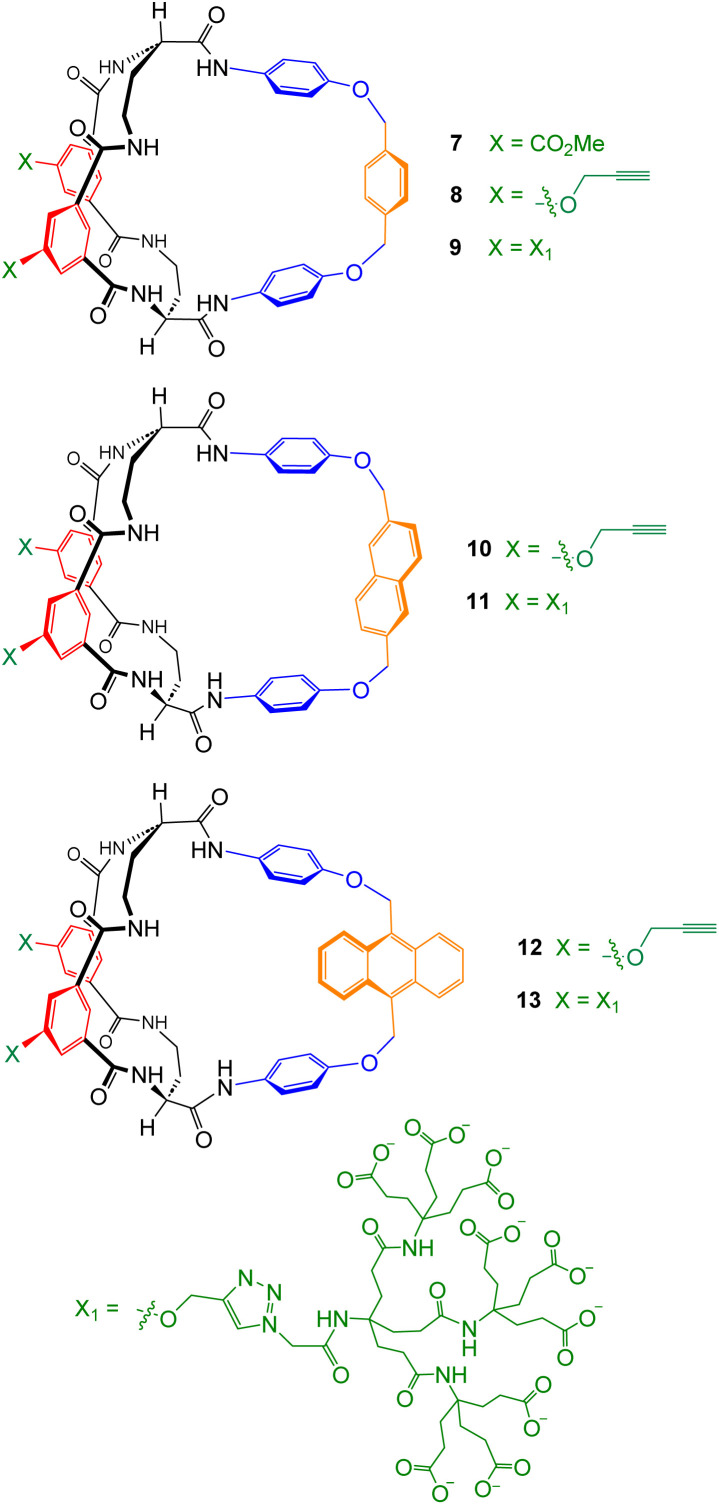 Figure 2
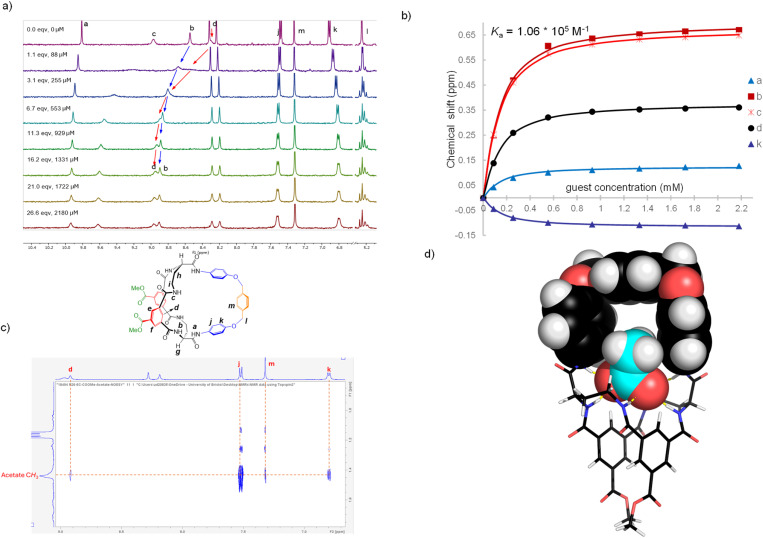 Figure 3
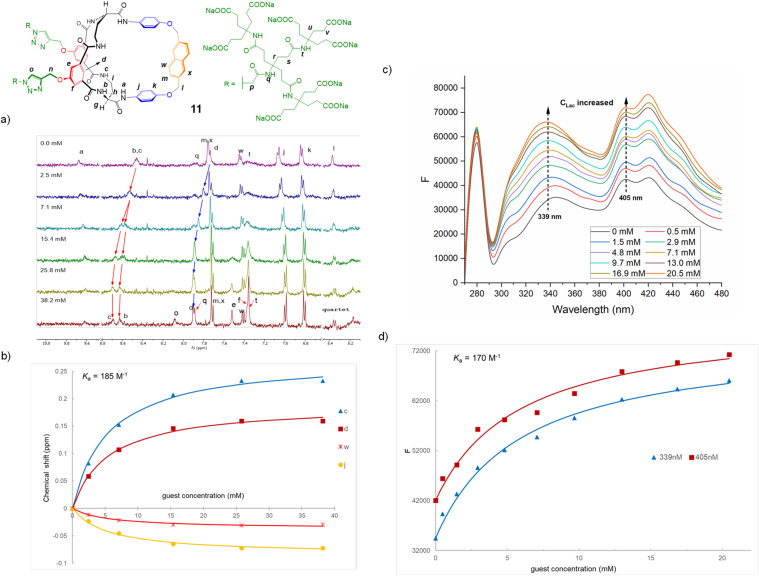 Figure 4
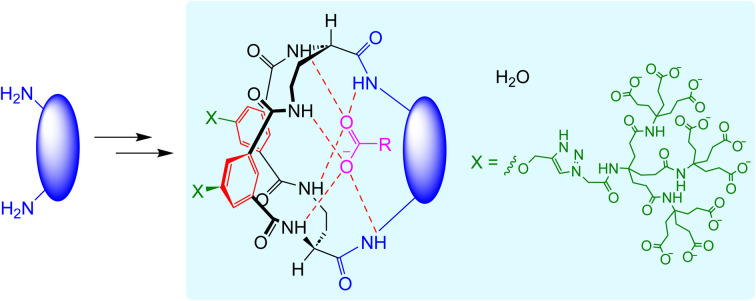 Figure 5
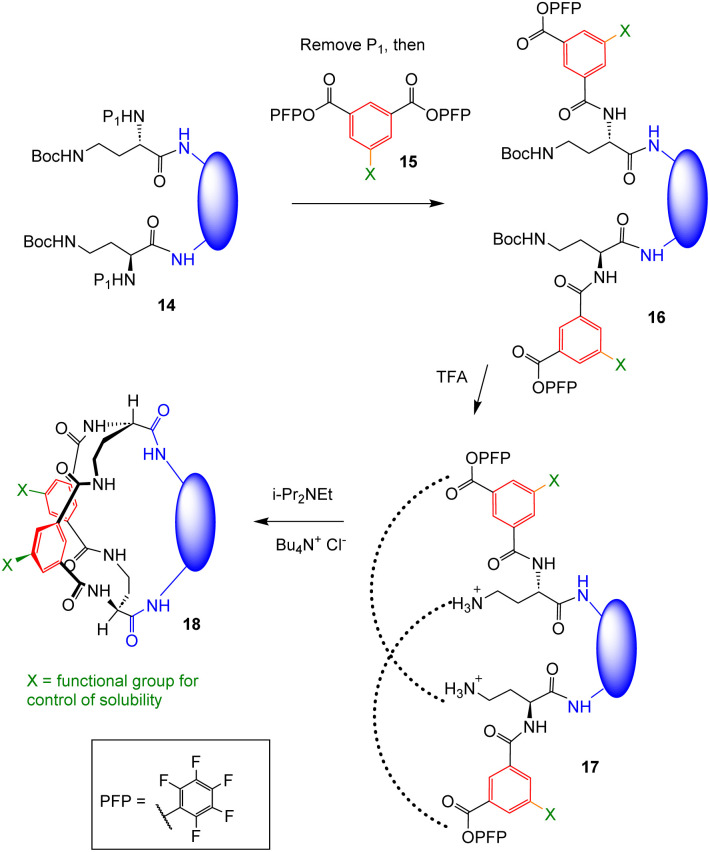 Figure 6
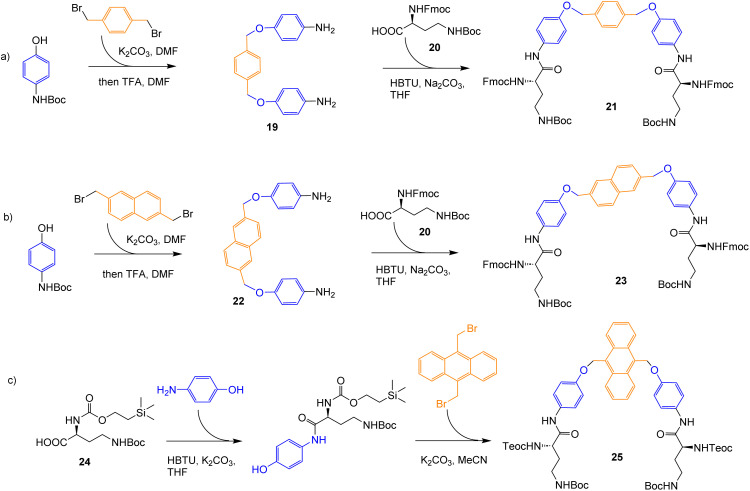 Figure 7
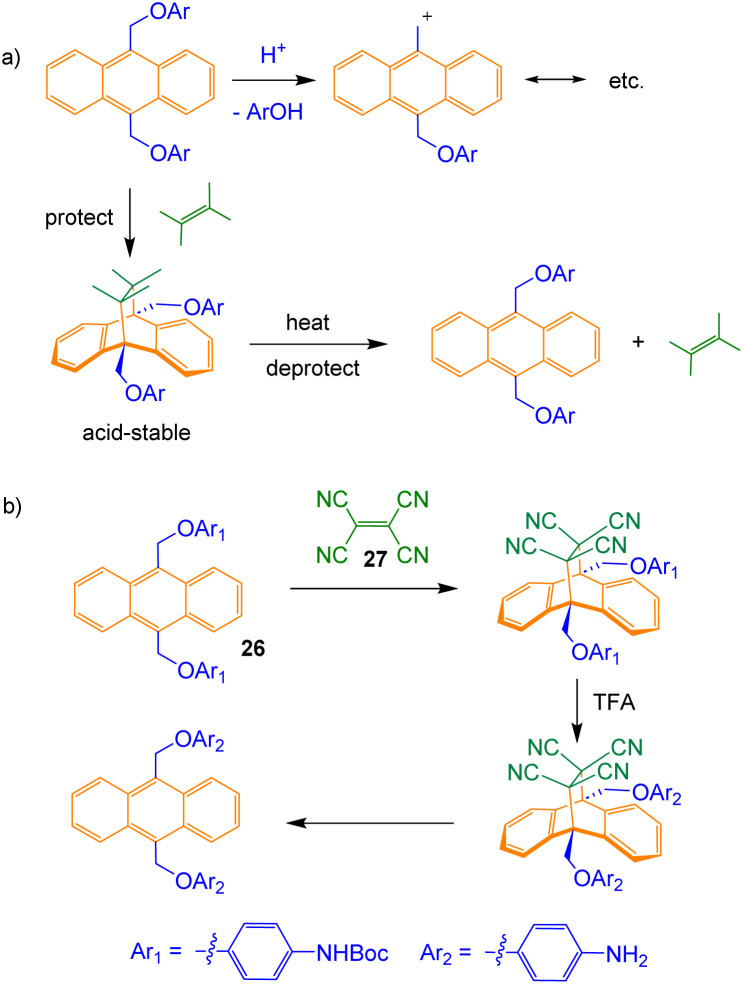 Figure 8
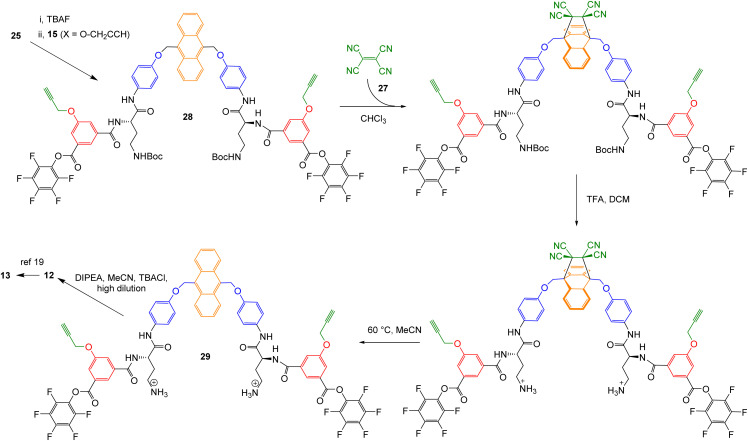 Figure 9
Peer Reviews
No public reviews on file for this paper yet. If you reviewed it on a platform where reviews are public (OpenReview, ICLR, NeurIPS, ICML), you can paste yours below so the community can read it here.
Videos
No videos yet. Explain this paper in a talk, walkthrough, or lecture? Add one.
Taxonomy
TopicsMolecular Sensors and Ion Detection · Analytical Chemistry and Chromatography · Analytical Chemistry and Sensors