d‑Electron Heavy Fermion Behavior in a Near-Room-Temperature Polar Metallic Ferrimagnet: A Case of Mn5SiC
Zachary T. Messegee, Vasile Ovidiu Garlea, Igor I. Mazin, Seung Han Shin, Yan Xin, Hari Bhandari, Stuart Calder, Resham Babu Regmi, Nirmal J. Ghimire, Joon I. Jang, Xiaoyan Tan

TL;DR
Mn5SiC is a polar metallic ferrimagnet with heavy Fermion behavior near room temperature, showing unique electronic and magnetic properties.
Contribution
Discovery of d-electron heavy Fermion behavior in a near-room-temperature polar metallic ferrimagnet.
Findings
Mn5SiC exhibits ferrimagnetic ordering with a transition temperature of 284 K.
The material shows a large Kadowaki–Woods ratio and a many-body renormalization factor of 5.5, indicating heavy Fermion behavior.
Crystal structure and magnetic properties were confirmed using diffraction and theoretical calculations.
Abstract
Polycrystalline Mn5SiC was synthesized by using a high-temperature solid-state method. Mn5SiC adopts a polar space group (Cmc21) with six crystallographic Mn sites confirmed by X-ray and neutron diffraction, transmission electron microscopy, and second harmonic generation experiments. The complex crystal structure features edge-sharing trigonal prisms and icosahedra, as well as face/edge-sharing pentagonal prisms. Magnetic measurements indicate ferrimagnetic ordering with a transition temperature of 284 K. The ferrimagnetic structure (magnetic space group Cm’c’21) was further identified by powder neutron diffraction, where collinear Mn spins align along the crystallographic c-axis. The refined magnetic moment for each crystallographic Mn site at 4 K is 1.8(2), −2.42(9), −1.72(8), 0.51(6), 0.50(4), and 1.7(2) μB. Density functional theory calculations confirm both the metallic behavior…
Genes, proteins, chemicals, diseases, species, mutations and cell lines named across the full text — each resolved to its canonical identifier and authoritative record.
Click any figure to enlarge with its caption.
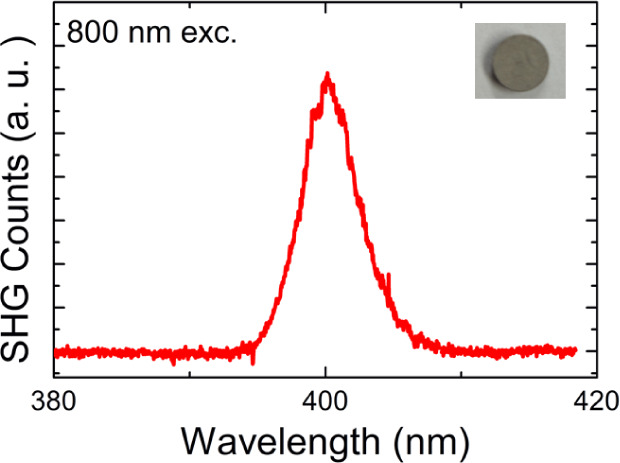 Figure 1
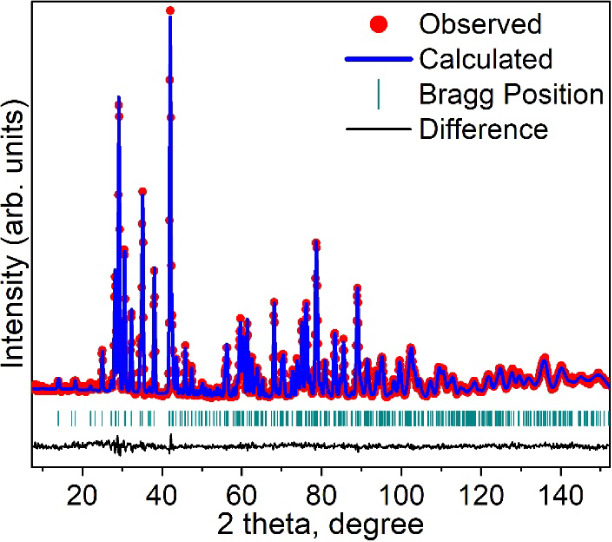 Figure 2
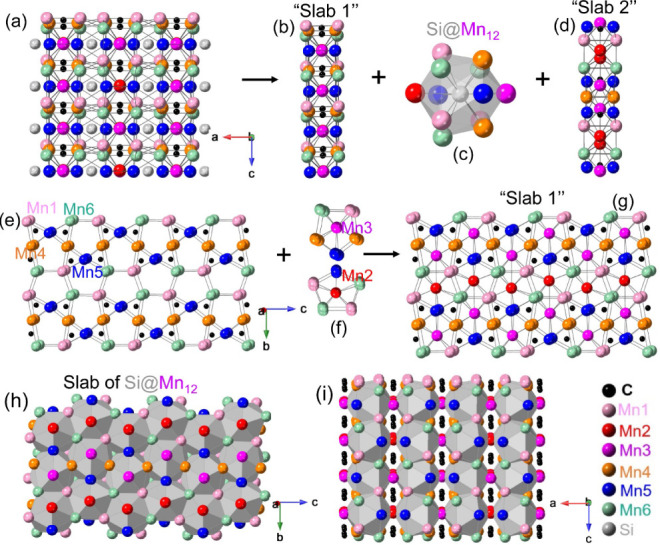 Figure 3
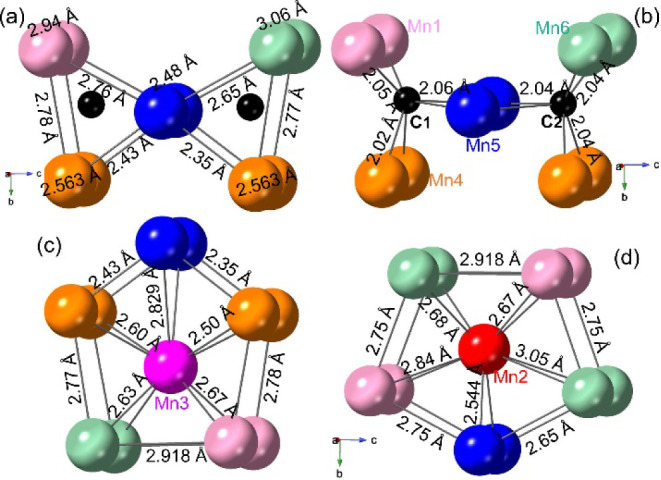 Figure 4
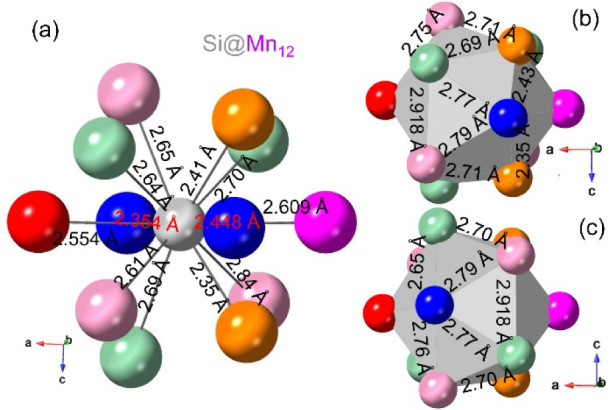 Figure 5
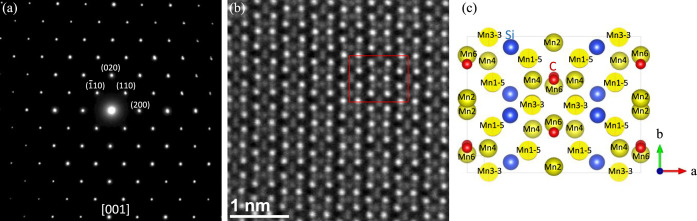 Figure 6
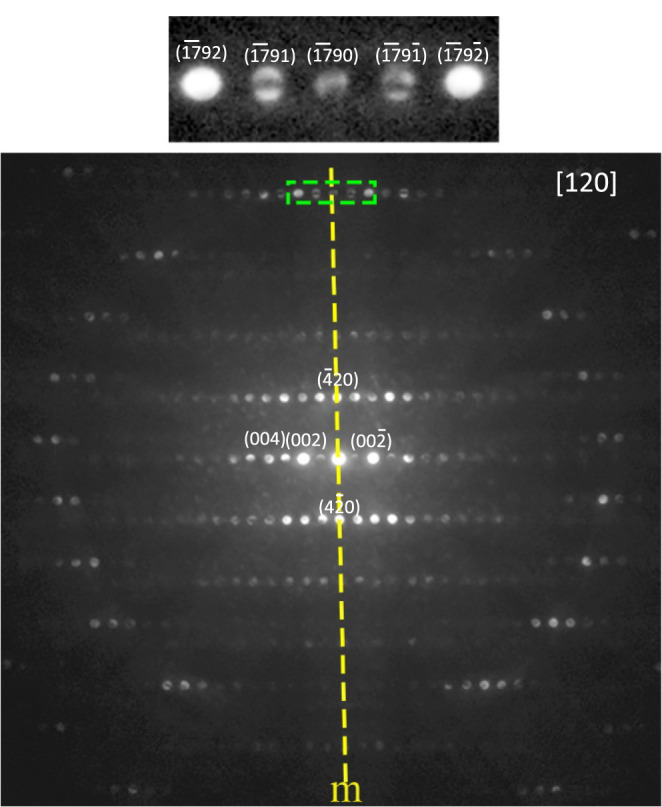 Figure 7
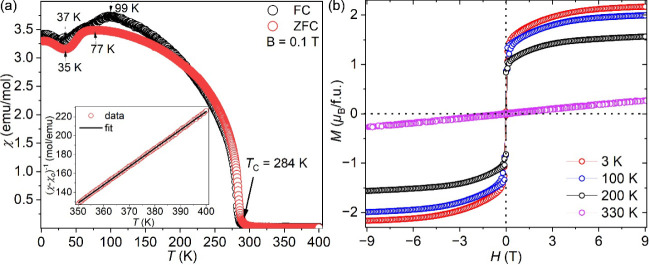 Figure 8
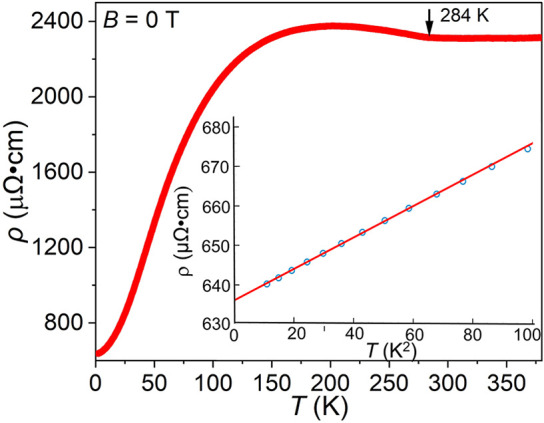 Figure 9
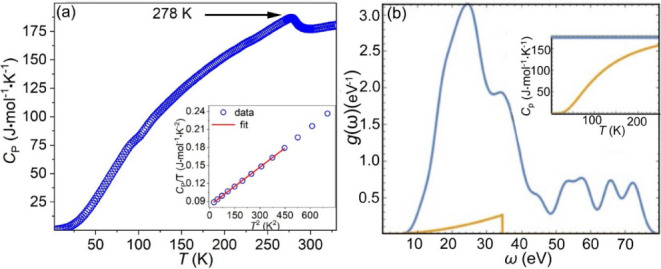 Figure 10
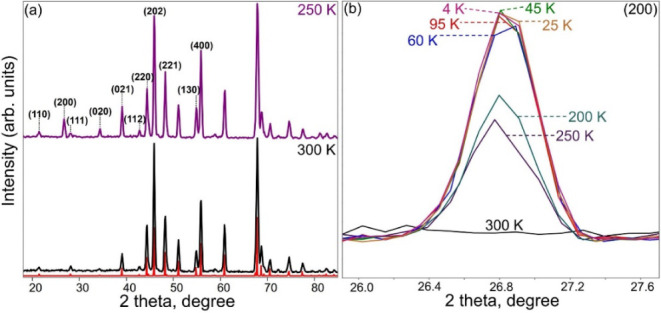 Figure 11
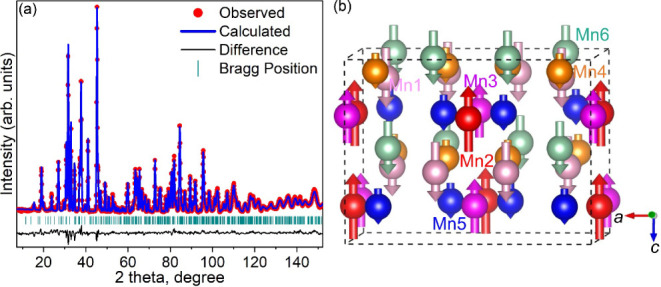 Figure 12
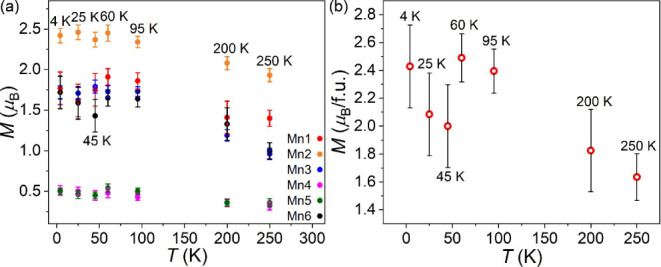 Figure 13
 Figure 14
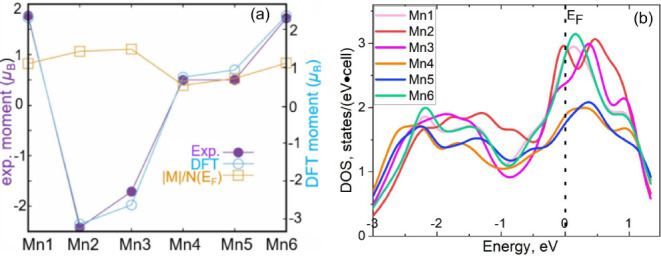 Figure 15
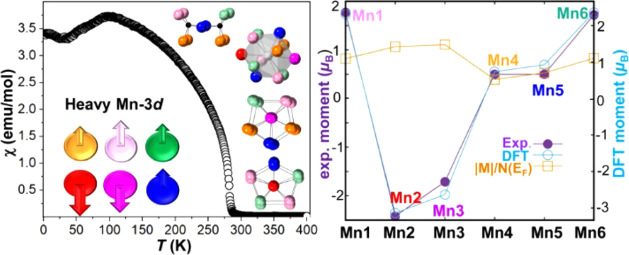 Figure 16
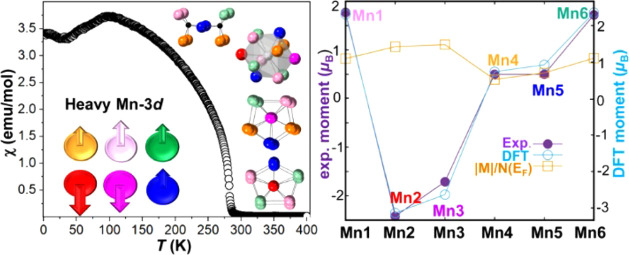 Figure 17
 Figure 18
 Figure 19
 Figure 20
 Figure 21
 Figure 22
Peer Reviews
No public reviews on file for this paper yet. If you reviewed it on a platform where reviews are public (OpenReview, ICLR, NeurIPS, ICML), you can paste yours below so the community can read it here.
Videos
No videos yet. Explain this paper in a talk, walkthrough, or lecture? Add one.
Taxonomy
TopicsHeusler alloys: electronic and magnetic properties · Magnetic Properties of Alloys · Rare-earth and actinide compounds