Serum-Based Detection of Pancreatic and Ovarian Cancer via a Nanoparticle-Enhanced Fluorescence Array and Machine Learning
Violeta Morcuende-Ventura, Oscar Sánchez-Gracia, Natalia Abian-Franco, Isabel Jiménez-Pardo, Lucía Herrer, Martín Castillo-Vallés, Alexandre Lancelot, F. Javier Falcó-Martí, Sonia Hermoso-Durán, Roberto Pazo-Cid, Ángel Lanas, Adrián Velazquez-Campoy, Teresa Sierra, Olga Abian

TL;DR
This study explores using nanoparticle-enhanced fluorescence and machine learning to detect pancreatic and ovarian cancer from blood samples, showing promising diagnostic accuracy.
Contribution
A novel array-based assay methodology combining nanoparticle-enhanced fluorescence and machine learning for serum-based cancer detection.
Findings
3-NH3+ nanoparticles showed over 80% AUC for pancreatic cancer detection.
2-OH nanoparticles achieved over 70% AUC for ovarian cancer detection.
Boosting algorithms outperformed other methods in classifying cancer states.
Abstract
Background: Early detection of oncological diseases such as pancreatic ductal adenocarcinoma (PDAC) and ovarian cancer (OV) is pivotal for successful treatment but remains a significant challenge due to the lack of sensitive and specific diagnostic tests. Fluorescence spectroscopy, enhanced by the interaction of serum proteins with nanoparticles (NPs) based on linear–dendritic block copolymers, has emerged as a promising technique for the noninvasive detection of these malignancies. This study introduces a novel array-based assay methodology to evaluate the diagnostic capabilities of various NPs within serum samples using fluorescence. Methods: We synthesized three types of NPs (1-SH, 2-OH, 3-NH3 +) and analyzed their fluorescence spectra in serum samples from patients with PDAC, OV, and control subjects. The samples were excited at 330 and 350 nm wavelengths to obtain their…
Genes, proteins, chemicals, diseases, species, mutations and cell lines named across the full text — each resolved to its canonical identifier and authoritative record.
Click any figure to enlarge with its caption.
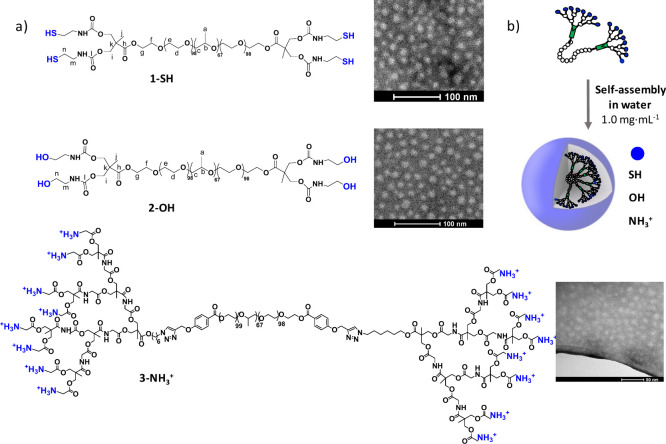 Figure 1
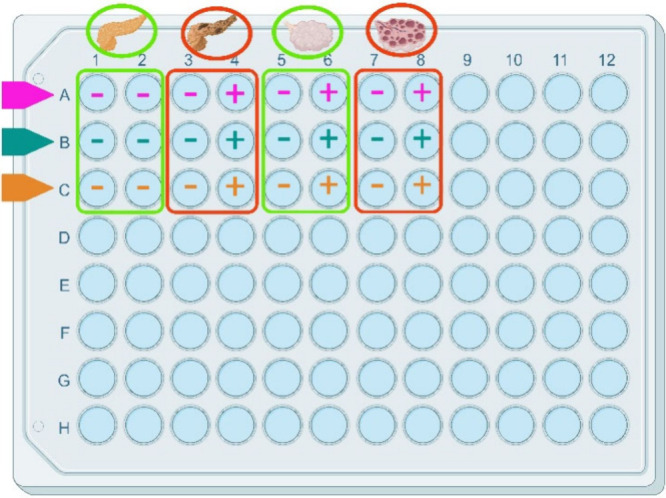 Figure 2
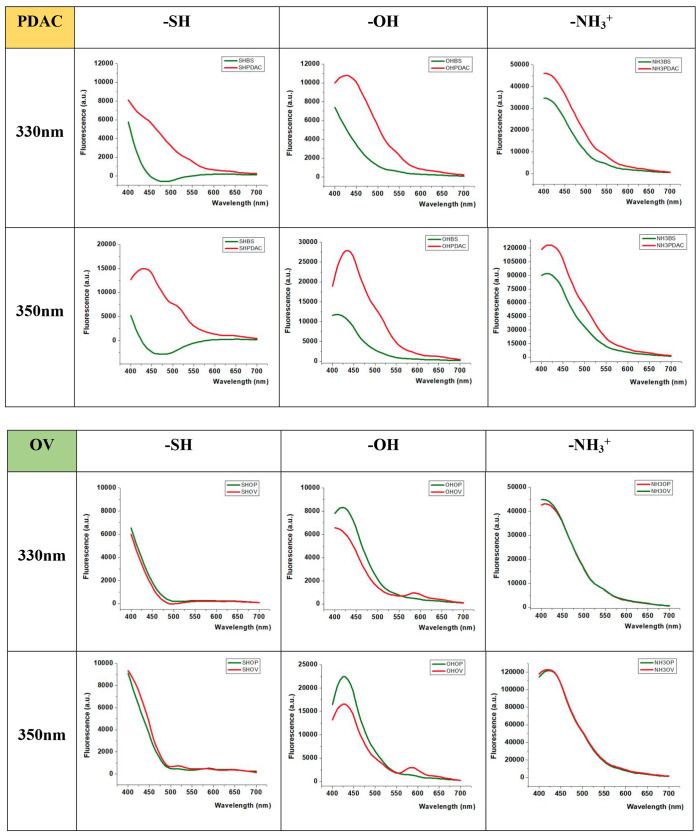 Figure 3
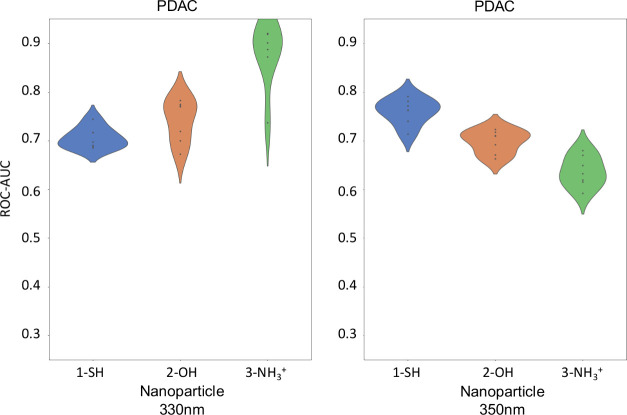 Figure 4
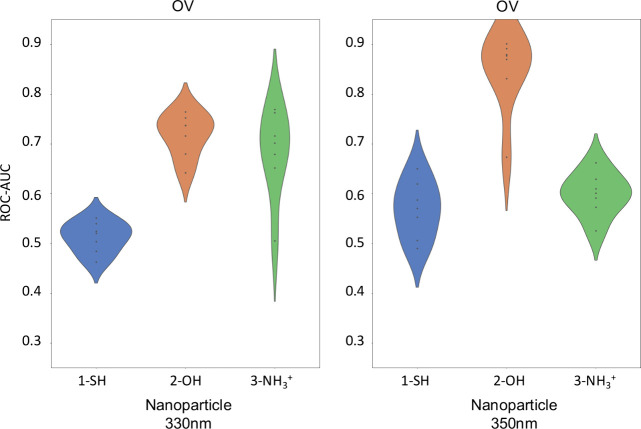 Figure 5
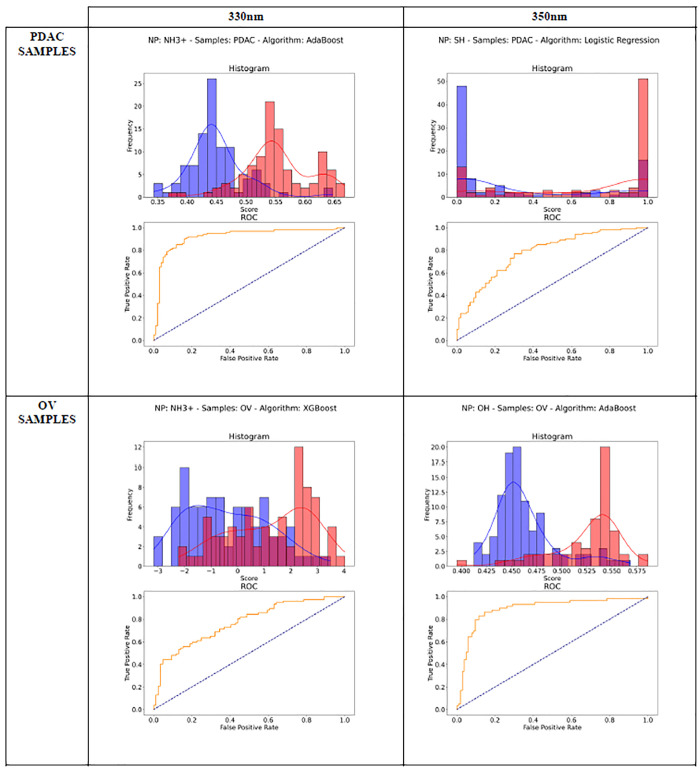 Figure 6
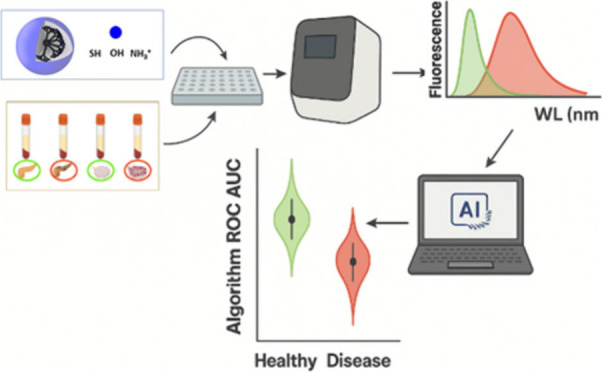 Figure 7
 Figure 8
Peer Reviews
No public reviews on file for this paper yet. If you reviewed it on a platform where reviews are public (OpenReview, ICLR, NeurIPS, ICML), you can paste yours below so the community can read it here.
Videos
No videos yet. Explain this paper in a talk, walkthrough, or lecture? Add one.
Taxonomy
TopicsAdvanced Biosensing Techniques and Applications · Biosensors and Analytical Detection · Advanced Proteomics Techniques and Applications