Is regional atrial strain a useful surrogate of regional atrial fibrosis in atrial cardiomyopathy?
Angela W C Lee, Charles Sillett, José Alonso Solis-Lemus, Cassia Kessler Iglesias, Luuk H G A Hopman, Alina Hua, Peter Wheen, Abdul Qayyum, Marina Strocchi, Caroline Roney, Thomas Booth, Tevfik F Ismail, Henry Chubb, Daniel B Ennis, Andrew Jabbour, Diane Fatkin, Marco J W Götte

TL;DR
This study investigates whether 3D regional atrial strain can predict fibrosis in atrial cardiomyopathy, finding that global measures like left atrial volume and function are more reliable indicators.
Contribution
The study introduces a machine learning approach to evaluate the relationship between atrial biomechanics and fibrosis in atrial cardiomyopathy.
Findings
3D regional strain alone is not a reliable predictor of severe regional fibrosis in atrial fibrillation patients.
Global measures like left atrial volume and emptying fraction, combined with regional location, better predict fibrosis (AUC = 0.86).
Fibrosis predominantly occurs in the lateral and posterior regions of the left atrium in atrial cardiomyopathy.
Abstract
To determine whether atrial biomechanics measured using 3D regional strain, left atrial volume (LAV), and left atrial emptying fraction (LAEF) are associated with atrial fibrosis in patients with suspected atrial cardiomyopathy. Cardiovascular magnetic resonance (CMR) was performed in atrial fibrillation (AF) patients (n = 47). Healthy volunteer (n = 41) and familial dilated cardiomyopathy (DCM) (n = 31) cohorts were acquired for normalization and validation, respectively. Fibrosis was quantified using late gadolinium enhancement (LGE)-CMR, and 3D regional strain was quantified using feature tracking. Machine learning classifiers were used to classify regional severe fibrosis (>30% LGE enhancement) using regional strain and global measures of atrial anatomy and function. 3D regional strain measures (peak reservoir strain or first/second strain principal component) alone were not…
Genes, proteins, chemicals, diseases, species, mutations and cell lines named across the full text — each resolved to its canonical identifier and authoritative record.
Click any figure to enlarge with its caption.
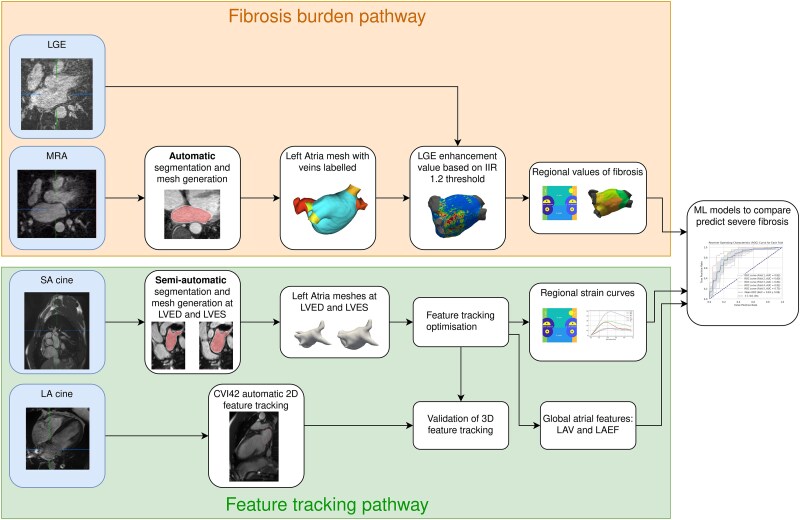 Figure 1
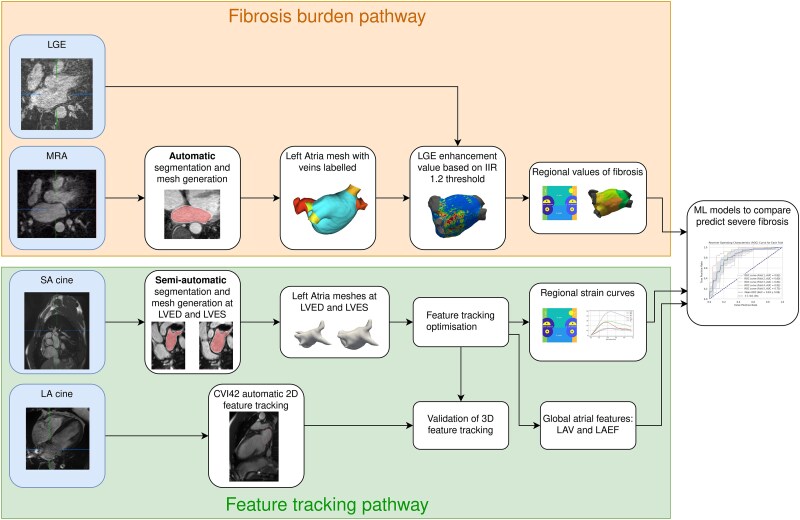 Figure 2
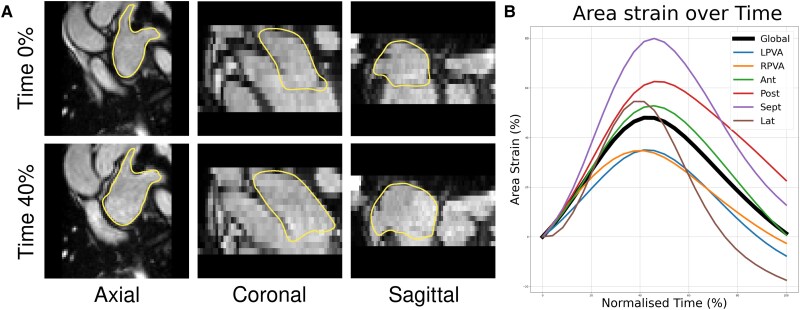 Figure 3
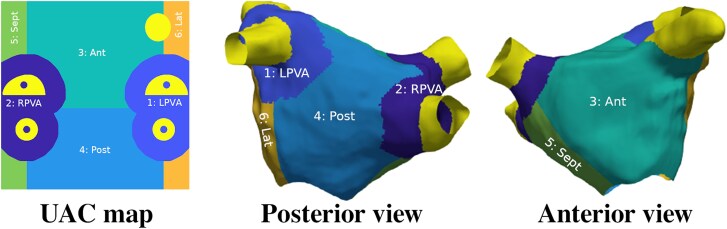 Figure 4
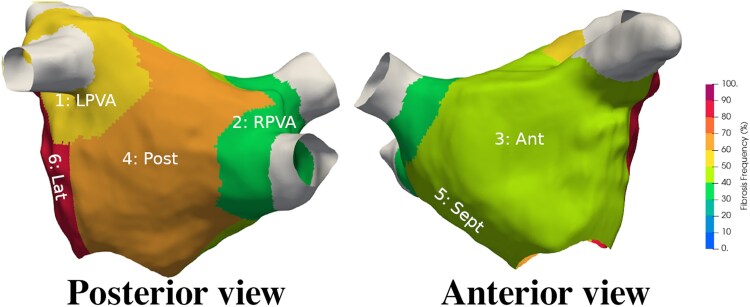 Figure 5
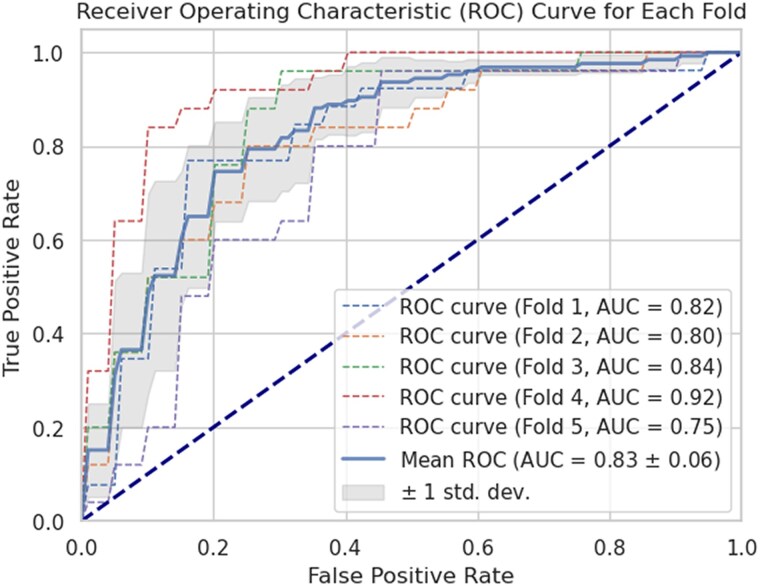 Figure 6
 Figure 7
Peer Reviews
No public reviews on file for this paper yet. If you reviewed it on a platform where reviews are public (OpenReview, ICLR, NeurIPS, ICML), you can paste yours below so the community can read it here.
Videos
No videos yet. Explain this paper in a talk, walkthrough, or lecture? Add one.
Taxonomy
TopicsAtrial Fibrillation Management and Outcomes · Cardiac Arrhythmias and Treatments · Cardiovascular Function and Risk Factors