Phenolic Acids Commonly Found in Natural Products Modulate Protein Aggregation in Caenorhabditis elegans Neurodegeneration Models
Xareni Valle-Jiménez, Ixchel Osorio-Paz, Silvestre Alavez

TL;DR
This study explores how phenolic acids from natural products can reduce protein aggregation in worm models of neurodegenerative diseases like Alzheimer's and Parkinson's.
Contribution
The novel contribution is identifying specific phenolic acids that effectively reduce protein aggregation in multiple C. elegans models of neurodegeneration.
Findings
High concentrations of caffeic, ferulic, and gallic acids reduced β-amyloid-induced paralysis by up to 32%.
Gallic acid showed the strongest reduction in polyQ aggregation (47%) compared to other acids.
Caffeic acid alone reduced α-synuclein aggregation, suggesting potential neuroprotective effects in mammals.
Abstract
Abnormal protein accumulation is frequently associated with the gradual degeneration of the central nervous system, which results in the development and progression of several neurodegenerative diseases (NDs). Since the incidence of ND is on the rise, their effects represent a substantial psychological and economic burden. As we advance in understanding human aging mechanisms, it is desirable to accelerate the discovery of molecules that can modulate human aging and perhaps postpone the onset of age-related disease. Therefore, uncovering compounds that can prevent the formation of protein aggregates should be a priority in the aging research field. Phenolic acids are organic compounds found in many natural products, such as vegetables and fruits. These compounds have been shown to have potential neuroprotective benefits. However, its effects on protein aggregation related to…
Genes, proteins, chemicals, diseases, species, mutations and cell lines named across the full text — each resolved to its canonical identifier and authoritative record.
Click any figure to enlarge with its caption.
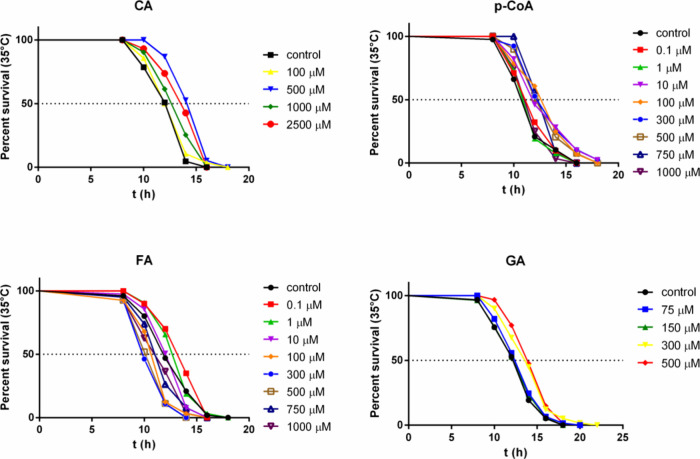 Figure 1
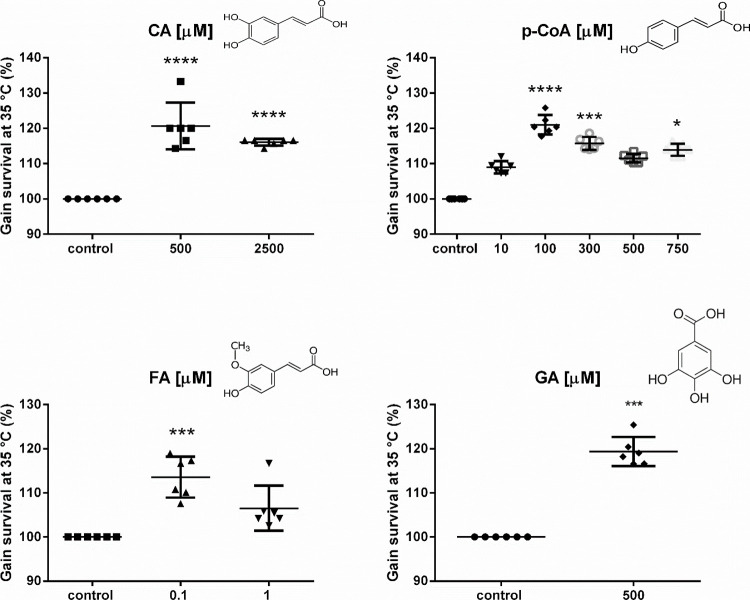 Figure 2
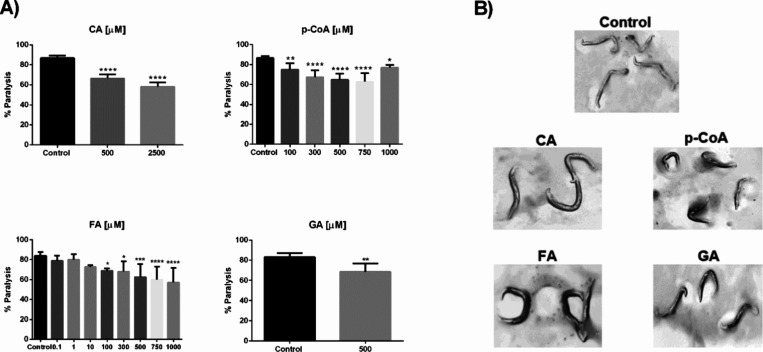 Figure 3
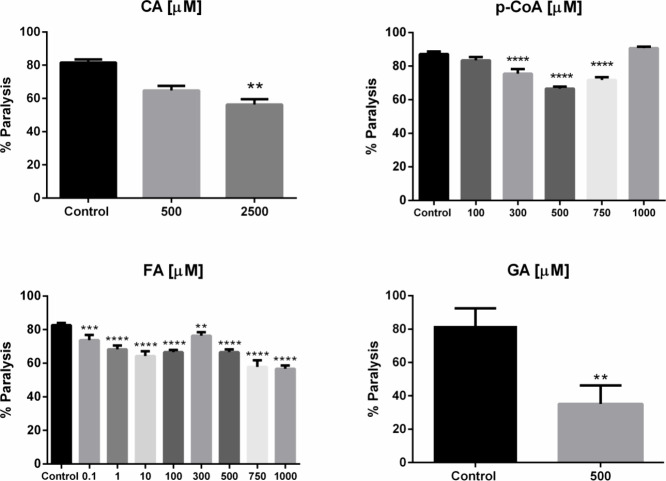 Figure 4
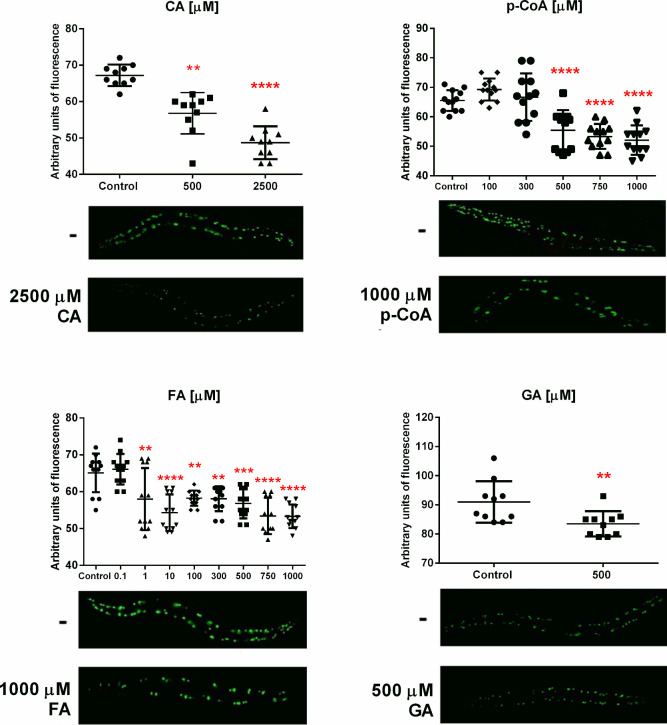 Figure 5
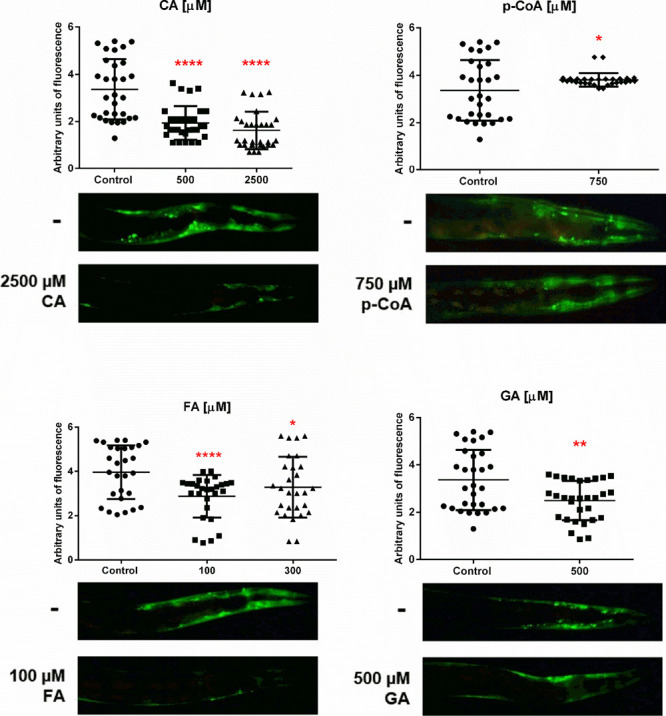 Figure 6
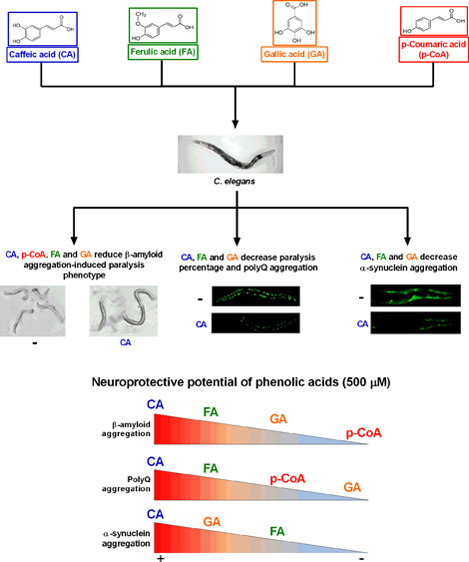 Figure 7
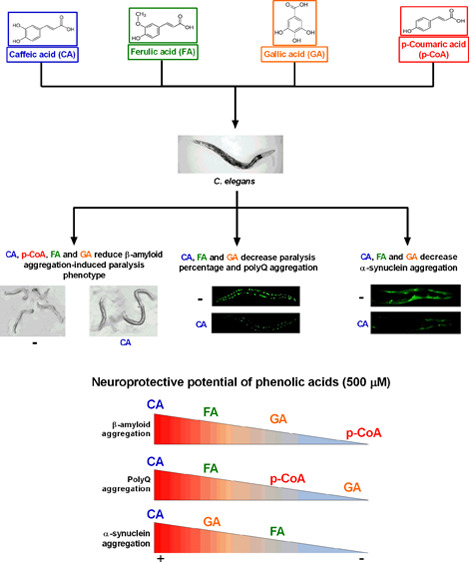 Figure 8
Peer Reviews
No public reviews on file for this paper yet. If you reviewed it on a platform where reviews are public (OpenReview, ICLR, NeurIPS, ICML), you can paste yours below so the community can read it here.
Videos
No videos yet. Explain this paper in a talk, walkthrough, or lecture? Add one.
Taxonomy
TopicsAlzheimer's disease research and treatments · Ginkgo biloba and Cashew Applications · Genetics, Aging, and Longevity in Model Organisms