Modelling the impact of climate and the environment on the spatiotemporal dynamics of Lyme borreliosis in Germany
Martín Lotto Batista, Bruno Carvalho, Rory Gibb, Balakrishnan Solaraju-Murali, Stefan Flasche, Stefanie Castell, Stéphane Ghozzi, Rachel Lowe

TL;DR
This study models how climate and environmental factors influence the spread of Lyme borreliosis in Germany, identifying key conditions that increase disease risk.
Contribution
The study introduces a Bayesian modeling framework to assess delayed and nonlinear climate-environment-Lyme disease associations in Germany.
Findings
Maximum temperatures between 10.5°C and 26.3°C and high humidity are linked to increased Lyme borreliosis risk.
Wet conditions over three months and deer-populated areas are associated with higher tick survival and disease transmission.
Lyme risk is increasing in northern German states, including those without mandatory case reporting.
Abstract
Lyme borreliosis (LB) is a predominant vector-borne disease in Europe, with Germany reporting endemic circulation for at least the past two decades. Climatic and environmental conditions are key drivers of tick activity, and human exposure to tick bites. Understanding the climatic and environmental factors driving LB dynamics can help devise decision-support tools to guide interventions and adaptation strategies. Using a Bayesian modelling framework, we assessed the delayed and nonlinear associations between climate variation and land use change and monthly LB case counts from the German national notification system at a district level from 2009 to 2022. We evaluated the predictive performance of our model and then predicted risk trends in states without mandatory notification. We then used the fitted risk function for maximum temperature to assess long-term trends in relative risk…
Genes, proteins, chemicals, diseases, species, mutations and cell lines named across the full text — each resolved to its canonical identifier and authoritative record.
Click any figure to enlarge with its caption.
 Figure 1
 Figure 2
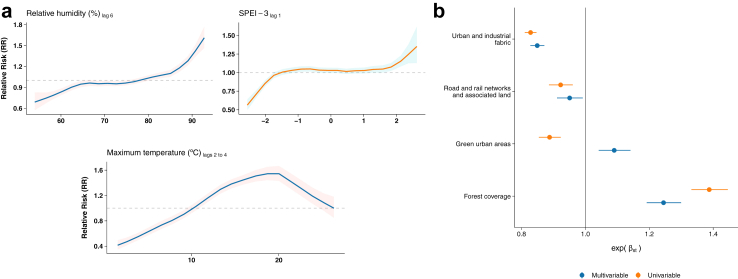 Figure 3
 Figure 4
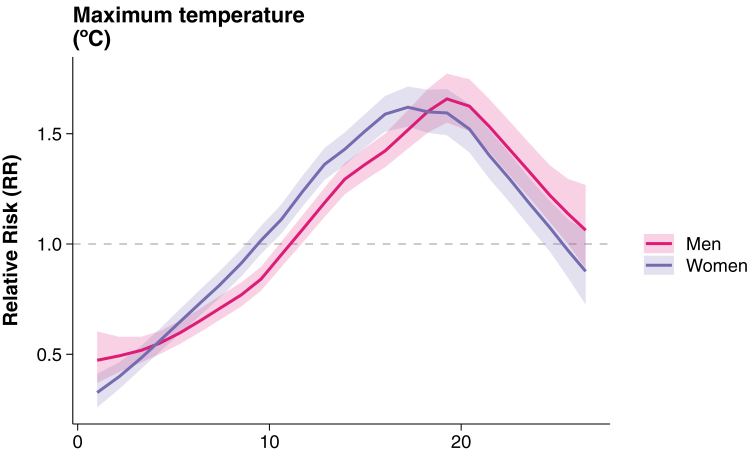 Figure 5
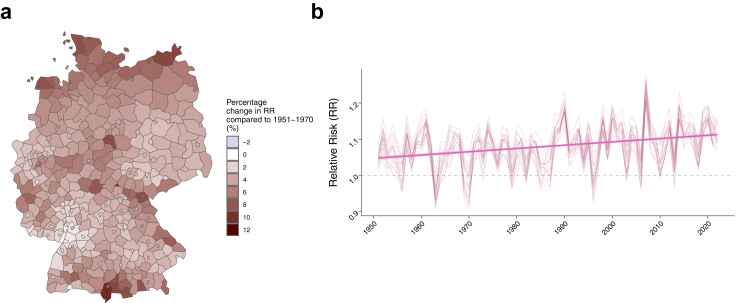 Figure 6
Peer Reviews
No public reviews on file for this paper yet. If you reviewed it on a platform where reviews are public (OpenReview, ICLR, NeurIPS, ICML), you can paste yours below so the community can read it here.
Videos
No videos yet. Explain this paper in a talk, walkthrough, or lecture? Add one.
Taxonomy
TopicsVector-borne infectious diseases · Viral Infections and Vectors · Mosquito-borne diseases and control