Noninvasive Hemodynamic Assessment by a Sensor Patch: The PATCHWRK (PortAble TeCHnology for Wireless caRdiomyopathy tracKing) Study
Zak Loring, Nicholas B. Bolus, F. Brennan Torstrick, Danielle Wilson, Melissa Lefevre, Brett D. Atwater, Anita Kelsey, Jonathan P. Piccini

TL;DR
A wearable sensor patch called SANSA can accurately measure heart function timing intervals, potentially enabling early detection of heart disease without needing traditional echocardiography.
Contribution
The study introduces a noninvasive sensor patch that estimates key cardiac timing intervals with accuracy comparable to echocardiography.
Findings
The SANSA patch accurately estimated diastolic filling time (ICC 0.92), pre-ejection period (ICC 0.74), and ejection time (ICC 0.76) compared to echocardiography.
The patch's measurements showed variability within the same range as different echocardiographic views.
Longitudinal monitoring using the patch could help detect early signs of cardiomyopathy.
Abstract
Echocardiographic timing intervals provide prognostic information in patients with preclinical cardiac dysfunction. Reduced diastolic filling time (DFT) identifies left bundle branch block patients at risk for cardiomyopathy. The need for specialized equipment limits the utility of echocardiography (echo) for longitudinal assessment. The purpose of this study was to evaluate a multimodal sensor patch’s (SANSA) assessment of DFT, pre-ejection period (PEP), and left ventricular ejection time (LVET). Fifty patients undergoing echo were prospectively enrolled and had simultaneous SANSA patch recording and echo. Timing intervals were analyzed using continuous wave, pulsed wave, and tissue Doppler imaging. SANSA electrocardiogram, seismocardiogram, and phonocardiogram data were independently analyzed to identify valve openings/closures for DFT, PEP, and LVET estimation. Agreement between…
Genes, proteins, chemicals, diseases, species, mutations and cell lines named across the full text — each resolved to its canonical identifier and authoritative record.
Click any figure to enlarge with its caption.
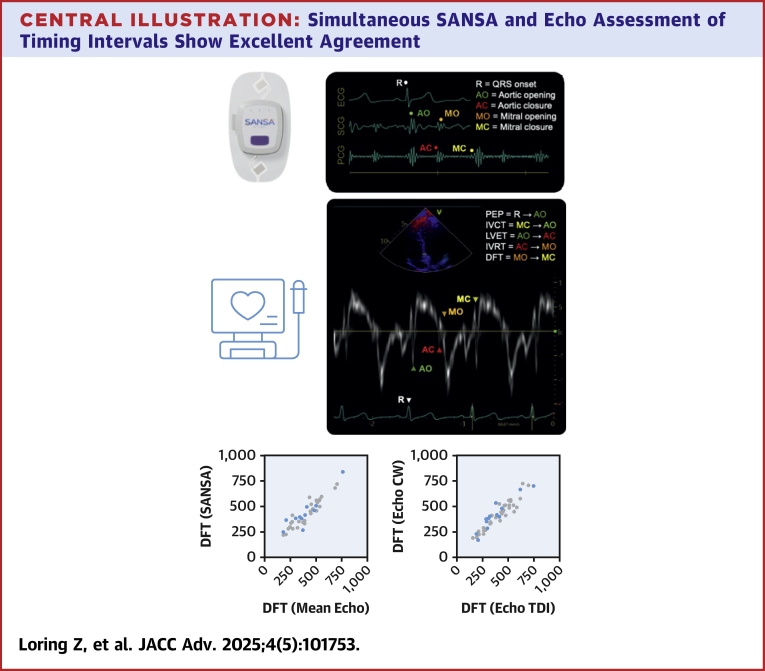 Figure 1
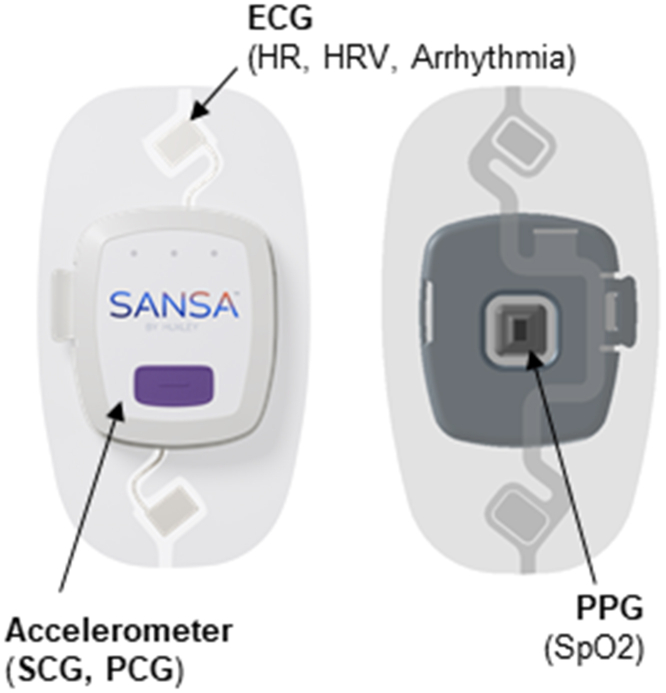 Figure 2
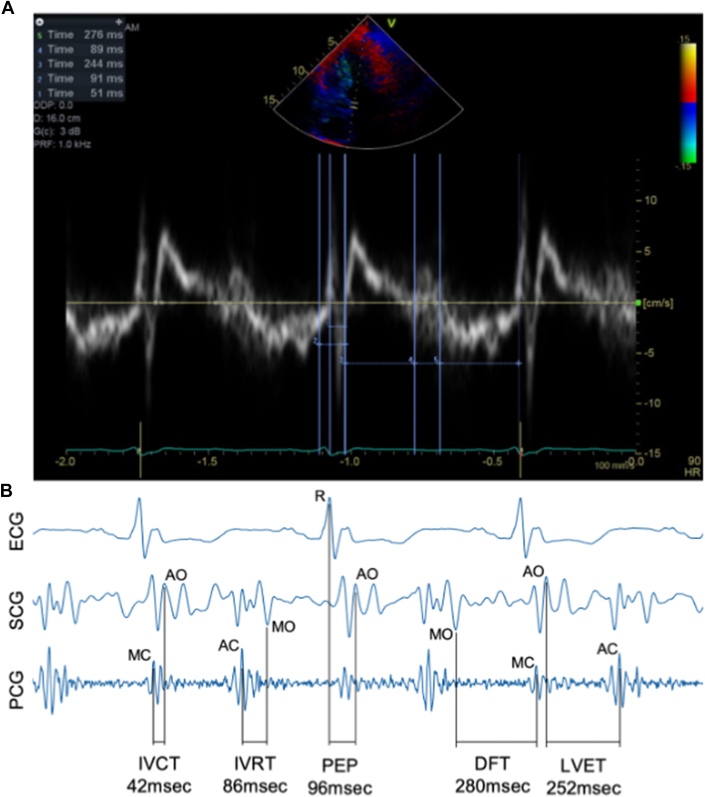 Figure 3
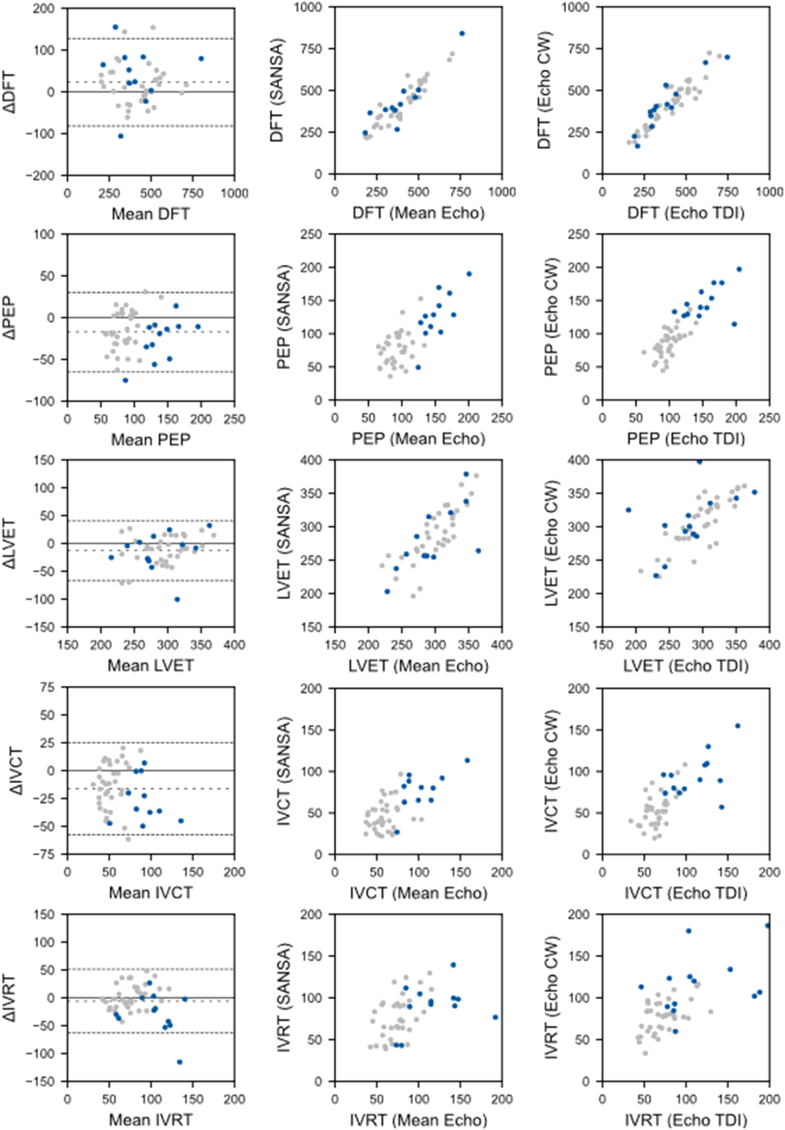 Figure 4
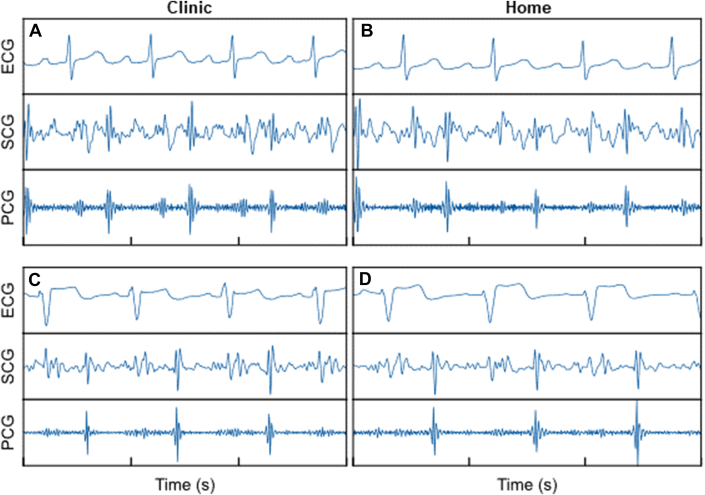 Figure 5
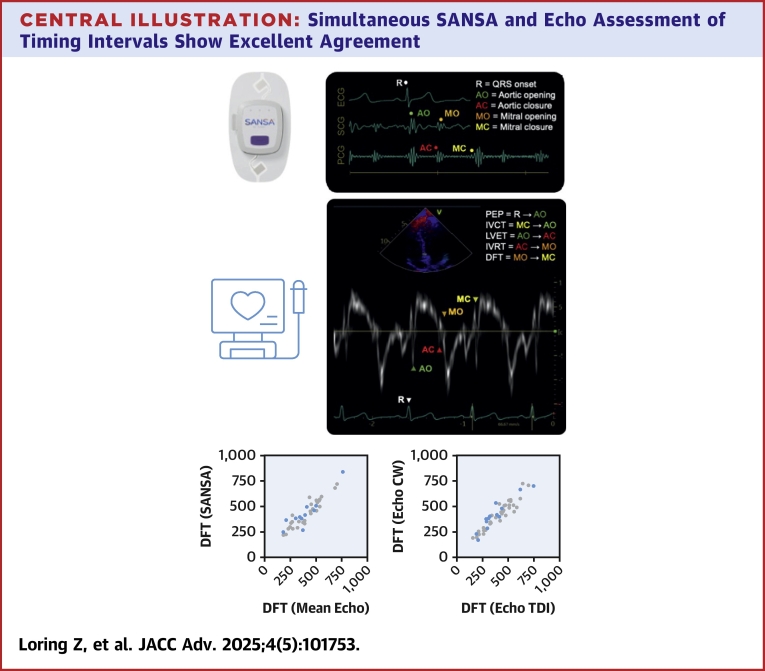 Figure 6
Peer Reviews
No public reviews on file for this paper yet. If you reviewed it on a platform where reviews are public (OpenReview, ICLR, NeurIPS, ICML), you can paste yours below so the community can read it here.
Videos
No videos yet. Explain this paper in a talk, walkthrough, or lecture? Add one.
Taxonomy
TopicsCardiac pacing and defibrillation studies · Cardiovascular Function and Risk Factors · Cardiac Imaging and Diagnostics