Electron attachment to CH3COCl molecule and clusters
Barbora Kocábková, Jozef Ďurana, Jozef Rakovský, Viktoriya Poterya, Michal Fárník, Michael Gatt, Gabriel Schöpfer, Philipp Jung, Milan Ončák

TL;DR
This study explores how electrons attach to acetyl chloride molecules and clusters, revealing that the environment significantly influences the resulting chemical products.
Contribution
The study demonstrates that electron attachment outcomes in clusters differ from isolated molecules, highlighting the solvent's critical role.
Findings
Dissociative electron attachment to acetyl chloride produces Cl− as the main product.
Cluster ion series (AC)nCl−, (AC)nHCl2−, and [(AC)n–H]− are observed, matching calculated energetics.
Electron attachment in clusters of AC, TFAC, and TCA yields distinct products compared to isolated molecules.
Abstract
We investigate the electron attachment of acetyl chloride CH3COCl (AC) molecules and clusters in a molecular beam experiment and by extensive theoretical calculations. The main product of dissociative electron attachment (DEA) to the AC molecule is Cl−, which leads to the main (AC)nCl− series in clusters. The weaker ion series identified in the cluster mass spectra correspond to (AC)nHCl2− and hydrogen abstraction fragments [(AC)n–H]−, in full agreement with calculated energetics. We compare the present results for AC with previously studied trifluoroacetyl chloride CF3COCl (TFAC) and trichloroacetic acid CCl3COOH (TCA) molecules and clusters. DEA of the three isolated molecules results in the main fragment Cl−; however, the electron attachment to their clusters produces distinctly different cluster ions. This demonstrates that the outcomes of reactions of electrons with molecules in an…
Genes, proteins, chemicals, diseases, species, mutations and cell lines named across the full text — each resolved to its canonical identifier and authoritative record.
Click any figure to enlarge with its caption.
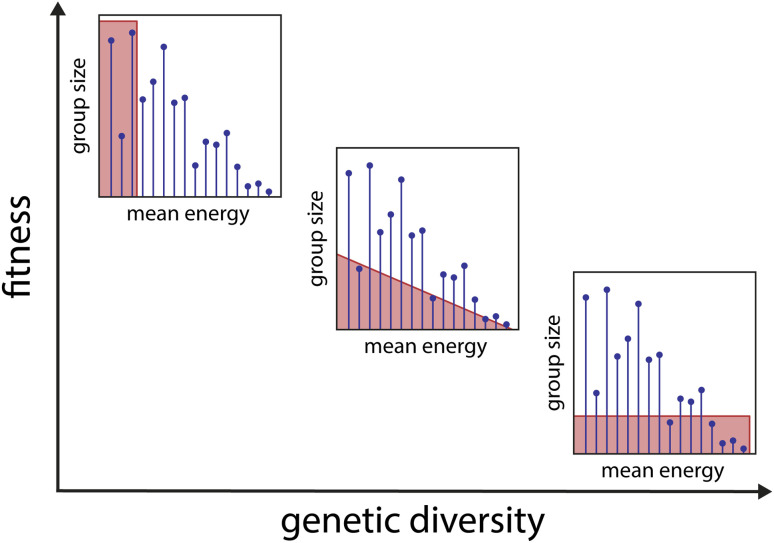 Figure 1
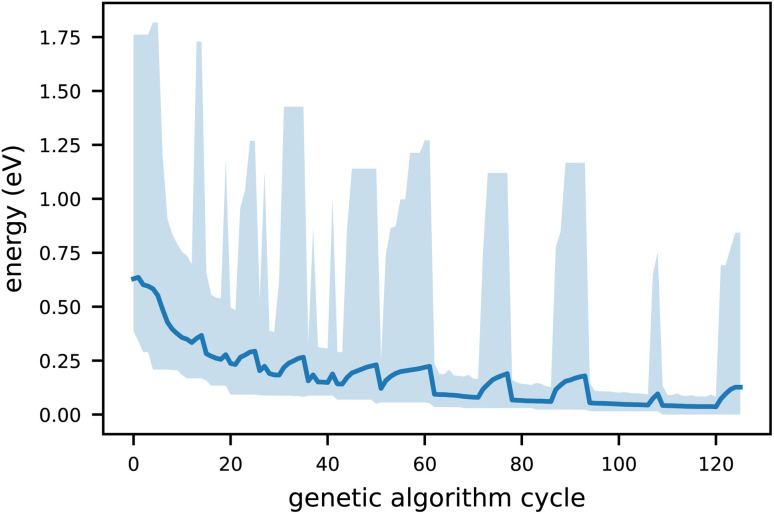 Figure 2
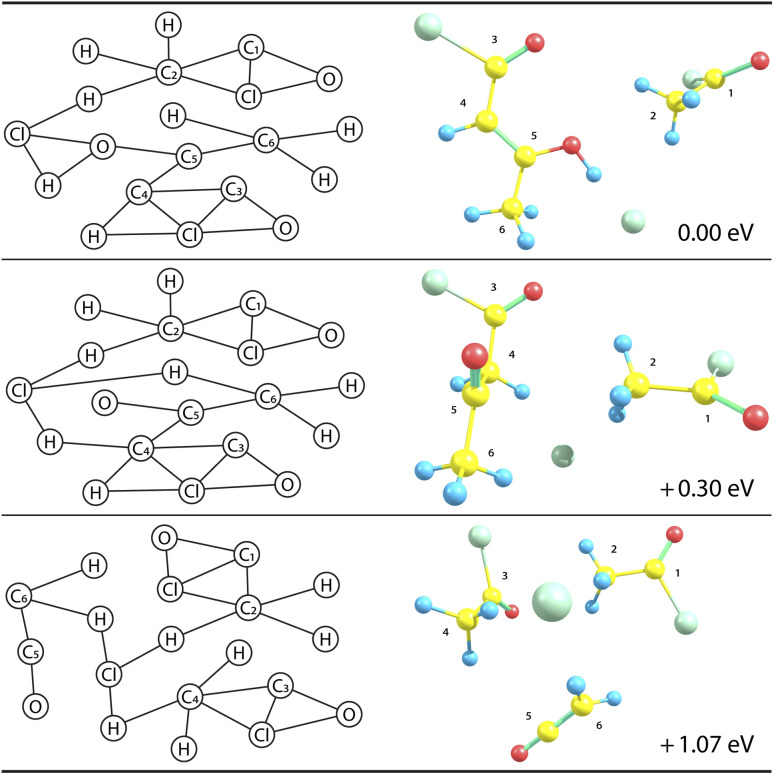 Figure 3
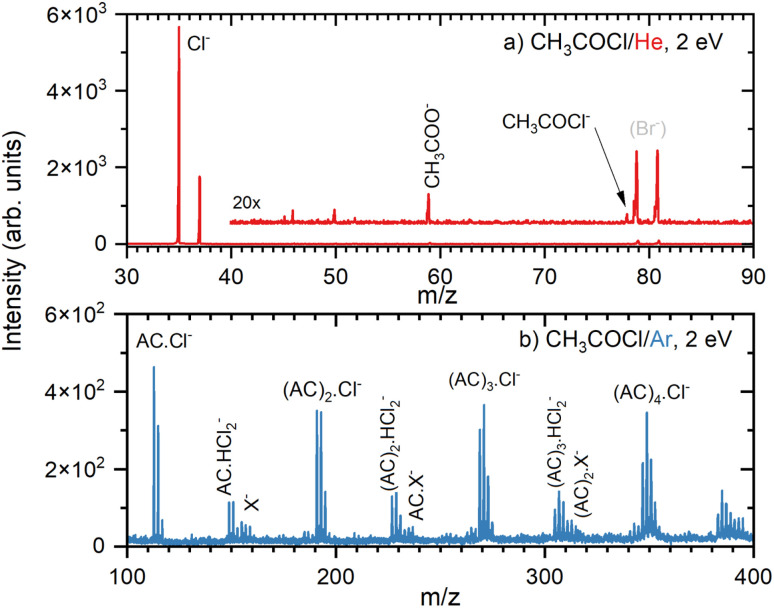 Figure 4
 Figure 5
 Figure 6
 Figure 7
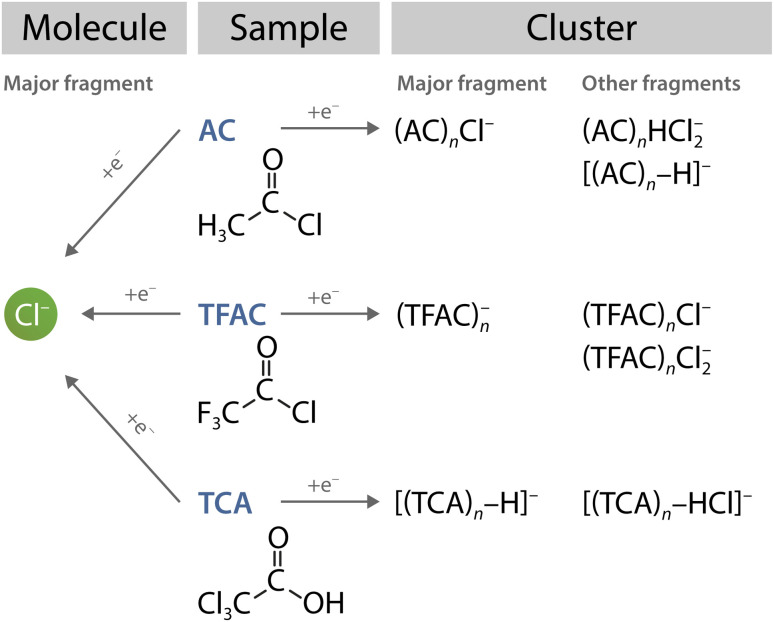 Figure 8
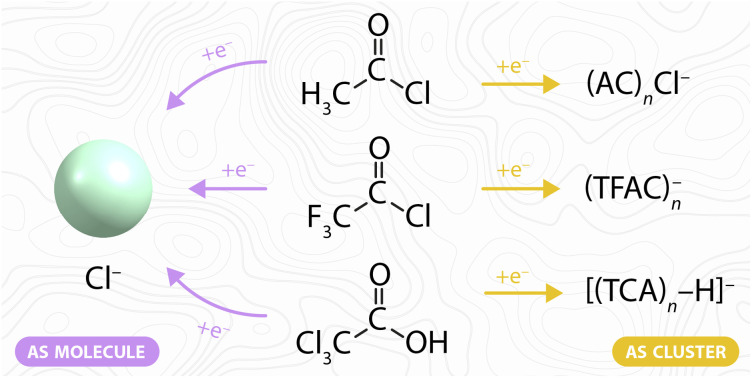 Figure 9
 Figure 10
 Figure 11
 Figure 12
Peer Reviews
No public reviews on file for this paper yet. If you reviewed it on a platform where reviews are public (OpenReview, ICLR, NeurIPS, ICML), you can paste yours below so the community can read it here.
Videos
No videos yet. Explain this paper in a talk, walkthrough, or lecture? Add one.
Taxonomy
TopicsAdvanced Chemical Physics Studies · Atomic and Molecular Physics · Molecular Spectroscopy and Structure