Glycerol Kinase Gene Variant as a Cause of Pseudohypertriglyceridemia and Apparent Poor Response to Plozasiran
Miriam Larouche, Christie Ballantyne, Josiane Dufour, Diane Brisson, Bruce Given, Daniel Gaudet

TL;DR
A rare genetic variant in the glycerol kinase gene can cause misleadingly high triglyceride levels and an apparent poor response to treatment.
Contribution
This case report identifies a glycerol kinase gene variant as a cause of pseudohypertriglyceridemia and apparent treatment resistance to plozasiran.
Findings
A loss-of-function variant in the GK gene led to elevated free glycerol levels, falsely increasing triglyceride measurements.
Correcting for free glycerol revealed mild hypertriglyceridemia and a significant treatment response to plozasiran.
APOC3 inhibition does not affect free glycerol concentration, highlighting the need for additional diagnostic measures in non-responders.
Abstract
Severe hypertriglyceridemia (HTG) is characterized by plasma triglyceride (TG) levels >500 mg/dL (SI: 5.7 mmol/L) (reference range, <150 mg/dL [SI: <1.7 mmol/L]) and is linked to cardiovascular disease and pancreatitis risk. Treatment typically involves dietary restrictions and lipid-lowering medications. Glycerol kinase deficiency (GKD) is a rare genetic disorder that causes pseudo-HTG. In SHASTA-2, a study of patients with severe HTG, most subjects (>90%) treated with plozasiran, an apolipoprotein C-III (APOC3) small interfering RNA (siRNA), achieved TG levels <500 mg/dL (SI: 5.7 mmol/L), below the risk threshold for acute pancreatitis. We report herein a case study of a 65-year-old male apparently not responding to plozasiran. The patient was shown to carry a loss-of-function variant in the GK gene resulting in GKD, with high free glycerol (40.24 mg/dL or 4.37 mmol/L) (reference…
Genes, proteins, chemicals, diseases, species, mutations and cell lines named across the full text — each resolved to its canonical identifier and authoritative record.
Click any figure to enlarge with its caption.
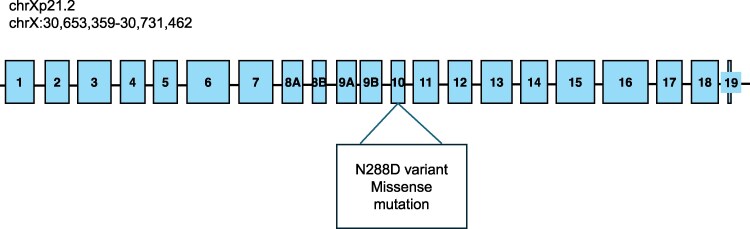 Figure 1
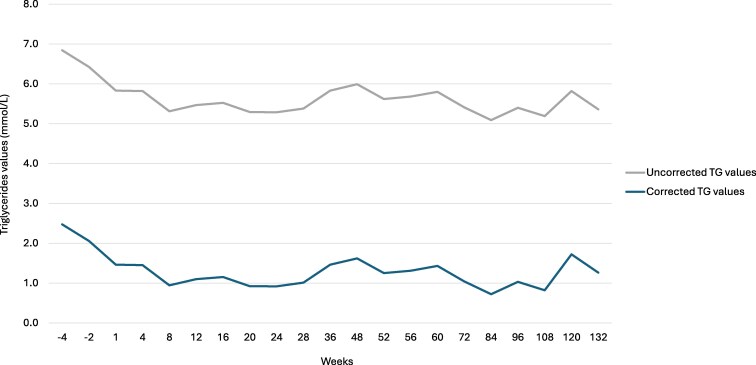 Figure 2
Peer Reviews
No public reviews on file for this paper yet. If you reviewed it on a platform where reviews are public (OpenReview, ICLR, NeurIPS, ICML), you can paste yours below so the community can read it here.
Videos
No videos yet. Explain this paper in a talk, walkthrough, or lecture? Add one.
Taxonomy
TopicsLipid metabolism and disorders · Cancer, Lipids, and Metabolism · Peroxisome Proliferator-Activated Receptors