Mediastinal NUT Carcinoma With Raised Serum Alpha-Fetoprotein Mimicking a Malignant Germ Cell Tumor: Suspicion Raised Due to Negative Serum miR-371a-3p Levels
Sheng-Yuan Kan, Cinzia G. Scarpini, Dawn Ward, Ben Fleming, Heok K. Cheow, Ibrahim Jalloh, John A. Tadross, James Watkins, Thomas Roberts, Jamie Trotman, Patrick Tarpey, Nicholas Coleman, C. Elizabeth Hook, Charlotte Burns, Claire Trayers, Matthew J. Murray

TL;DR
A 15-year-old patient with a mediastinal tumor and high alpha-fetoprotein levels was diagnosed with NUT carcinoma after ruling out germ cell tumors using molecular tests and miRNA analysis.
Contribution
The paper highlights the diagnostic utility of serum miR-371a-3p and agnostic molecular testing in distinguishing NUT carcinoma from germ cell tumors.
Findings
Negative miR-371a-3p levels helped rule out malignant germ cell tumors.
Whole genome and RNA sequencing confirmed a BRD4::NUTM1 gene fusion, diagnosing NUT carcinoma.
NUTM1 immunohistochemistry confirmed the diagnosis after initial biopsy was non-diagnostic.
Abstract
NUT carcinoma is challenging to diagnose and may mimic a germ cell tumor (GCT) due to raised serum alpha-fetoprotein (AFP). A 15-year-old patient presented with back pain and cough. Investigation revealed a mediastinal mass and multiple bone metastases. Serum AFP was highly elevated, consistent with a metastatic malignant nonseminomatous GCT. Aggressive chemotherapy was initiated with initial response, unfortunately not sustained. Diagnostic biopsy showed undifferentiated tumor cells with weak GCT immunophenotype but was ultimately non-diagnostic. Serum miR-371a-3p levels, highly sensitive/specific for malignant GCTs, were negative casting diagnostic suspicion. Routine use of agnostic molecular investigations, including whole genome sequencing, identified a chromosome 15:19 translocation, with BRD4::NUTM1 gene fusion on RNA sequencing, confirming NUT carcinoma. Subsequent NUTM1…
Genes, proteins, chemicals, diseases, species, mutations and cell lines named across the full text — each resolved to its canonical identifier and authoritative record.
Click any figure to enlarge with its caption.
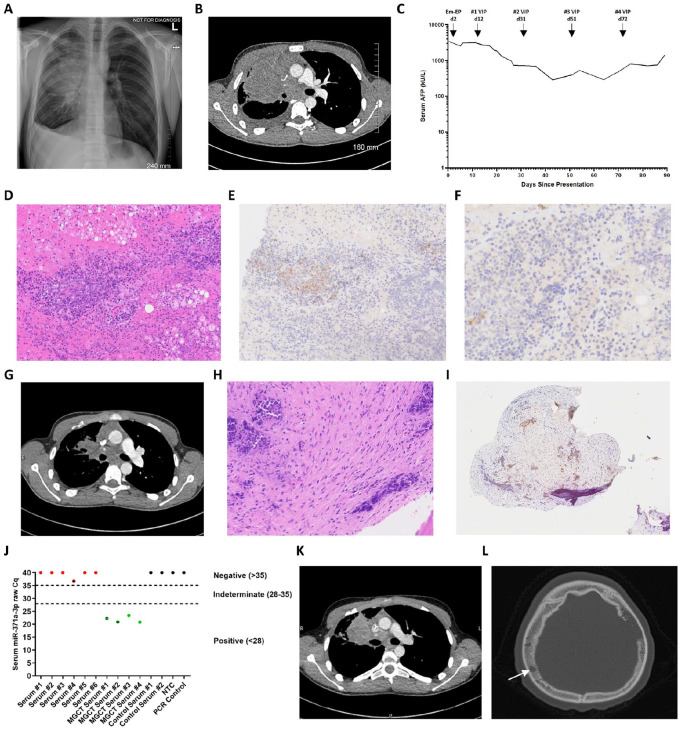 Figure 1
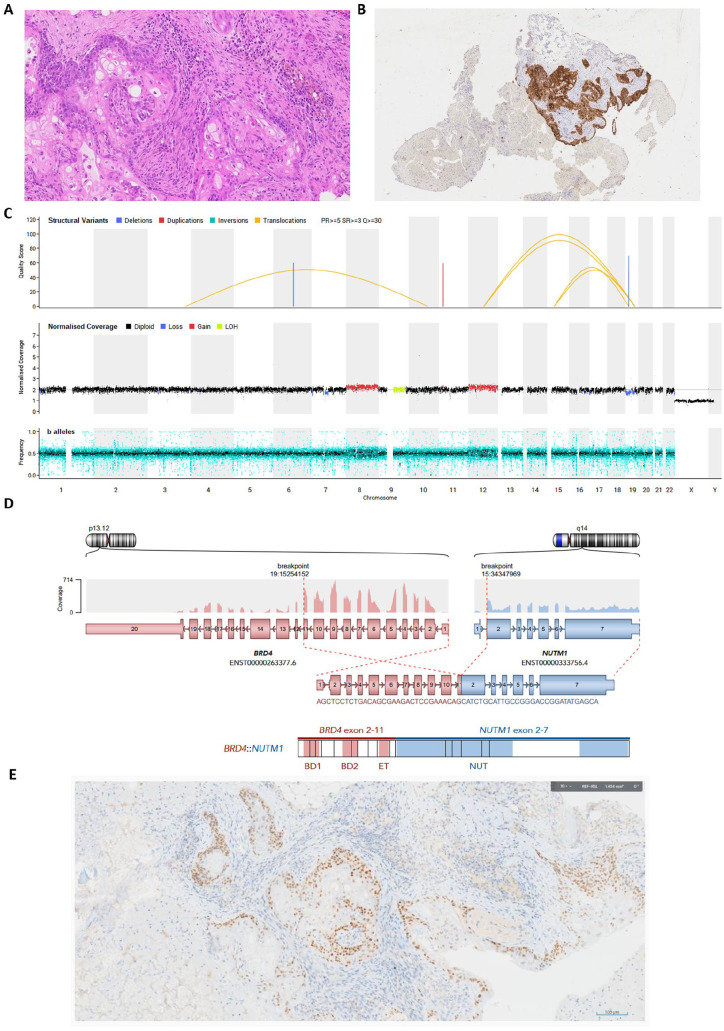 Figure 2
 Figure 3
Peer Reviews
No public reviews on file for this paper yet. If you reviewed it on a platform where reviews are public (OpenReview, ICLR, NeurIPS, ICML), you can paste yours below so the community can read it here.
Videos
No videos yet. Explain this paper in a talk, walkthrough, or lecture? Add one.
Taxonomy
TopicsProtein Degradation and Inhibitors · Testicular diseases and treatments · Multiple Myeloma Research and Treatments