The Well‐Being of Slum Dwellers Are Associated With WaSH‐Related Factors: A Cross‐Sectional Study From India
P. Padma Sri Lekha, E. P. Abdul Azeez, B. Latha Lavanya, V. Kalyani, Manoj Mathew, S. Giri Prasath, J. Leo Joshwin, U. Nithyasree

TL;DR
This study in India finds that better water, sanitation, and hygiene practices improve the well-being of people living in slums.
Contribution
The study provides new evidence linking WaSH practices and water insecurity to psychological well-being in slum populations.
Findings
Good WaSH practices and sanitation-related quality of life significantly improve well-being.
Positive attitudes toward WaSH and higher water insecurity experiences reduce well-being.
Access to toilets increases both well-being and sanitation-related quality of life.
Abstract
The adverse health outcomes due to unsafe Water, Sanitation, and Hygiene (WaSH) are a public health concern in low‐and middle‐income countries. However, evidence on how WaSH is associated with psychological outcomes is minimal. Insights on this association would help address the well‐being of the slum population. Therefore, this study aimed to understand the association between knowledge, attitude and practice (KAP) of WaSH, water insecurity experiences, and sanitation‐related quality of life on the well‐being of individuals living in slums. We used the KAP of WaSH, water insecurity experience scale, sanitation‐related quality of life scale, and WHO well‐being index to collect data from adult slum dwellers aged 18 years and above from Vellore, Tamil Nadu, India. We adopted a cross‐sectional study design and employed a systematic sampling procedure to select the households. The data was…
Genes, proteins, chemicals, diseases, species, mutations and cell lines named across the full text — each resolved to its canonical identifier and authoritative record.
Click any figure to enlarge with its caption.
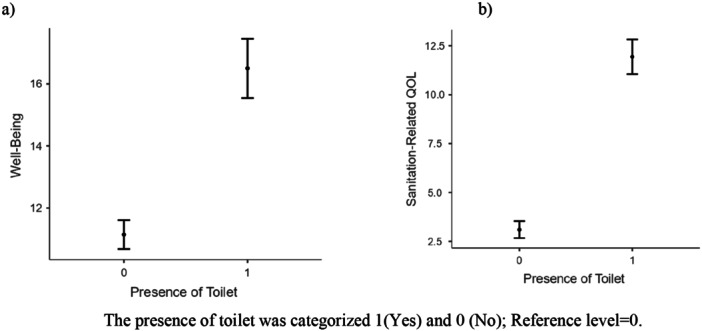 Figure 1
Peer Reviews
No public reviews on file for this paper yet. If you reviewed it on a platform where reviews are public (OpenReview, ICLR, NeurIPS, ICML), you can paste yours below so the community can read it here.
Videos
No videos yet. Explain this paper in a talk, walkthrough, or lecture? Add one.
Taxonomy
TopicsChild Nutrition and Water Access · Poverty, Education, and Child Welfare · Income, Poverty, and Inequality