Rsk2 inhibition induces an aneuploid post-mitotic arrest of cell cycle progression in osteosarcoma cells
Armelle Carreau, Christina Baldauf, Lena Warlich, Magdalena Weingartner, Laura Brylka, Michael Amling, Thorsten Schinke, Julia Luther

TL;DR
Inhibiting Rsk2 causes cell cycle arrest in osteosarcoma cells, suggesting a new therapeutic approach for this aggressive bone cancer.
Contribution
This study identifies Rsk2 and Aurora kinase B as potential therapeutic targets in osteosarcoma by linking their inhibition to cell cycle disruption.
Findings
Rsk2 deficiency or inhibition with BI-D1870 impairs cytokinesis and induces mitotic catastrophe in osteosarcoma cells.
Pharmacological inhibition of Aurora kinase B with Hesperadin similarly causes polynuclear cell accumulation.
The effects of Rsk2 inhibition and Aurora kinase B inhibition are observed in both mouse and human osteosarcoma cell lines.
Abstract
Osteosarcoma is the most common primary bone tumor, which is associated with a high mortality rate. The c-Fos transgenic mouse model has been described to spontaneously develop osteosarcoma, and the ribosomal S6 kinase 2 (Rsk2) was found to be essential for c-Fos-induced osteosarcoma formation in mice. By isolating and characterizing osteosarcoma cell lines from FosTg and FosTg;Rsk2−/y mice, we observed that Rsk2 deficiency impairs the growth advantage of FosTg cells. This can be explained by the aberrant number of nuclei due to impaired cytokinesis, inducing mitotic catastrophe. We therefore tested a pharmacological Rsk inhibitor (BI-D1870) for its ability to inhibit the proliferation of osteosarcoma cells and found that the effects observed by genetic Rsk2 inactivation were mimicked. BI-D1870 administration to FosTg cell lines led to reduced expression of Aurora kinase B. Therefore,…
Genes, proteins, chemicals, diseases, species, mutations and cell lines named across the full text — each resolved to its canonical identifier and authoritative record.
Click any figure to enlarge with its caption.
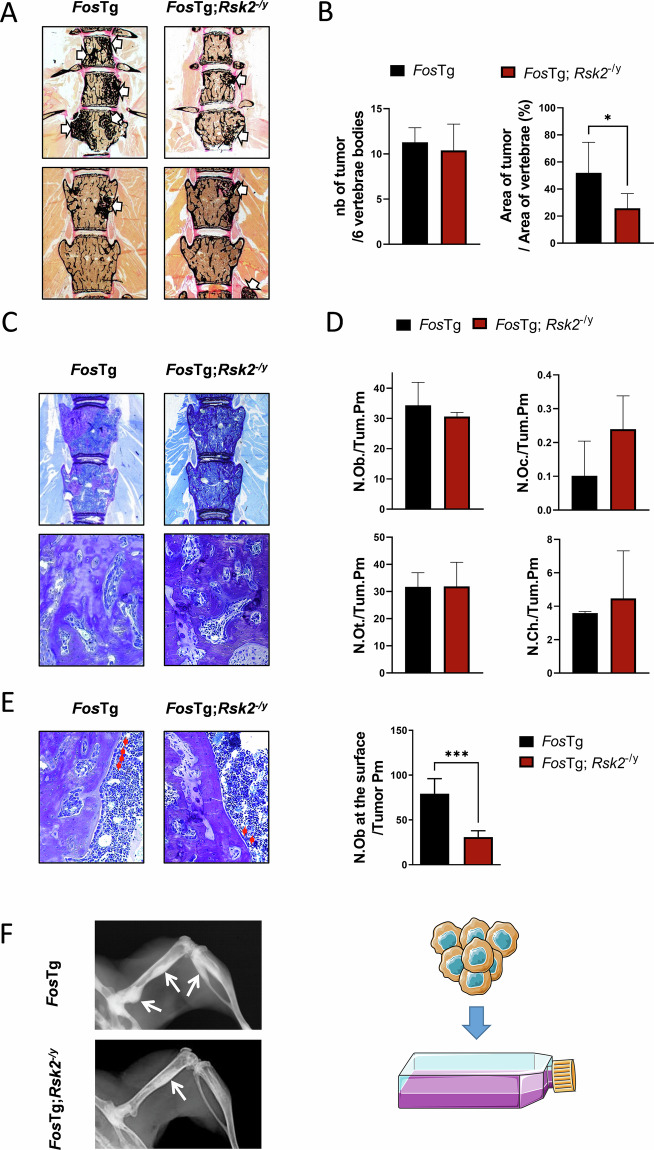 Figure 1
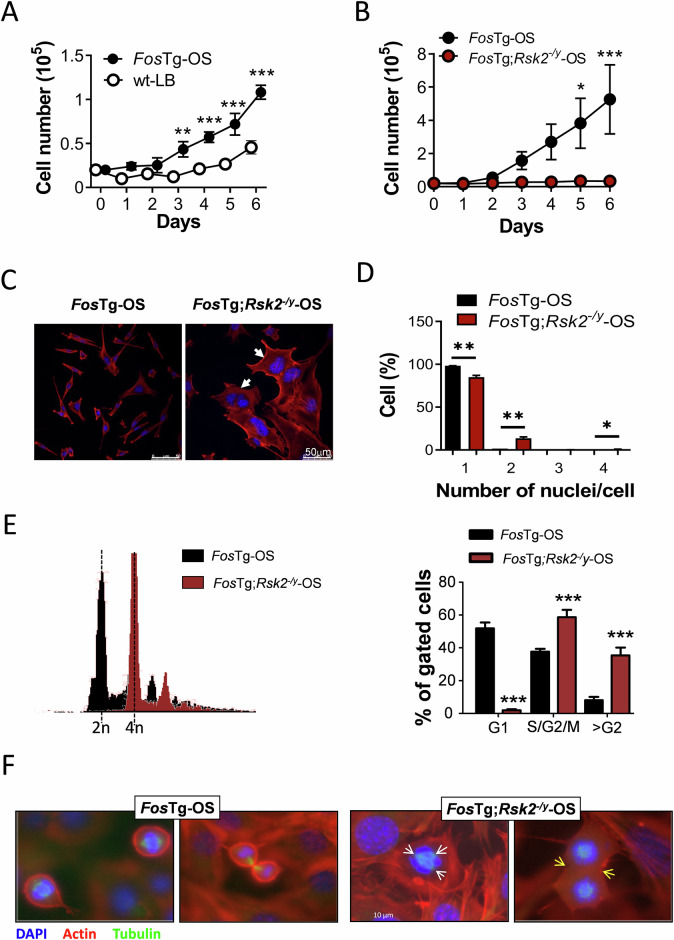 Figure 2
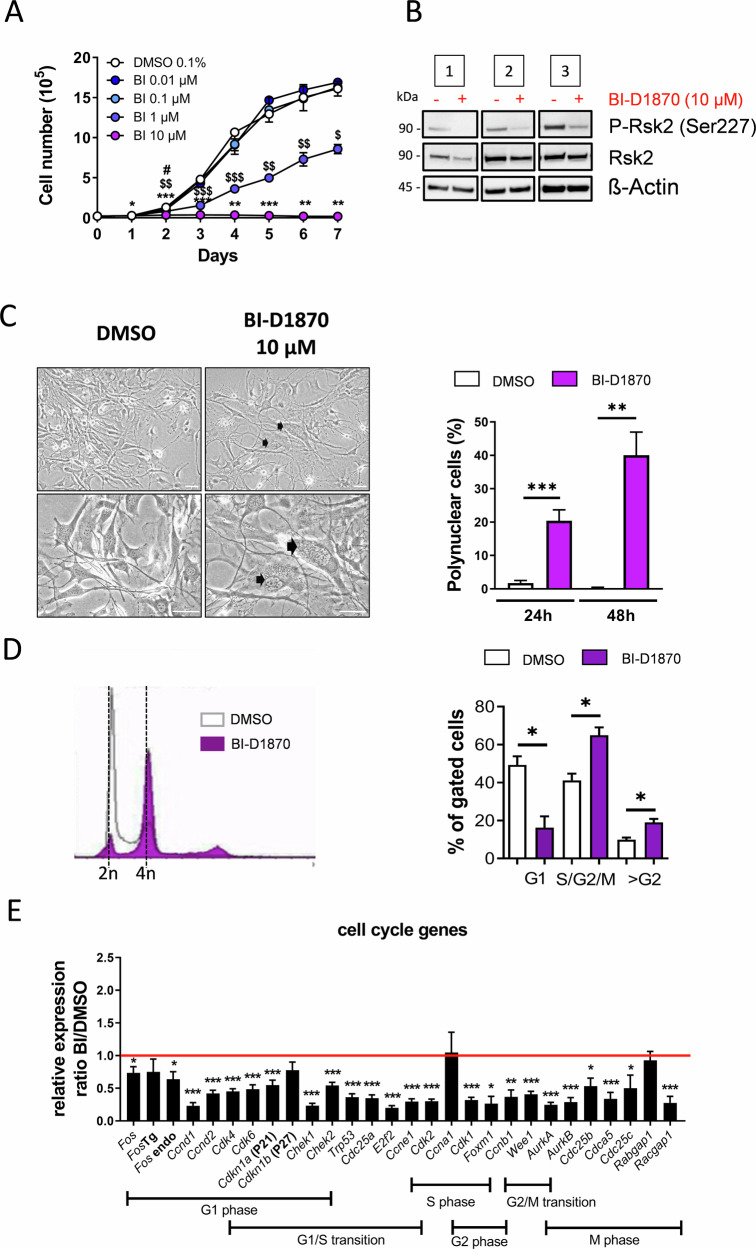 Figure 3
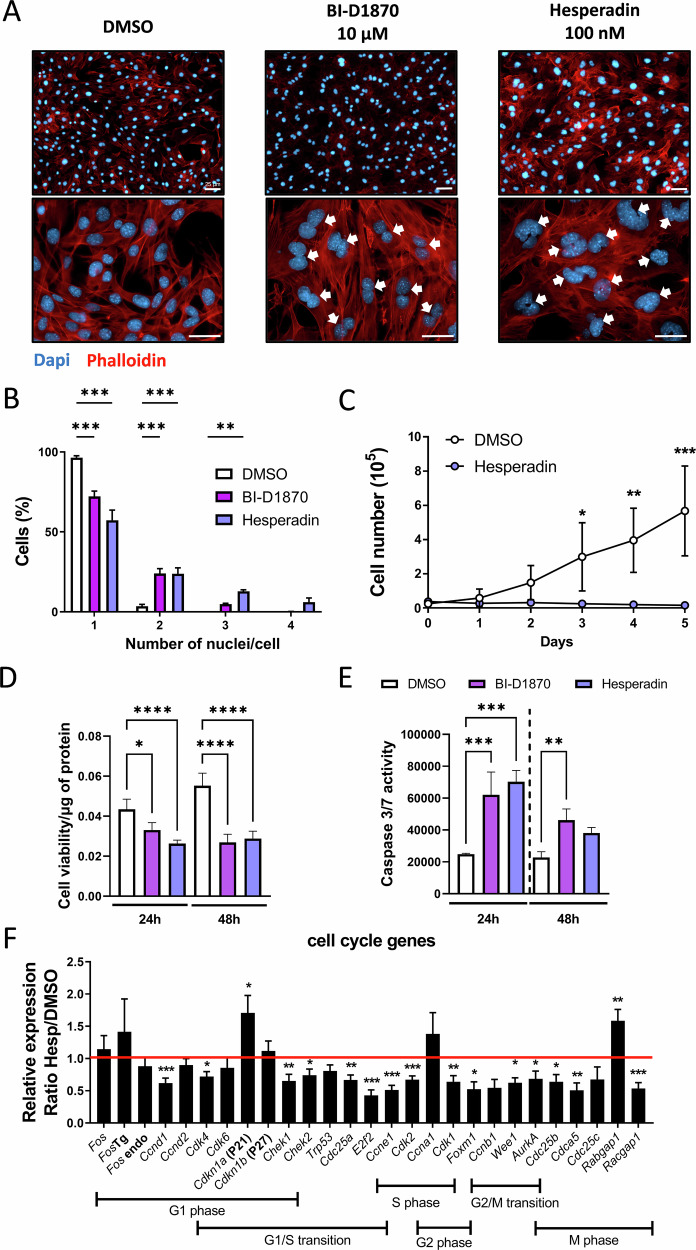 Figure 4
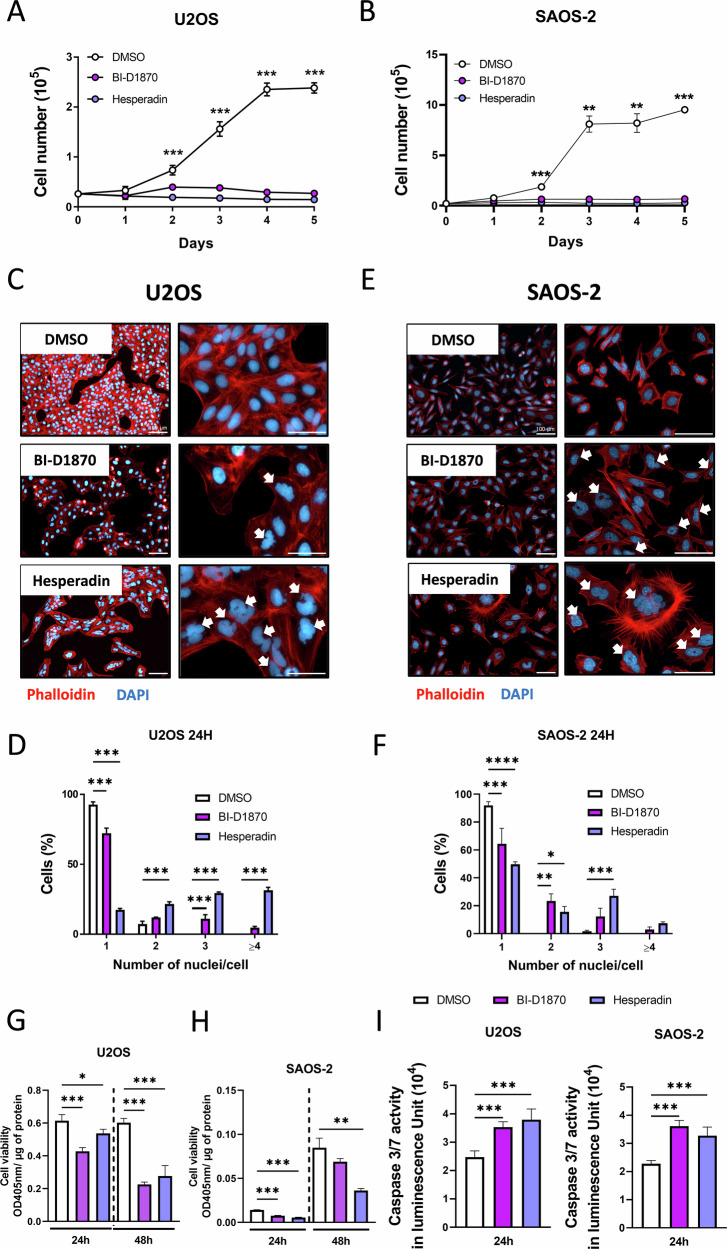 Figure 5
Peer Reviews
No public reviews on file for this paper yet. If you reviewed it on a platform where reviews are public (OpenReview, ICLR, NeurIPS, ICML), you can paste yours below so the community can read it here.
Videos
No videos yet. Explain this paper in a talk, walkthrough, or lecture? Add one.
Taxonomy
TopicsMicrotubule and mitosis dynamics · Cancer-related Molecular Pathways · Ubiquitin and proteasome pathways