PPE50 variants as novel phylogeographic signatures of host-pathogen co-evolution in tuberculosis
Christopher D’Souza, Jody E. Phelan, Paula-Josefina Gomez-Gonzalez, Joseph Thorpe, Taane G. Clark, Anthony G. Tsolaki

TL;DR
This paper identifies PPE50 protein variants in tuberculosis bacteria that are linked to geographic regions and suggest co-evolution with human hosts.
Contribution
The study introduces PPE50 as a novel subfamily of proteins with phylogeographic signatures of host-pathogen co-evolution in tuberculosis.
Findings
PPE50 variants are lineage-specific and stably associated with geographic regions in M. tuberculosis complex strains.
PPE50-381 is the ancestral variant found in both Ancient and Modern MTBC lineages.
Transcriptomic analysis shows ppe50 variant genes are expressed in specific MTBC lineages but deleted in others.
Abstract
PPE50 is a diverse novel subfamily of PE/PPE proteins in the Mycobacterium tuberculosis complex that show a phylogeographic distribution indicative host-pathogen co-evolution. While evidence supports co-evolution between Mycobacterium tuberculosis and humans, underlying mechanisms remain unclear. We identified PPE50 as a novel subfamily of PE/PPE proteins comprising eight variants. Surveying 387 M. tuberculosis complex (MTBC) strains representing global phylogeography, we found PPE50 variants are lineage-specific and stably associated with geographic regions, defining them as phylogeographically-associated proteins (PAPs). PPE50-381 is the ancestral variant (present in early-branching M. canettii) and the only variant observed in both Ancient and Modern MTBC lineages. Transcriptomic analysis confirmed that ppe50 variant genes are expressed in strains from respective MTBC lineages, but…
Genes, proteins, chemicals, diseases, species, mutations and cell lines named across the full text — each resolved to its canonical identifier and authoritative record.
Click any figure to enlarge with its caption.
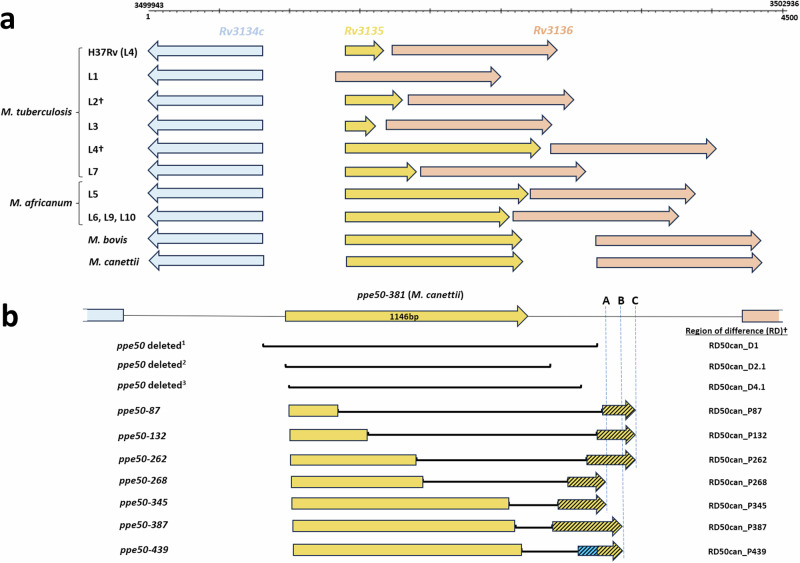 Figure 1
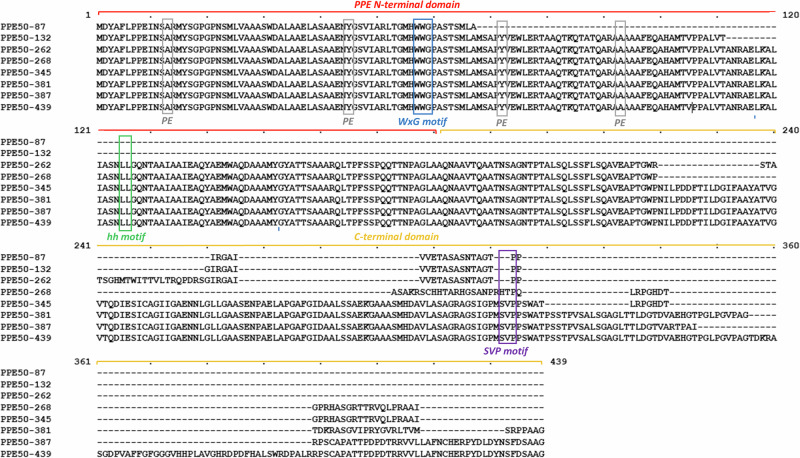 Figure 2
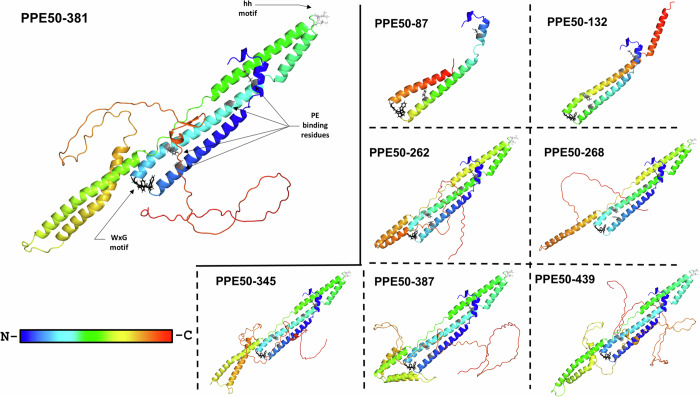 Figure 3
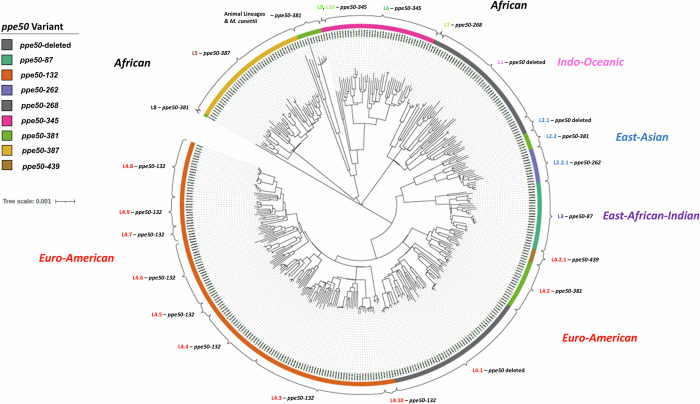 Figure 4
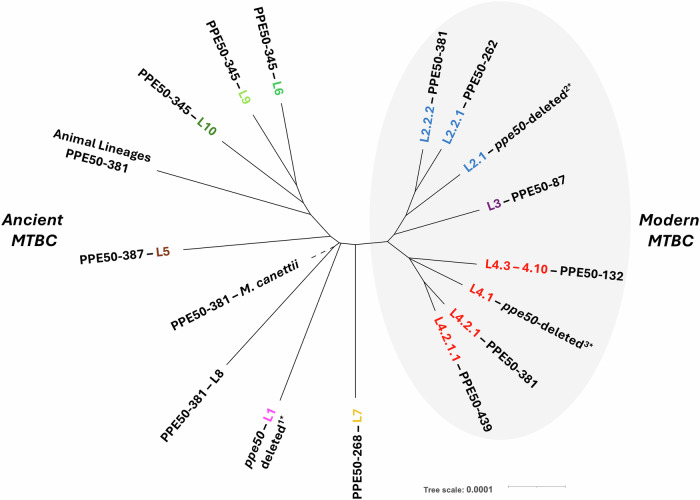 Figure 5
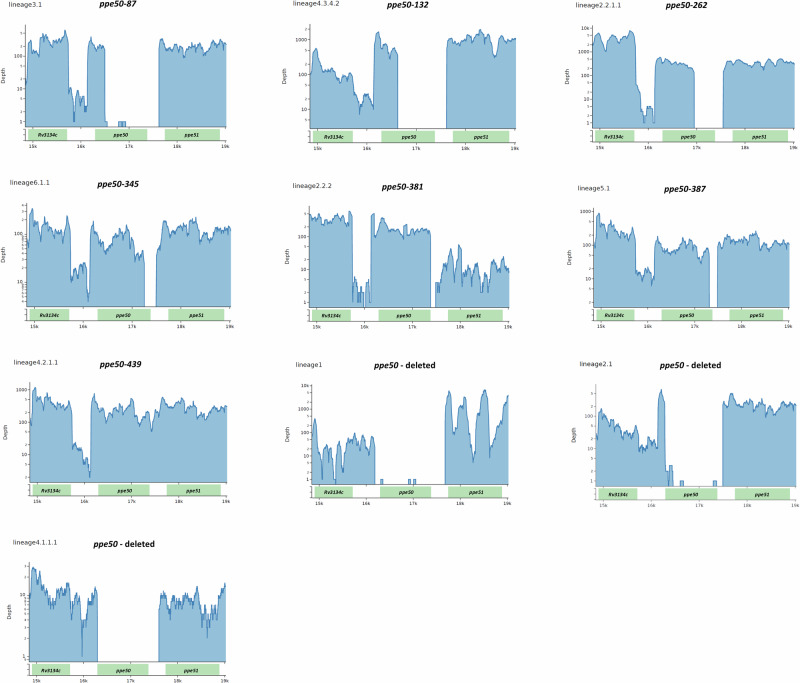 Figure 6
Peer Reviews
No public reviews on file for this paper yet. If you reviewed it on a platform where reviews are public (OpenReview, ICLR, NeurIPS, ICML), you can paste yours below so the community can read it here.
Videos
No videos yet. Explain this paper in a talk, walkthrough, or lecture? Add one.
Taxonomy
TopicsTuberculosis Research and Epidemiology · Mycobacterium research and diagnosis · Genomics and Phylogenetic Studies