LED-pumped room-temperature solid-state maser
Sophia Long, Lisa Lopez, Bethan Ford, François Balembois, Riccardo Montis, Wern Ng, Daan M. Arroo, Neil McN. Alford, Hamdi Torun, Juna Sathian

TL;DR
Researchers created a low-cost, room-temperature maser using LED light to generate microwave signals, which could improve quantum tech and space communication.
Contribution
A novel LED-pumped solid-state maser is demonstrated at room temperature, enabling low-cost and safe microwave amplification.
Findings
LED-pumped maser emits microwaves at 1.45 GHz with 200 µs duration and 0.014 mW output power.
The system uses a luminescent concentrator to enhance LED brightness for efficient maser operation.
The device operates safely at low voltage and outperforms non-laser pumped masers.
Abstract
Room-temperature MASERs (Microwave Amplification by Stimulated Emission of Radiation) amplify electromagnetic waves at microwave frequencies with minimal noise. We demonstrate a cost-effective LED-pumped maser using pentacene-doped para-terphenyl as the gain medium. Here, we show that LED light, which is brightness-enhanced and guided via a cerium-doped yttrium aluminium garnet luminescent concentrator, achieves persistent maser emission at 1.45 GHz with a duration of 200 µs and a microwave output power of 0.014 mW, surpassing previous non-laser pumped systems. Operating at low voltage, the LED-pumped maser ensures safety, reduced costs, and simple integration. Potential applications include sensitive magnetic resonance imaging, portable atomic clocks, quantum technologies, and enhanced deep-space radio astronomy. Juna Sathian and colleagues demonstrate a room-temperature LED-pumped…
Genes, proteins, chemicals, diseases, species, mutations and cell lines named across the full text — each resolved to its canonical identifier and authoritative record.
Click any figure to enlarge with its caption.
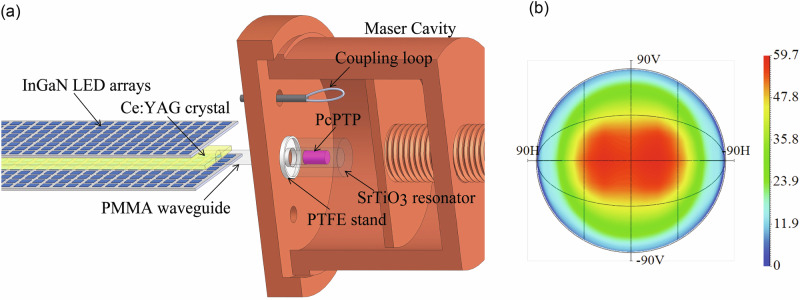 Figure 1
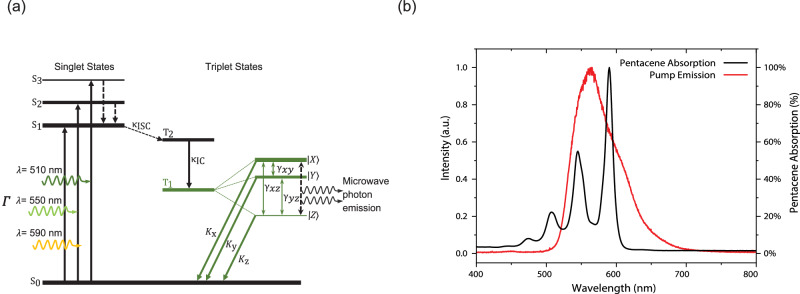 Figure 2
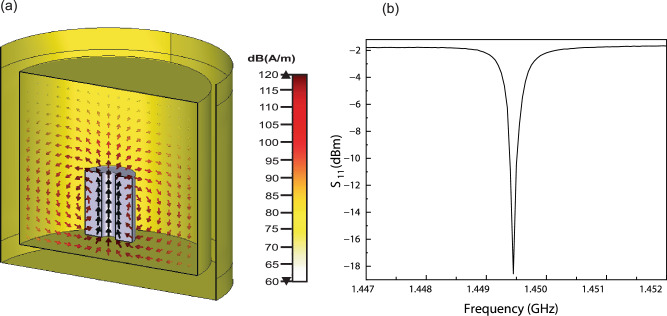 Figure 3
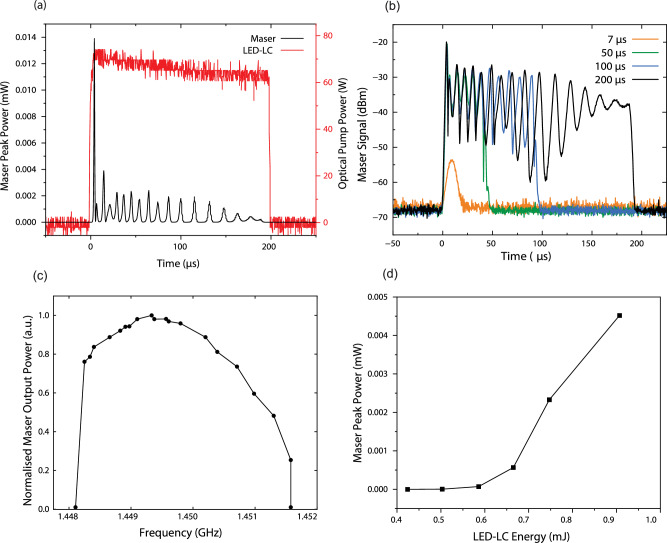 Figure 4
Peer Reviews
No public reviews on file for this paper yet. If you reviewed it on a platform where reviews are public (OpenReview, ICLR, NeurIPS, ICML), you can paste yours below so the community can read it here.
Videos
No videos yet. Explain this paper in a talk, walkthrough, or lecture? Add one.
Taxonomy
TopicsGaN-based semiconductor devices and materials · Semiconductor Quantum Structures and Devices · Spectroscopy and Laser Applications