Identifying temperature cues driving increased voltinism in a geometrid moth
Jemma Guthrie, Hannele M. Honkanen, Daniel T. Haydon, Colin E. Adams

TL;DR
This study shows how rising temperatures affect the number of generations per year in a moth species and how this change impacts its population.
Contribution
The study identifies a specific temperature cue linked to increased voltinism in a geometrid moth using long-term monitoring data.
Findings
The small phoenix moth shifted from one to two generations per year due to increased minimum temperatures.
The temperature cue occurs during the later part of the first generation's flight period.
The change in voltinism did not negatively affect population size.
Abstract
Identifying the environmental cues that determine the timing of developmental processes is vital to understanding the effects of climate change on populations. However, as developmental processes are inherently difficult to measure directly at the population level, the drivers and potential consequences of change in their timings remain unknown in most species. Here we explore the use of long-term monitoring data for assessments of change in the number of generations per year and its impact on abundance, demonstrating new applications for a rapidly growing data source. Data derived from a light trap in west-central Scotland operated over 56 years (1968 to 2023) showed that the small phoenix moth, Ecliptopera silaceata, switched from a univoltine to bivoltine generation pattern. This voltinism change was predicted by an increased minimum temperature in a critical time window towards the…
Genes, proteins, chemicals, diseases, species, mutations and cell lines named across the full text — each resolved to its canonical identifier and authoritative record.
Click any figure to enlarge with its caption.
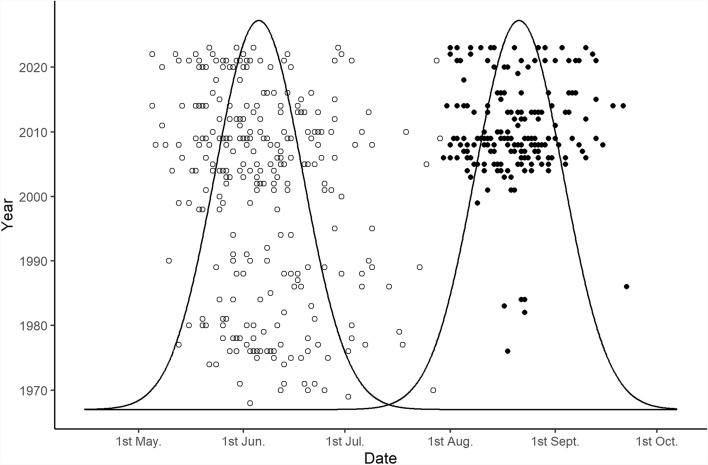 Figure 1
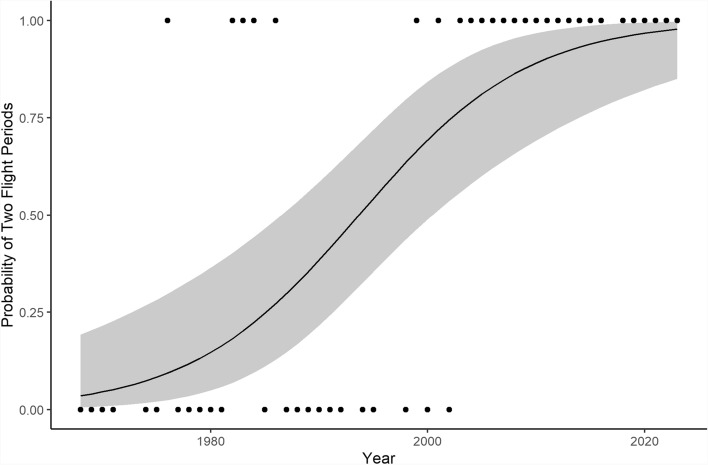 Figure 2
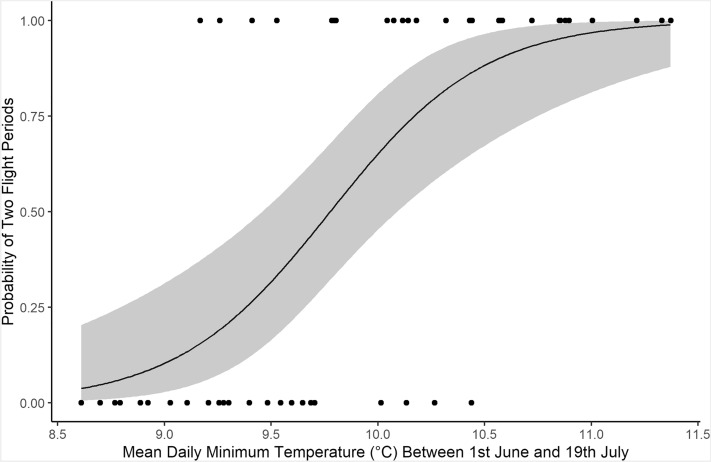 Figure 3
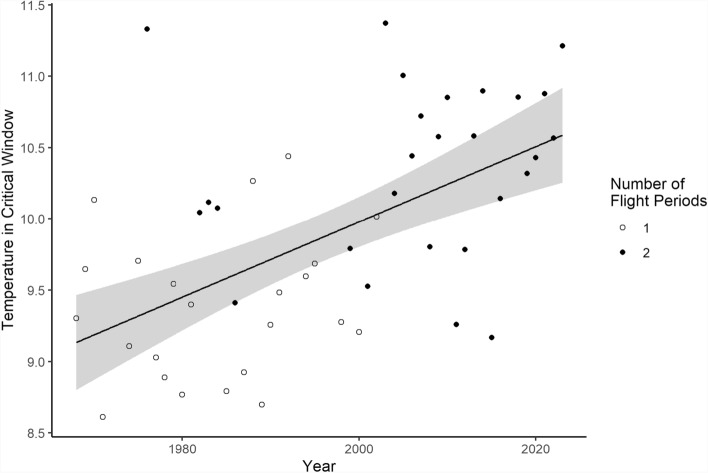 Figure 4
Peer Reviews
No public reviews on file for this paper yet. If you reviewed it on a platform where reviews are public (OpenReview, ICLR, NeurIPS, ICML), you can paste yours below so the community can read it here.
Videos
No videos yet. Explain this paper in a talk, walkthrough, or lecture? Add one.
Taxonomy
TopicsNeurobiology and Insect Physiology Research · Insect and Arachnid Ecology and Behavior · Physiological and biochemical adaptations