GC/MS-based quantitative analysis of sulfide ion in whole blood using ethenesulfonyl fluoride as a derivatization reagent
Ryosuke Shiraki, Shin Ogawa, Kengo Wakigawa, Hidehiko Okazaki, Akinaga Gohda, Takeshi Mori, Yoshiki Katayama

TL;DR
This paper introduces a simplified GC/MS method using ethenesulfonyl fluoride to accurately measure sulfide ions in whole blood for forensic and analytical applications.
Contribution
The use of ethenesulfonyl fluoride as a selective and efficient derivatization reagent for sulfide ion analysis in whole blood is novel.
Findings
ESF showed high reactivity toward sulfide ions, enabling selective derivatization.
The method achieved a detection limit of 0.01 μg/mL with excellent linearity (R2 = 0.9999).
Precision and accuracy were within ±10%, making it reliable for forensic and analytical use.
Abstract
Identification and quantification of sulfide ion in biological samples are required in forensic purpose. Gas chromatography-mass spectrometry (GC/MS) has been used for the analysis of sulfide ion by using derivatization reagents. However, conventional derivatization reagents require special attention for derivatization. To simplify the derivatization protocol, we examined ethenesulfonyl fluoride (ESF) as a derivatizing reagent of sulfide ion. To 100 μL of whole blood sample containing sulfide ion, 100 μL of boric acid buffer (pH 8.0), 100 μL of acetone solution containing internal standard, 100 μL of acetone solution containing 600 mM concentration of ESF, and 100 μL of hexane were added in a 1.5-mL plastic tube. The mixture was vortexed at room temperature, the tubes were centrifuged, and the organic layer was injected into the GC/MS. ESF exhibited higher reactivity toward sulfide…
Genes, proteins, chemicals, diseases, species, mutations and cell lines named across the full text — each resolved to its canonical identifier and authoritative record.
Click any figure to enlarge with its caption.
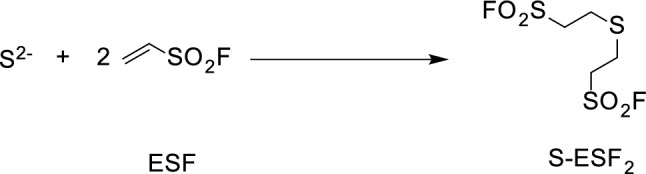 Figure 1
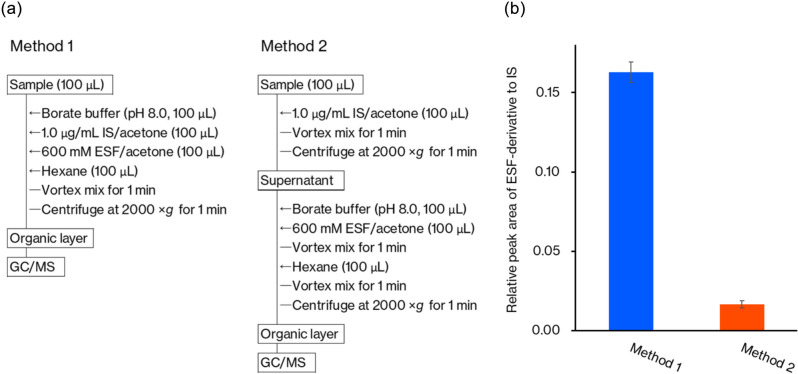 Figure 2
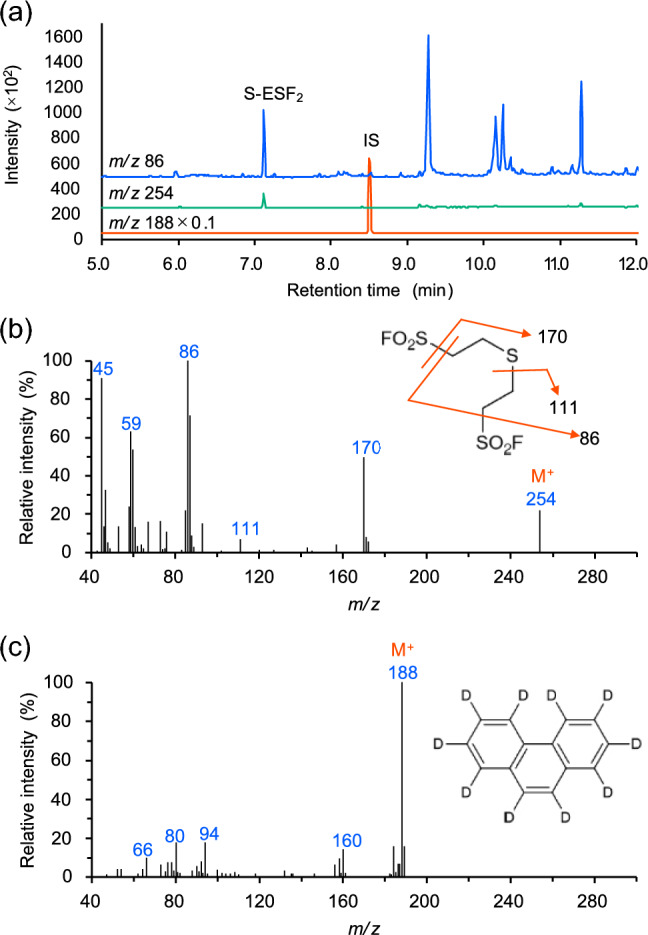 Figure 3
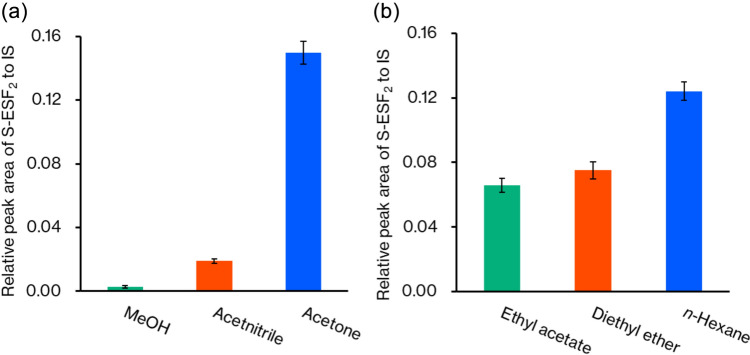 Figure 4
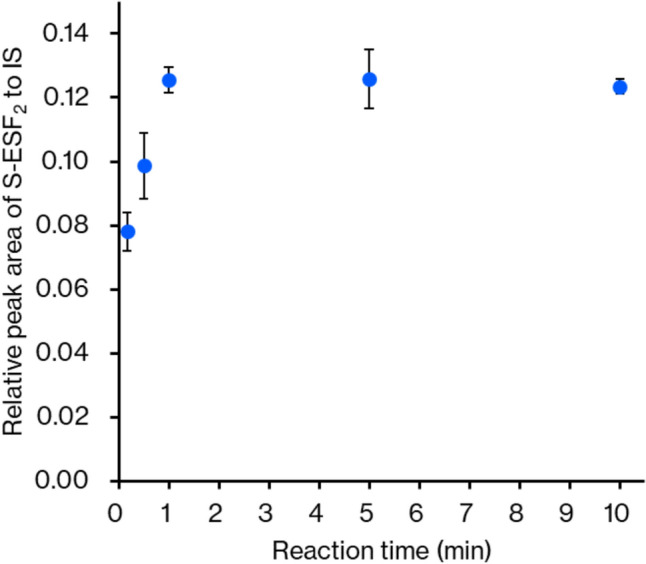 Figure 5
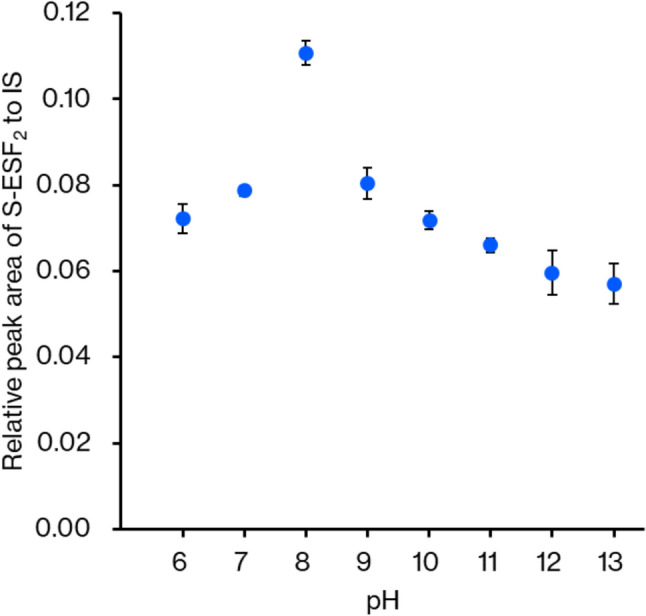 Figure 6
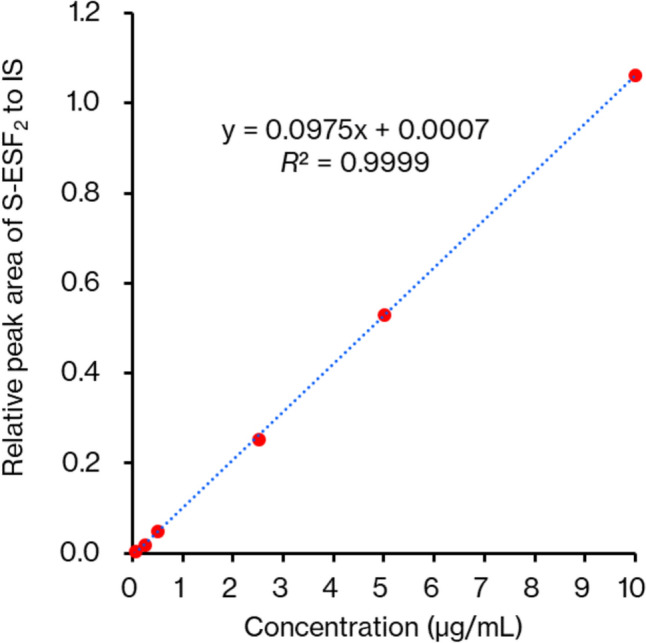 Figure 7
Peer Reviews
No public reviews on file for this paper yet. If you reviewed it on a platform where reviews are public (OpenReview, ICLR, NeurIPS, ICML), you can paste yours below so the community can read it here.
Videos
No videos yet. Explain this paper in a talk, walkthrough, or lecture? Add one.
Taxonomy
TopicsSulfur Compounds in Biology · Amino Acid Enzymes and Metabolism · Molecular Sensors and Ion Detection