Incentives and practice improve prospective memory performance in older adults
Marta Menéndez-Granda, Nadine Schmidt, Michael Orth, Sebastian Horn, Matthias Kliegel, Jessica Peter

TL;DR
Older adults perform better in memory tasks when motivated by avoiding losses rather than gaining rewards, and practice helps with certain types of memory.
Contribution
The study shows that avoiding financial losses is more effective than financial gains for improving memory performance in older adults.
Findings
Financial losses led to faster event-based memory responses and more strategic time-based memory checking.
Practice improved event-based memory but had no effect on time-based memory.
Incentives should be tailored to the type of memory being tested for optimal results.
Abstract
Prospective memory can decline with age. Incentives or practice may improve it. Previous research indicated that avoiding financial losses may be more appealing for older adults than achieving financial gains. In this study, we examined whether financial gains, financial losses, or practice will improve prospective memory performance in older adults. We included N = 132 healthy adults (60–80 years old, 35% female). We used a between-subject factor ‘group’ (event-based or time-based prospective memory; financial gains or losses) and a within-subject factor ‘practice’ comprising 2 blocks (first or second half of task trials). All participants performed a 1-back task as an ongoing task and a prospective memory task embedded in the 1-back task. We used linear effects modelling to examine whether incentives or practice improved task accuracy, response times, or clock checking. The…
Genes, proteins, chemicals, diseases, species, mutations and cell lines named across the full text — each resolved to its canonical identifier and authoritative record.
Click any figure to enlarge with its caption.
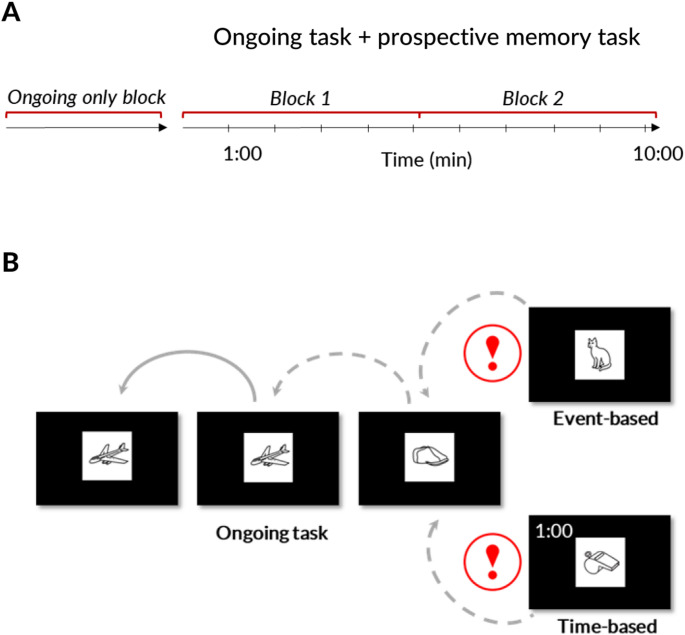 Figure 1
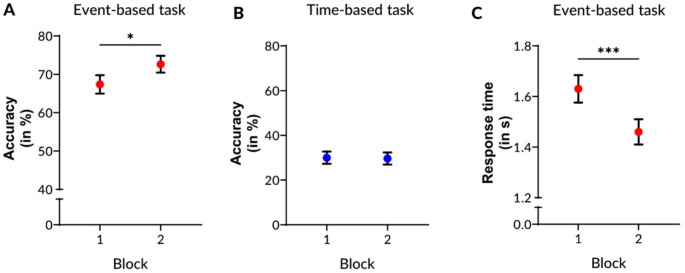 Figure 2
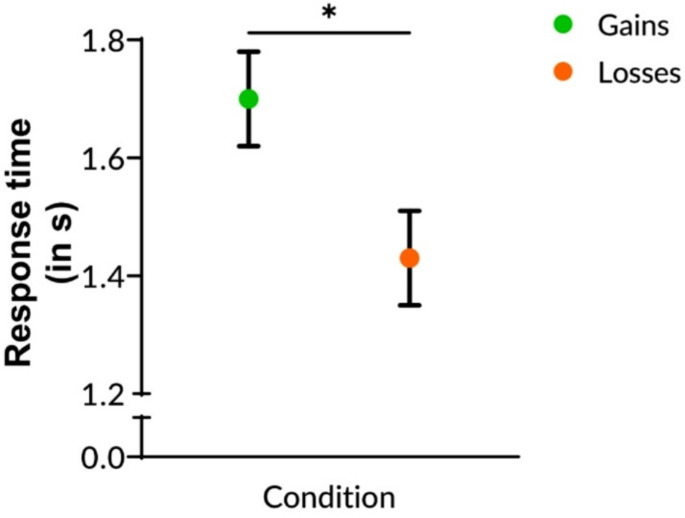 Figure 3
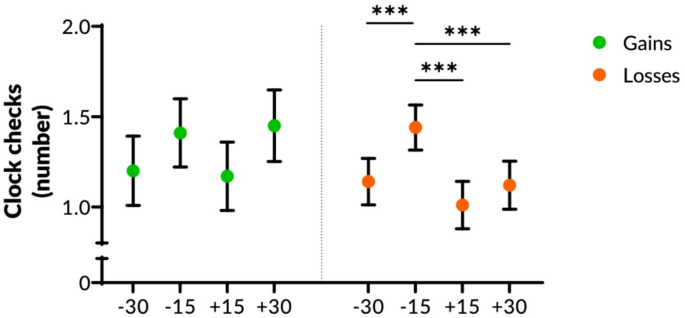 Figure 4
Peer Reviews
No public reviews on file for this paper yet. If you reviewed it on a platform where reviews are public (OpenReview, ICLR, NeurIPS, ICML), you can paste yours below so the community can read it here.
Videos
No videos yet. Explain this paper in a talk, walkthrough, or lecture? Add one.
Taxonomy
TopicsCognitive Functions and Memory · EEG and Brain-Computer Interfaces · Dementia and Cognitive Impairment Research