Small Things that Make a Big Difference: Single-Cell Transcriptomic of Nanociliates Reveals Genes Potentially Involved in Mixotrophy
Filomena Romano, Uwe John, Michele Laval-Peuto, Paraskevi Pitta

TL;DR
This study explores the genes of marine nanociliates to understand their mixotrophic abilities, combining photosynthesis and digestion.
Contribution
The study identifies genes related to both photosynthesis and digestion in nanociliates, suggesting a broader basis for mixotrophy than previously thought.
Findings
Two nanociliates clustered with Tintinnida, while three clustered with Oligotrichida based on phylogenetic analysis.
Photosynthesis-related genes were found in all transcriptomes, along with genes for phagosome, lysosome, and metabolic pathways.
The findings suggest that mixotrophy in nanociliates involves more than just photosynthesis-related genes.
Abstract
Nanociliates play an important role in the microbial food web of oligotrophic marine systems as grazers of picoplankton on one side, and as prey for microplankton, on the other. However, knowledge on their taxonomy, phylogeny, and trophic strategies is very limited, as well as their potential role as mixotrophs. In the present study, we investigated the transcriptomes of five marine planktonic nanociliates isolated from the Eastern Mediterranean Sea. Our aim was the following: (i) to characterize the phylogenetic placement of these cells using concatenated phylotranscriptomic and (ii) to identify genes potentially involved in mixotrophy by focusing on both photosynthesis and digestion-related genes (phagosome, lysosome). Phylogenetic reconstruction revealed that two cells clustered with Tintinnida, while the other three clustered with Oligotrichida. Reciprocal best hits (RHBs) BlastP…
Genes, proteins, chemicals, diseases, species, mutations and cell lines named across the full text — each resolved to its canonical identifier and authoritative record.
Click any figure to enlarge with its caption.
 Figure 1
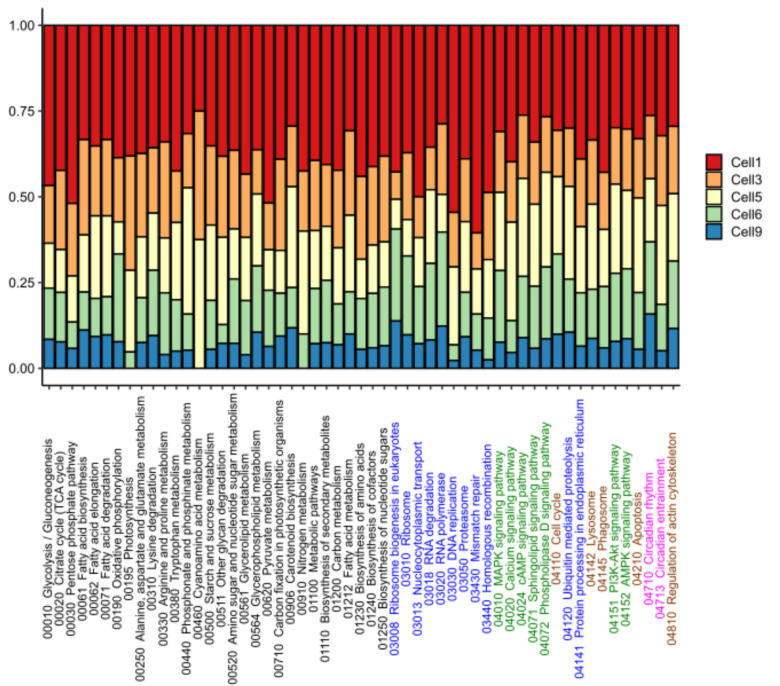 Figure 2
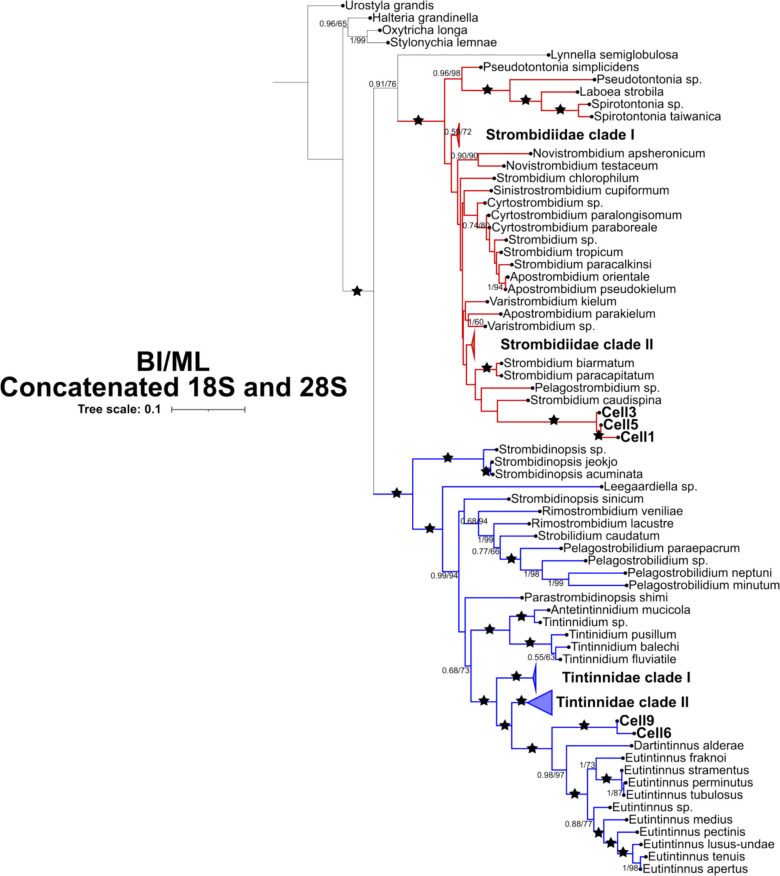 Figure 3
 Figure 4
Peer Reviews
No public reviews on file for this paper yet. If you reviewed it on a platform where reviews are public (OpenReview, ICLR, NeurIPS, ICML), you can paste yours below so the community can read it here.
Videos
No videos yet. Explain this paper in a talk, walkthrough, or lecture? Add one.
Taxonomy
TopicsMicrobial Community Ecology and Physiology · Protist diversity and phylogeny · Genomics and Phylogenetic Studies