Light-induced increase in the steady-state chlorophyll fluorescence in cyanobacteria reflects induction of energy dissipation complementary to orange carotenoid protein-dependent thermal dissipation
Takako Ogawa, Hiroko Takahashi, Yoshitaka Nishiyama, Yukako Hihara, Kintake Sonoike

TL;DR
Cyanobacteria use a light-induced increase in chlorophyll fluorescence to manage excess energy when their usual heat-dissipation method is insufficient.
Contribution
The study reveals a complementary energy dissipation mechanism in cyanobacteria that operates alongside OCP-dependent thermal dissipation.
Findings
OCP depletion leads to higher chlorophyll fluorescence without affecting photosynthetic yield.
Overexpression of OCP reduces both fluorescence and photosynthetic efficiency under high light.
Cyanobacteria employ an OCP-independent strategy to manage excess light energy.
Abstract
Under high-light conditions, the dissipation of excess energy as heat in the light-harvesting antenna is essential for photosynthetic organisms to protect the photosynthetic machinery. In the case of cyanobacteria, however, the induction of the thermal dissipation in the antennae is insufficient to dissipate all excess energy, which is manifested as the increase in the steady-state level of chlorophyll fluorescence (Fs) under high light. To elucidate the underlying cause of the incomplete dissipation of excess light in the antenna, we investigated the impact of depletion and overexpression of orange carotenoid protein (OCP), which is essential to induce thermal dissipation in the antenna, on photosynthesis in Synechocystis sp. PCC 6803. The suppression of the OCP-dependent thermal dissipation resulted in elevated Fs with a constant yield of photosynthesis, suggesting that the…
Genes, proteins, chemicals, diseases, species, mutations and cell lines named across the full text — each resolved to its canonical identifier and authoritative record.
Click any figure to enlarge with its caption.
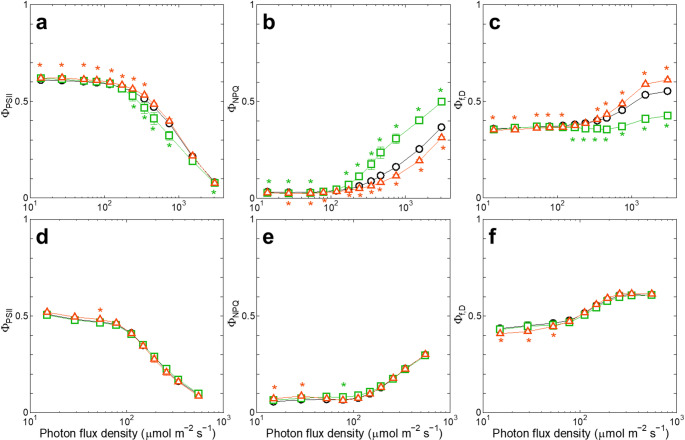 Figure 1
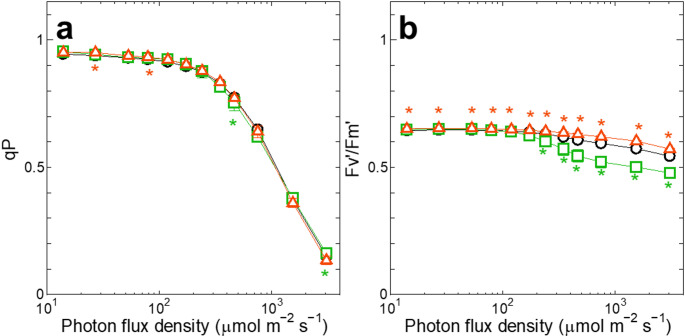 Figure 2
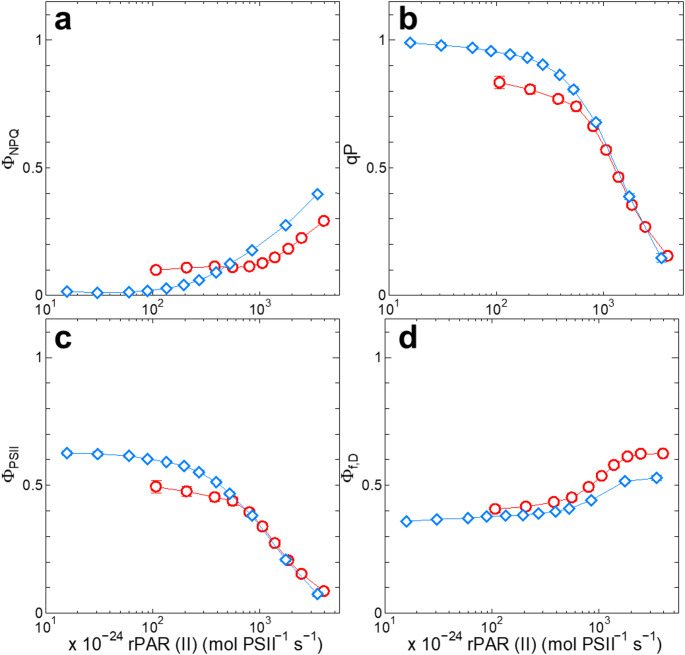 Figure 3
Peer Reviews
No public reviews on file for this paper yet. If you reviewed it on a platform where reviews are public (OpenReview, ICLR, NeurIPS, ICML), you can paste yours below so the community can read it here.
Videos
No videos yet. Explain this paper in a talk, walkthrough, or lecture? Add one.
Taxonomy
TopicsPhotosynthetic Processes and Mechanisms · Photoreceptor and optogenetics research · Biocrusts and Microbial Ecology