Optoionics: New opportunity for ionic conduction-based radiation detection
Thomas Defferriere, Harry L. Tuller

TL;DR
Optoionics offers a new approach to radiation detection using light-modulated ionic transport in solid materials.
Contribution
The paper introduces optoionics as a novel platform for radiation detection leveraging ionic conduction and grain boundary phenomena.
Findings
Grain boundary effects can modulate ionic current for sensitive radiation detection.
Ionic solids show robustness and scalability for practical radiation detection applications.
Theoretical and experimental foundations are outlined for optimizing optoionic devices.
Abstract
Optoionics, involving light-modulated ionic transport in ionic solids, parallels optoelectronics in semiconductors and offers novel device design opportunities across various fields. Among these opportunities, grain boundary phenomena related to radiation-induced electron/hole pair generation and charge trapping at the boundaries causing a modulation in ionic current could enable fast, sensitive, and reversible radiation detectors. The robustness of ionic solids in chemical, structural, and thermal aspects in turn makes them scalable and robust alternatives to traditional semiconductor detectors. This article explores the theoretical underpinnings, experimental breakthroughs, and design considerations needed to optimize such optoionic devices.
Genes, proteins, chemicals, diseases, species, mutations and cell lines named across the full text — each resolved to its canonical identifier and authoritative record.
Click any figure to enlarge with its caption.
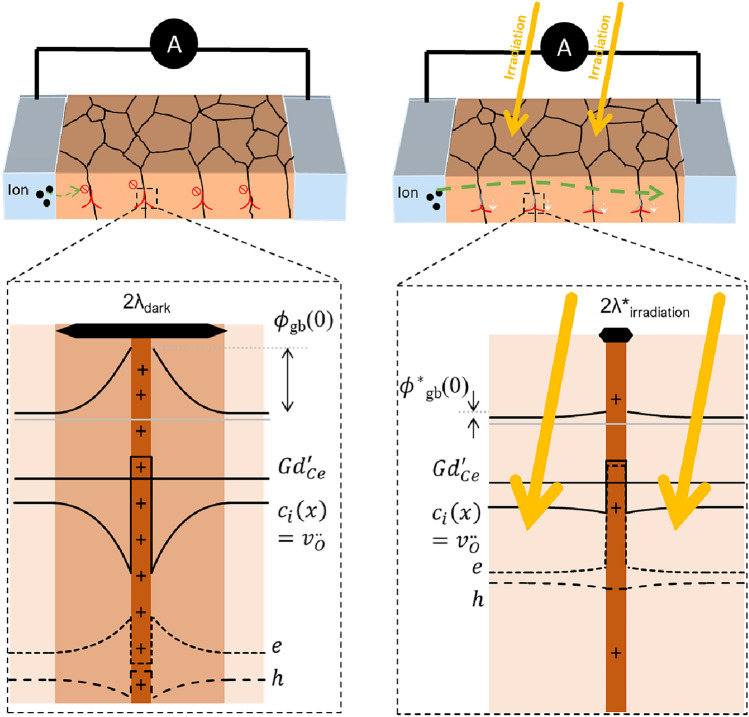 Figure 1
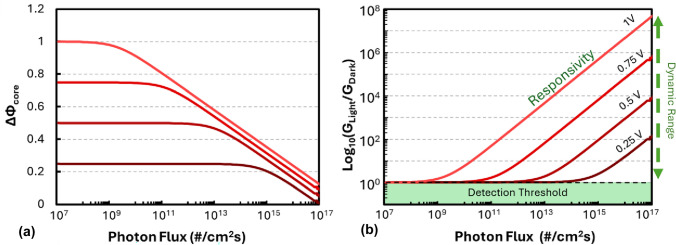 Figure 2
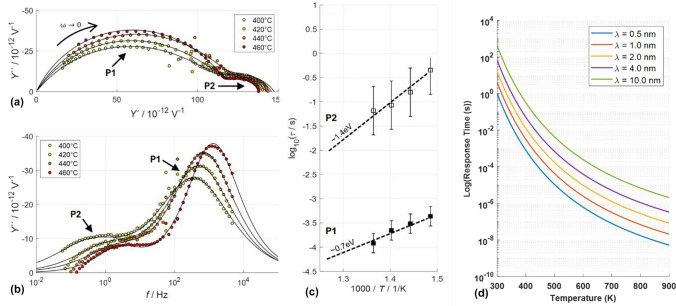 Figure 3
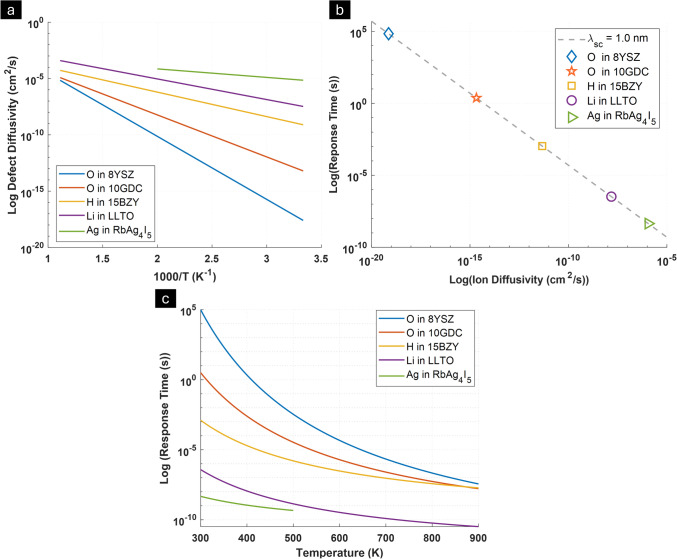 Figure 4
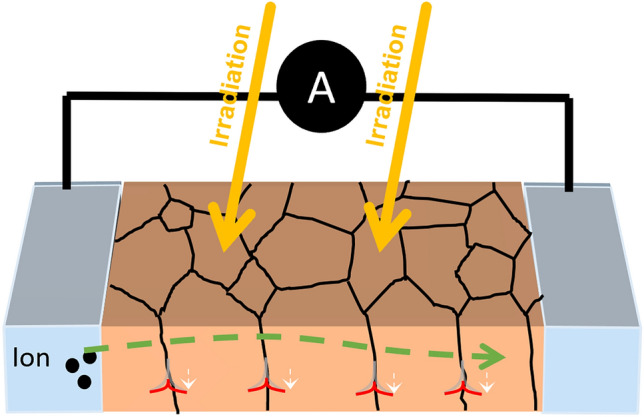 Figure 5
Peer Reviews
No public reviews on file for this paper yet. If you reviewed it on a platform where reviews are public (OpenReview, ICLR, NeurIPS, ICML), you can paste yours below so the community can read it here.
Videos
No videos yet. Explain this paper in a talk, walkthrough, or lecture? Add one.
Taxonomy
TopicsGas Sensing Nanomaterials and Sensors · Analytical Chemistry and Sensors · Advanced Chemical Sensor Technologies