Conduction defects and arrhythmias in mdx mice are not associated with a degeneration of the cardiac Purkinje network
Juliette Vahdat, Jakob Sauer, Jessica Marksteiner, Karlheinz Hilber, Lucile Miquerol

TL;DR
This study shows that mdx mice, a model for Duchenne muscular dystrophy, develop heart rhythm issues and conduction defects without damage to the Purkinje network, suggesting other factors like sodium current loss and fibrosis are to blame.
Contribution
The study reveals that arrhythmias in mdx mice occur without Purkinje network degeneration, challenging previous assumptions about the cause of cardiac issues in Duchenne muscular dystrophy.
Findings
mdx mice showed progressive PR interval increase and prolonged QRS compared to wild-type mice.
Premature ventricular complexes were more prevalent in mdx mice after β-adrenergic stimulation.
Conduction defects in mdx mice were linked to sodium current reduction and ventricular dyssynchrony, not Purkinje fiber degeneration.
Abstract
Duchenne muscular dystrophy (DMD) is a severe X-chromosomal disease characterised by progressive muscle weakness and degeneration. Cardiac involvement is inevitable in DMD patients and ventricular arrhythmias are a high-risk factor for mortality in these patients. Ventricular arrhythmias are often triggered by a dysfunctional ventricular conduction system, which serves as an electrical circuit in the heart to ensure the synchronization of the heartbeat. This system includes Purkinje fibers which are susceptible to degeneration in DMD patients, leading to cardiac conduction disorders. To unravel whether a defective ventricular conduction system may account for arrhythmogenesis in a DMD mouse model, we performed a longitudinal study of the cardiac electrical activity in mdx mice. ECG recordings showed a progressive increase in PR interval over time and a prolonged QRS in mdx compared to…
Genes, proteins, chemicals, diseases, species, mutations and cell lines named across the full text — each resolved to its canonical identifier and authoritative record.
Click any figure to enlarge with its caption.
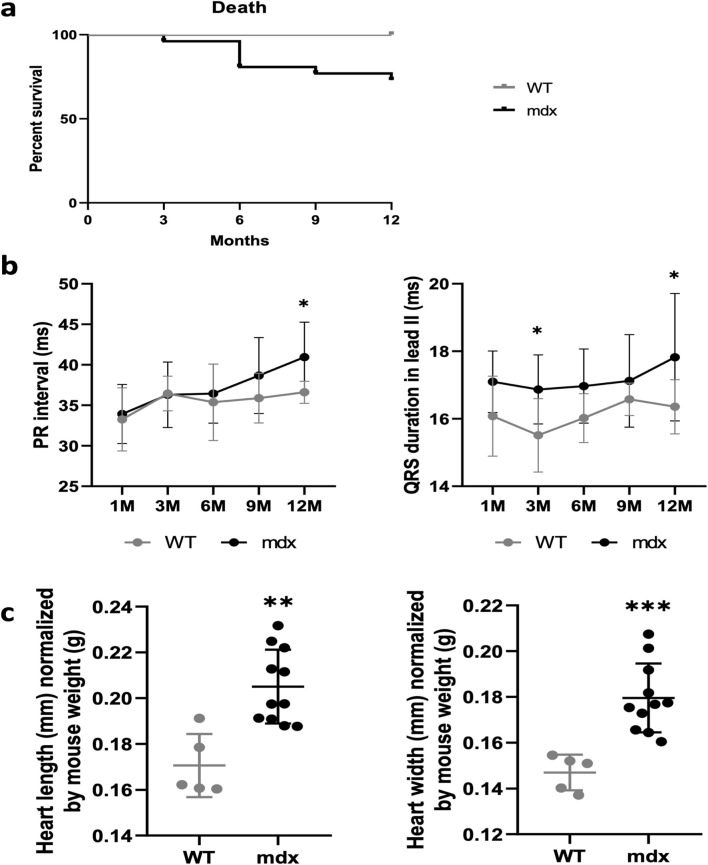 Figure 1
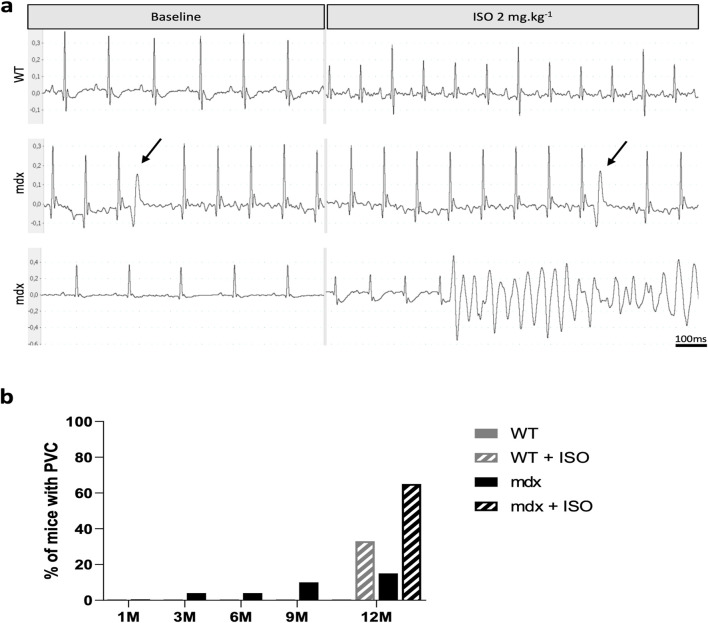 Figure 2
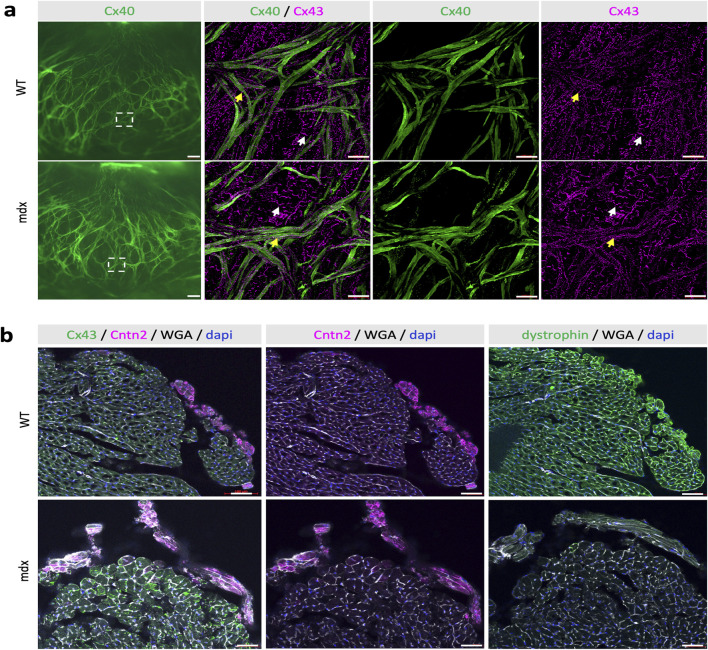 Figure 3
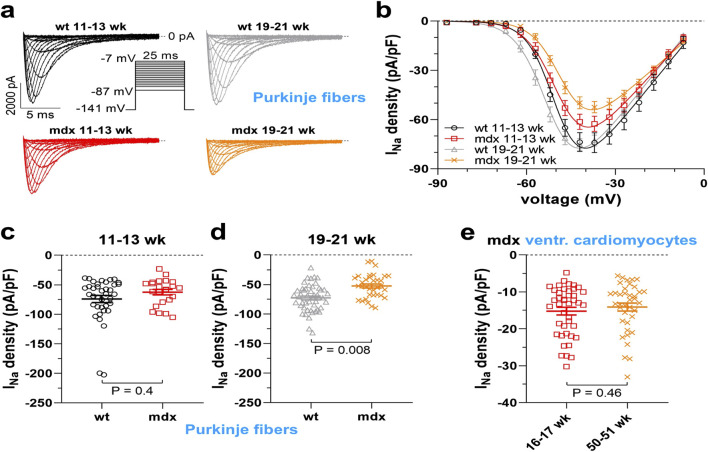 Figure 4
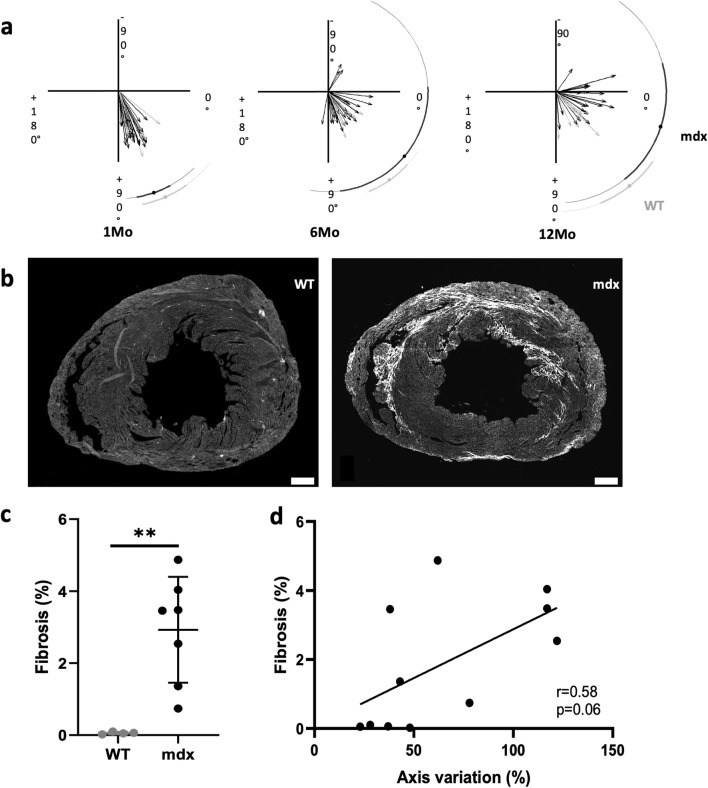 Figure 5
Peer Reviews
No public reviews on file for this paper yet. If you reviewed it on a platform where reviews are public (OpenReview, ICLR, NeurIPS, ICML), you can paste yours below so the community can read it here.
Videos
No videos yet. Explain this paper in a talk, walkthrough, or lecture? Add one.
Taxonomy
TopicsCardiovascular Effects of Exercise · Cardiomyopathy and Myosin Studies · Muscle Physiology and Disorders