Immunobiological effects of tocilizumab across respiratory subphenotypes in COVID-19 ARDS
Emma Rademaker, Daan F. L. Filippini, Jelle L. G. Haitsma Mulier, Marleen A. Slim, Rombout B. E. van Amstel, Sivasubramanium V. Bhavani, Nicole P. Juffermans, Harm-Jan S. de Grooth, Lennie P. G. Derde, Olaf L. Cremer, Lieuwe D. J. Bos

TL;DR
This study examines how tocilizumab affects immune responses in two types of severe COVID-19 lung disease, finding that the drug's impact is stronger than the differences between the types.
Contribution
The study reveals that tocilizumab's effect on inflammation is more significant than respiratory subphenotype differences in severe COVID-19.
Findings
High-power subphenotype showed higher SP-D, thrombomodulin, and TNF-RI levels at intubation.
Tocilizumab treatment explained more variance in IL-6 and angiopoietin-2 levels than subphenotype.
Respiratory subphenotype did not influence tocilizumab's effect on mortality.
Abstract
Two distinct longitudinal respiratory subphenotypes have recently been described in COVID-19-related acute respiratory distress syndrome (ARDS). These subphenotypes exhibit dynamic immunobiological changes that may help guide immunomodulatory interventions. However, the extent to which the immune response is determined by respiratory subphenotype in the presence of concurrent immunomodulatory treatment remains unclear. We investigated the independent and combined effects of respiratory subphenotype and tocilizumab on inflammatory response and clinical outcomes. We analyzed patients from existing COVID-19 biobanks who were consecutively admitted to the ICU and received more than 4 days of invasive mechanical ventilation between March 2020 and May 2022. Patients were classified into two previously described longitudinal respiratory subphenotypes—characterized by mechanical power, minute…
Genes, proteins, chemicals, diseases, species, mutations and cell lines named across the full text — each resolved to its canonical identifier and authoritative record.
Click any figure to enlarge with its caption.
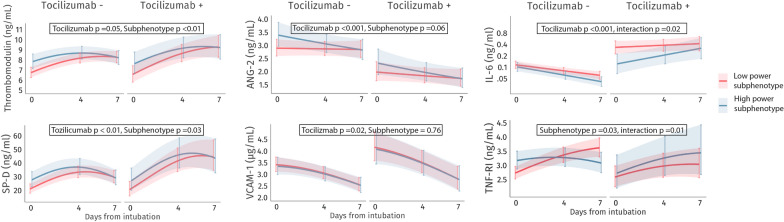 Figure 1
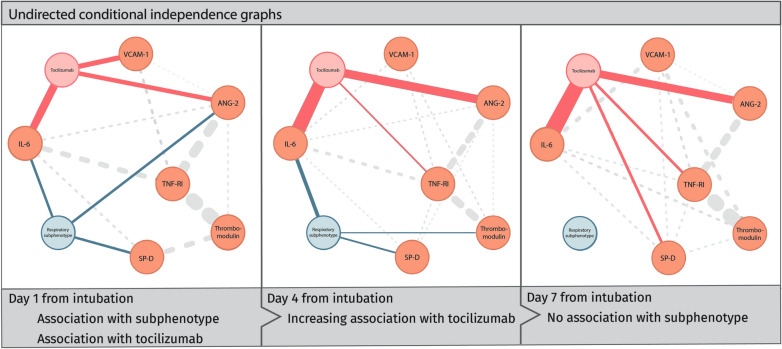 Figure 2
Peer Reviews
No public reviews on file for this paper yet. If you reviewed it on a platform where reviews are public (OpenReview, ICLR, NeurIPS, ICML), you can paste yours below so the community can read it here.
Videos
No videos yet. Explain this paper in a talk, walkthrough, or lecture? Add one.
Taxonomy
TopicsRespiratory Support and Mechanisms · COVID-19 Clinical Research Studies · Sepsis Diagnosis and Treatment