Impacts of feed gases for micro-nano bubble water treatments: Antimicrobial efficacy against Escherichia coli and Staphylococcus aureus on ‘Fan Retief’ guava fruit
Harold K. Malahlela, Zinash A. Belay, Rebogile R. Mphahlele, Lize Engelbrecht, Janica C. Theron, Oluwafemi J. Caleb

TL;DR
This study explores using micro-nano bubble water with different gases to reduce bacteria on guava fruits, offering a safer alternative to chlorine.
Contribution
The study introduces micro-nano bubble water with ozone as a novel decontamination method for fresh produce.
Findings
O3-MNB reduced E. coli on guava fruits significantly after 60 minutes.
S. aureus was more resistant to MNB treatments than E. coli.
Cell damage from O3-MNB was confirmed via electron microscopy.
Abstract
Microbes on fresh produce are often controlled by chlorine-based sanitizers, due to there is growing demand for safe alternatives. This work investigated effects of micro-nano bubble (MNB) water generated using air, oxygen (O2), or ozone (O3) against bacteria contaminants encountered along the fresh produce value chain. Escherichia coli (ATCC 25922) and Staphylococcus aureus (ATCC 25923) broth were treated with distilled water (DW), sodium hypochlorite (NaOCl, 200 mg/L, 5 min), air-MNB, O2-MNB, and O3-MNB for 30- and 60-min. Scanning-transmission electron microscopy confirmed that the bacterial survival population was reduced via various types of cell damage under O3-MNB. S. aureus was more resistant than E. coli to the MNB treatments. This could be due to the thicker layer of peptidoglycan surrounding the cell membrane protecting against oxidative species. On guava fruits, O3-MNB-60…
Genes, proteins, chemicals, diseases, species, mutations and cell lines named across the full text — each resolved to its canonical identifier and authoritative record.
Click any figure to enlarge with its caption.
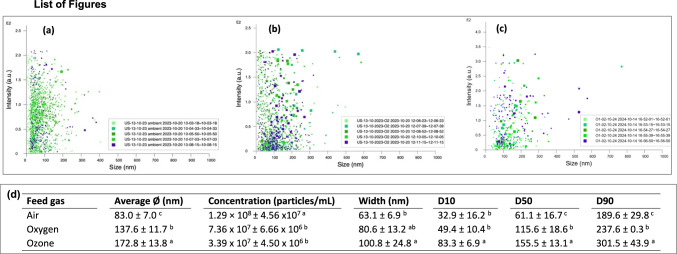 Figure 1
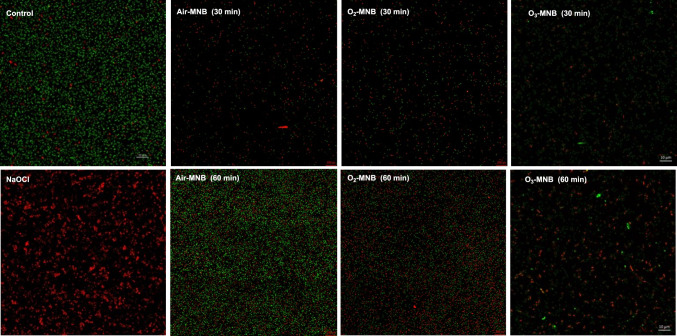 Figure 2
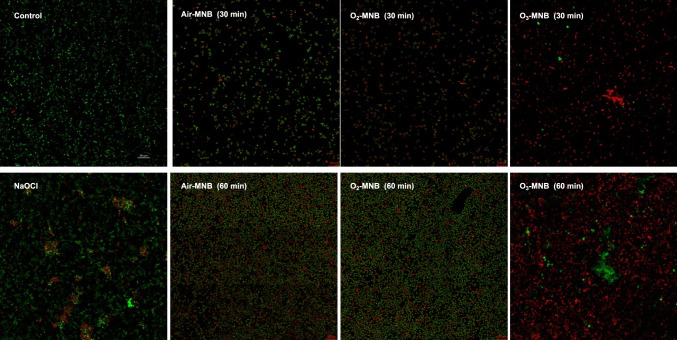 Figure 3
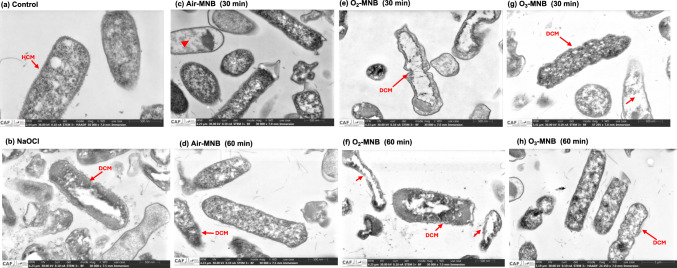 Figure 4
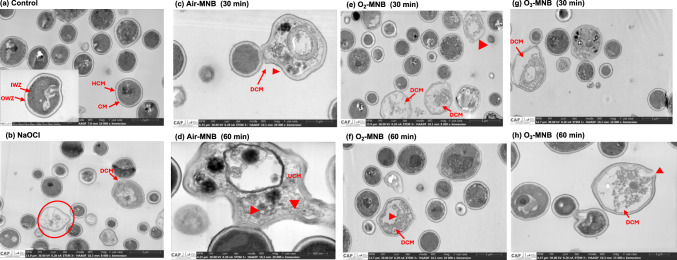 Figure 5
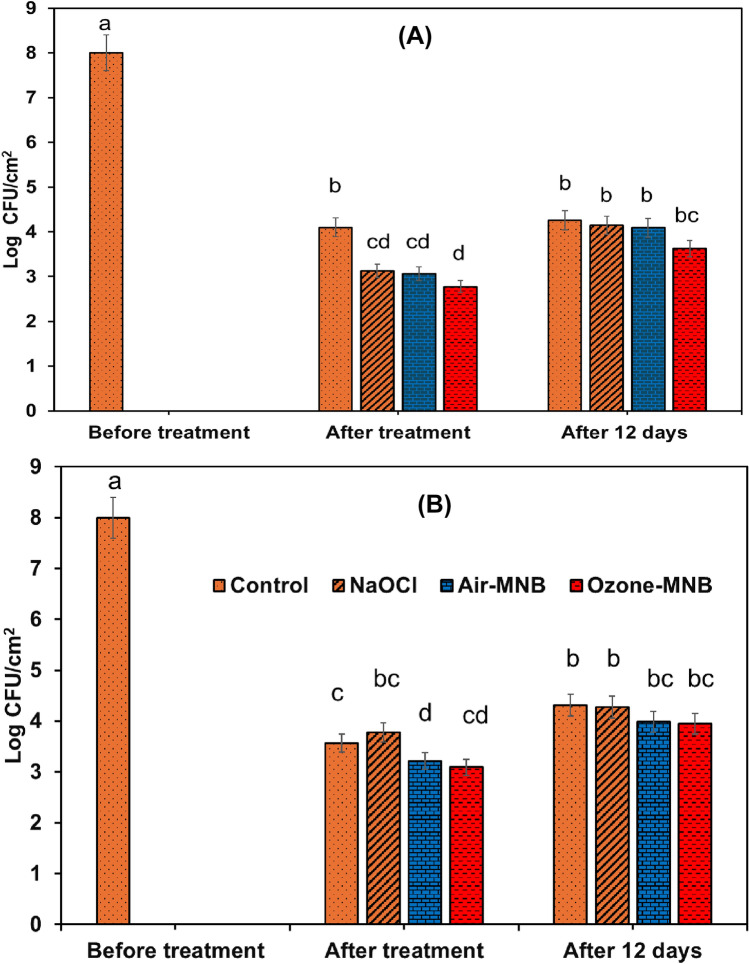 Figure 6
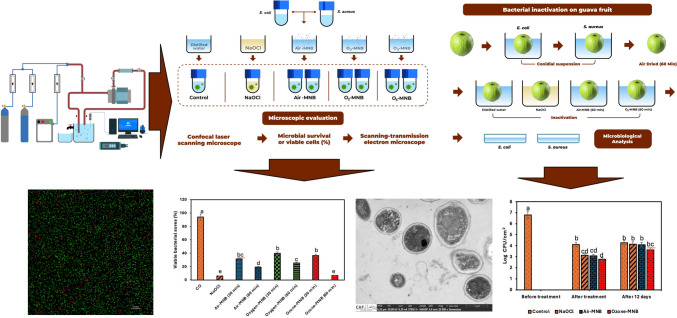 Figure 7
Peer Reviews
No public reviews on file for this paper yet. If you reviewed it on a platform where reviews are public (OpenReview, ICLR, NeurIPS, ICML), you can paste yours below so the community can read it here.
Videos
No videos yet. Explain this paper in a talk, walkthrough, or lecture? Add one.
Taxonomy
TopicsListeria monocytogenes in Food Safety · Biosensors and Analytical Detection · Water Quality Monitoring and Analysis