Effect of decreasing respiratory rate on the mechanical power of ventilation and lung injury biomarkers: a randomized cross-over clinical study in COVID-19 ARDS patients
L. Felipe Damiani, Roque Basoalto, Vanessa Oviedo, Leyla Alegria, Dagoberto Soto, M. Consuelo Bachmann, Yorschua Jalil, Cesar Santis, David Carpio, Rodrigo Ulloa, Daniel Valenzuela, Magdalena Vera, Marcus J. Schultz, Jaime Retamal, Alejandro Bruhn, Guillermo Bugedo

TL;DR
This study found that lowering the breathing rate in ventilated COVID-19 ARDS patients reduces mechanical power but does not lower lung injury biomarkers.
Contribution
The study is the first to investigate the effect of reduced respiratory rate on mechanical power and lung injury biomarkers in a randomized cross-over design in COVID-19 ARDS patients.
Findings
Lower respiratory rate significantly reduced mechanical power of ventilation in ARDS patients.
No significant differences were observed in inflammatory or lung injury biomarkers between lower and higher respiratory rates.
Cardiac function and respiratory mechanics were unaffected by changes in respiratory rate.
Abstract
The respiratory rate (RR) is a key determinant of the mechanical power of ventilation (MP). The effect of reducing the RR on MP and its potential to mitigate ventilator-induced lung injury remains unclear. To compare invasive ventilation using a lower versus a higher RR with respect to MP and plasma biomarkers of lung injury in COVID-19 ARDS patients. In a randomized cross-over clinical study in COVID-19 ARDS patients, we compared ventilation using a lower versus a higher RR in time blocks of 12 h. Patients were ventilated with tidal volumes of 6 ml/kg predicted body weight, and positive-end-expiratory pressure and fraction of inspired oxygen according to an ARDS network table. Respiratory mechanics and hemodynamics were assessed at the end of each period, and blood samples were drawn for measurements of inflammatory cytokines, epithelial and endothelial lung injury markers. In a…
Genes, proteins, chemicals, diseases, species, mutations and cell lines named across the full text — each resolved to its canonical identifier and authoritative record.
Click any figure to enlarge with its caption.
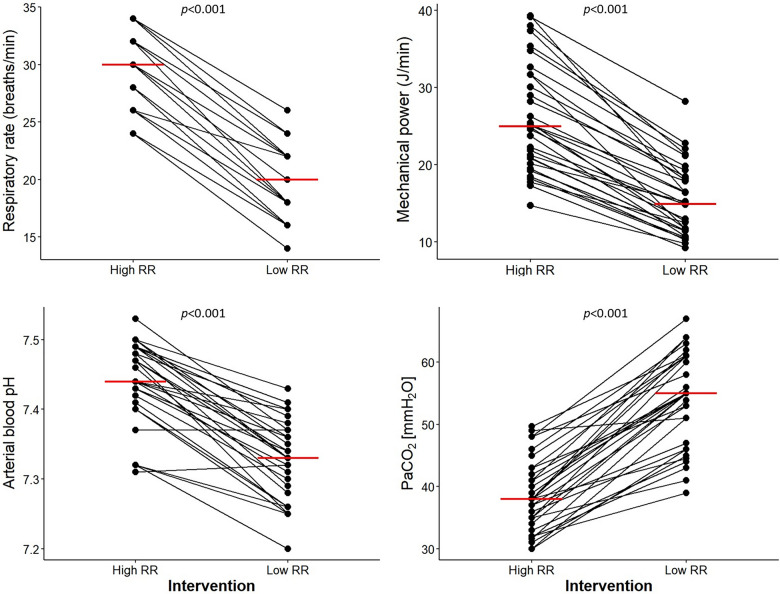 Figure 1
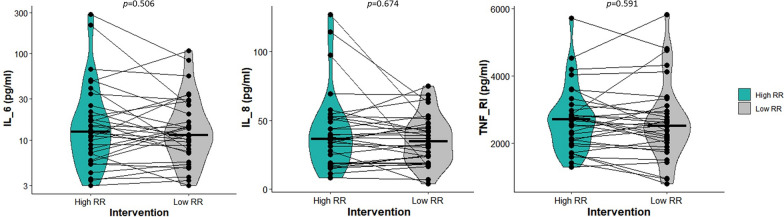 Figure 2
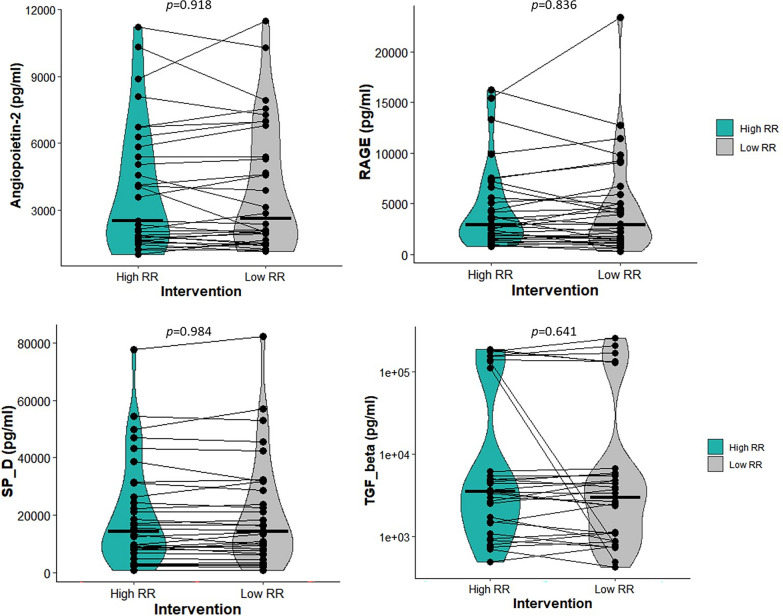 Figure 3
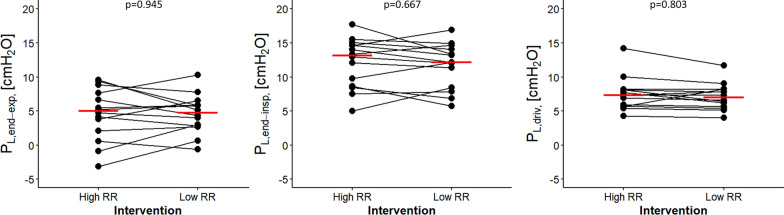 Figure 4
Peer Reviews
No public reviews on file for this paper yet. If you reviewed it on a platform where reviews are public (OpenReview, ICLR, NeurIPS, ICML), you can paste yours below so the community can read it here.
Videos
No videos yet. Explain this paper in a talk, walkthrough, or lecture? Add one.
Taxonomy
TopicsRespiratory Support and Mechanisms · Sepsis Diagnosis and Treatment · Thermal Regulation in Medicine