A complexity transition in displaced Gaussian Boson sampling
Zhenghao Li, Naomi R. Solomons, Jacob F. F. Bulmer, Raj B. Patel, Ian A. Walmsley

TL;DR
This paper studies how adding coherent states to Gaussian Boson Sampling affects its computational complexity and identifies a transition point between classical and quantum advantage.
Contribution
The paper introduces Displaced GBS and identifies a complexity transition between classical simulability and quantum advantage.
Findings
High displacement or non-negative graphs allow efficient classical simulation of Displaced GBS.
Quantum advantage is likely in the low-displacement regime.
The complexity transition is numerically quantified.
Abstract
Gaussian Boson Sampling (GBS) is the problem of sampling from the output of photon-number-resolving measurements of squeezed states input to a linear optical interferometer. For purposes of demonstrating quantum computational advantage as well as practical applications, a large photon number is often desirable. However, producing squeezed states with high photon numbers is experimentally challenging. In this work, we examine the computational complexity implications of increasing the photon number by introducing coherent states. This displaces the state in phase space and as such we call this modified problem Displaced GBS. By utilising a connection to the matching polynomial in graph theory, we first describe an efficient classical algorithm for Displaced GBS when displacement is high or when the output state is represented by a non-negative graph. Then we provide complexity theoretic…
Genes, proteins, chemicals, diseases, species, mutations and cell lines named across the full text — each resolved to its canonical identifier and authoritative record.
Click any figure to enlarge with its caption.
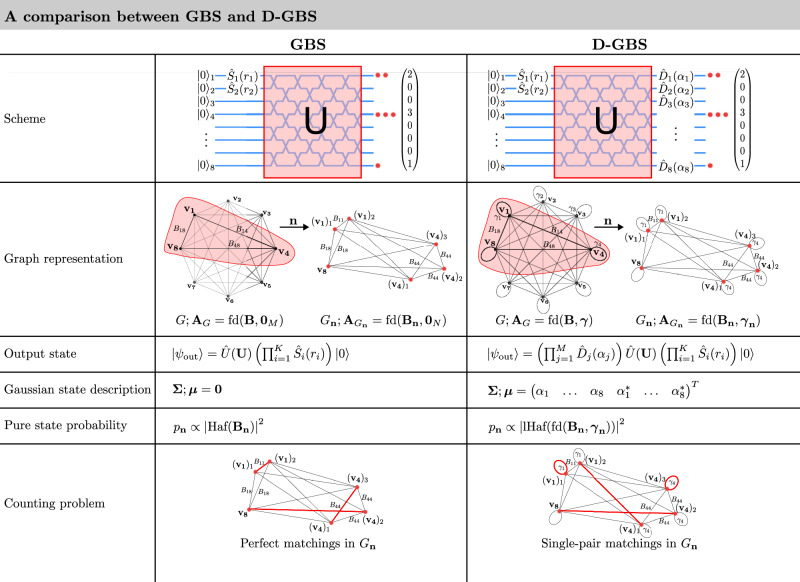 Figure 1
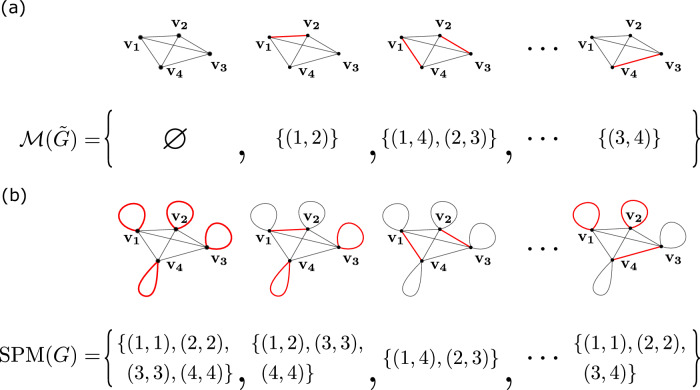 Figure 2
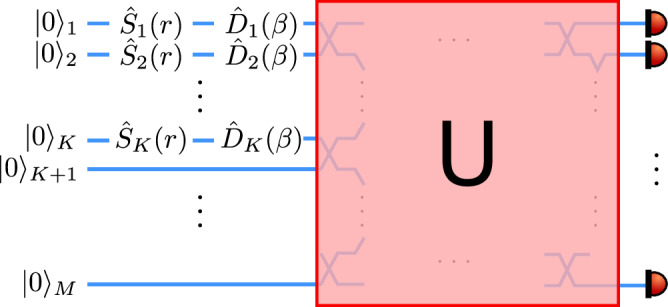 Figure 3
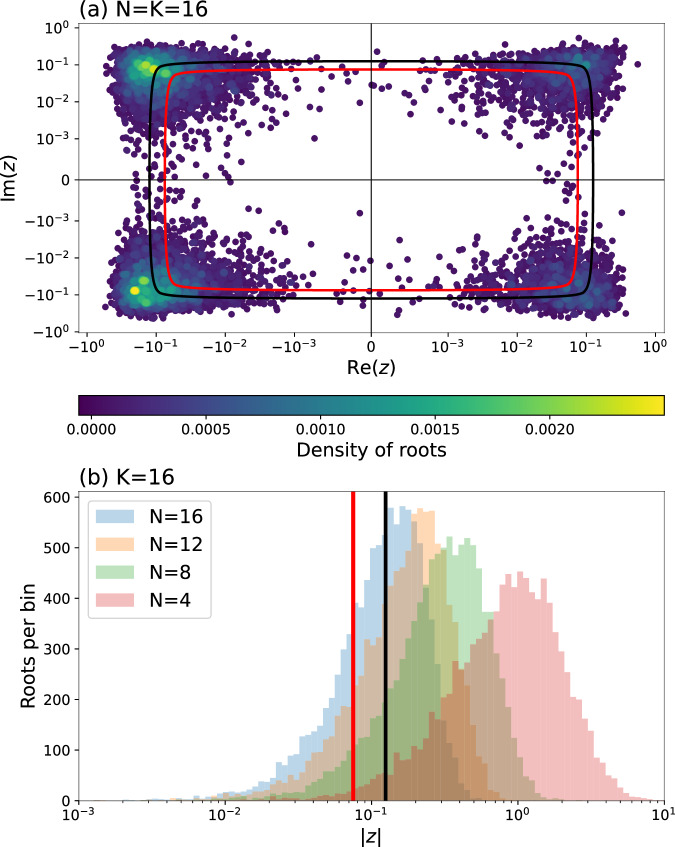 Figure 4
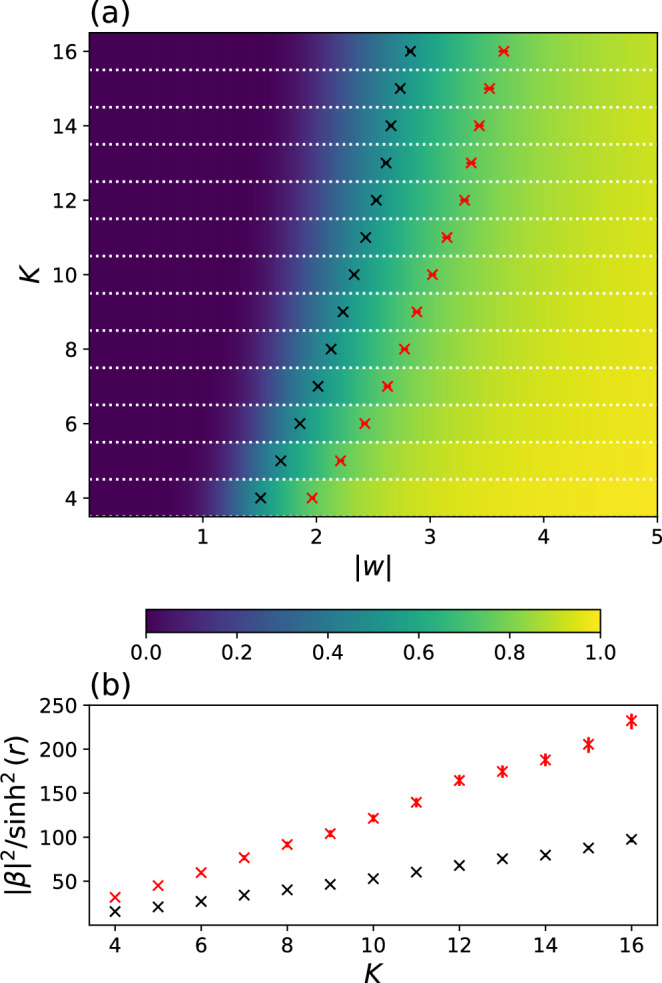 Figure 5
Peer Reviews
No public reviews on file for this paper yet. If you reviewed it on a platform where reviews are public (OpenReview, ICLR, NeurIPS, ICML), you can paste yours below so the community can read it here.
Videos
No videos yet. Explain this paper in a talk, walkthrough, or lecture? Add one.
Taxonomy
TopicsQuantum Information and Cryptography · Markov Chains and Monte Carlo Methods · Quantum Mechanics and Applications