AEPMA: peptide–microbe association prediction based on autoevolutionary heterogeneous graph learning
Zhiyang Hu, Linqiang Pan, Daijun Zhang, Yannan Bin, Yansen Su

TL;DR
This paper introduces AEPMA, a computational framework that predicts which antimicrobial peptides target specific microbes, helping to develop new antibiotics more efficiently.
Contribution
AEPMA introduces a novel autoevolutionary heterogeneous graph learning framework for targeted prediction of peptide–microbe associations.
Findings
AEPMA outperforms five state-of-the-art methods on peptide–microbe and drug–microbe datasets.
The model identifies two novel peptides targeting Staphylococcus aureus and Escherichia coli.
Abstract
The inappropriate use of antibiotics has precipitated the emergence of multidrug-resistant bacteria, prompting significant interest in antimicrobial peptides (AMPs) as potential alternatives to traditional antibiotics. Given the prohibitive costs and time-consuming nature of biological experiments, computational methods provide an efficient alternative for the development of AMP-based drugs. However, existing computational studies primarily focus on identifying AMPs with antimicrobial activity, lacking a targeted identification of AMPs against specific microbial species. To address this gap, we propose a peptide–microbe association (PMA) prediction framework, termed AEPMA, which is constructed based on an autoevolutionary heterogeneous graph. Within AEPMA, we construct an innovative peptide-microbe-disease network (PMDHAN). Furthermore, we design an autoevolutionary information…
Genes, proteins, chemicals, diseases, species, mutations and cell lines named across the full text — each resolved to its canonical identifier and authoritative record.
Click any figure to enlarge with its caption.
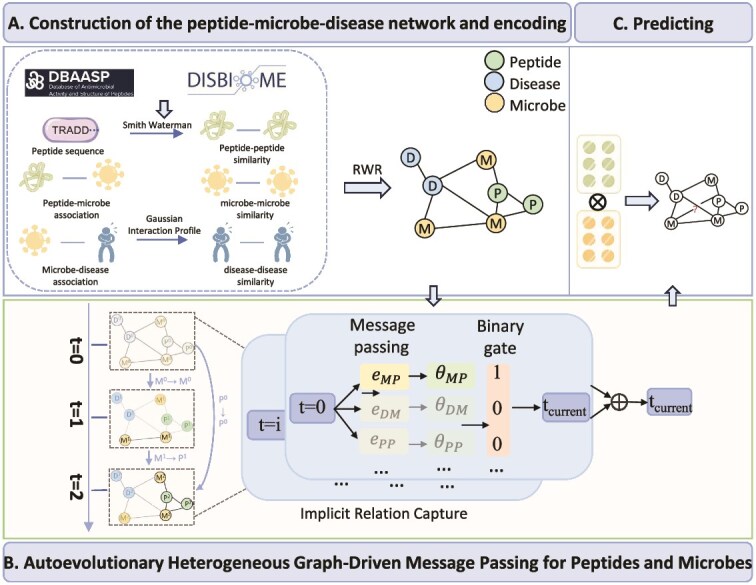 Figure 1
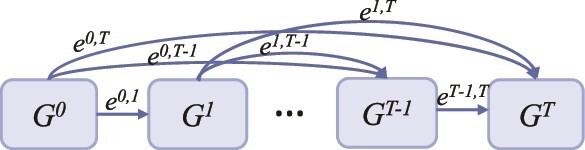 Figure 2
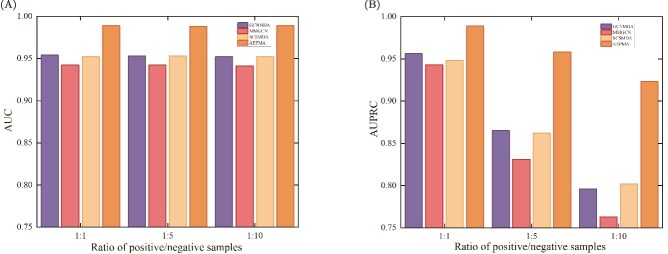 Figure 3
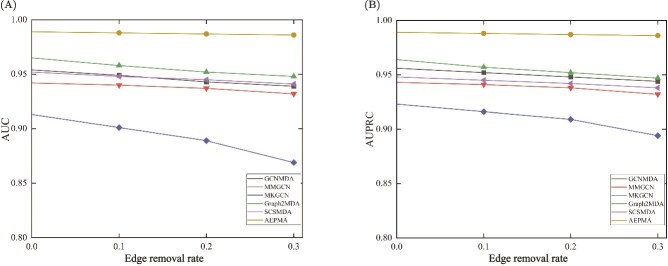 Figure 4
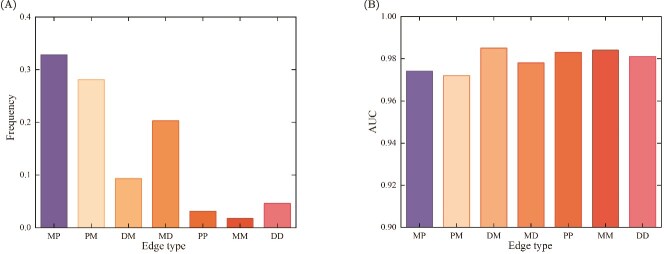 Figure 5
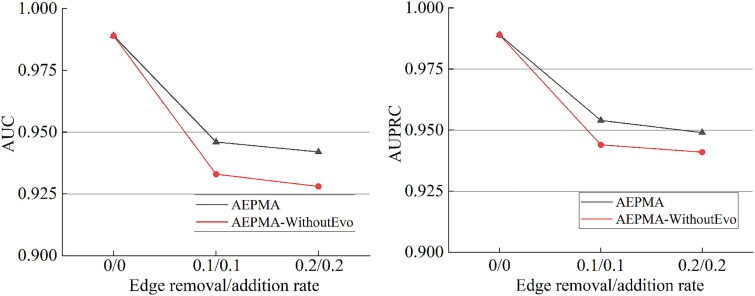 Figure 6
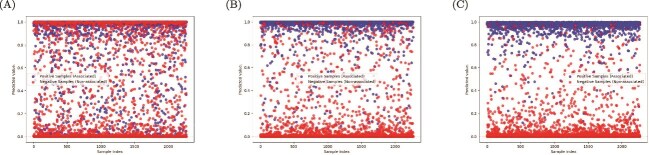 Figure 7
Peer Reviews
No public reviews on file for this paper yet. If you reviewed it on a platform where reviews are public (OpenReview, ICLR, NeurIPS, ICML), you can paste yours below so the community can read it here.
Videos
No videos yet. Explain this paper in a talk, walkthrough, or lecture? Add one.
Taxonomy
TopicsMachine Learning in Bioinformatics · Antimicrobial Peptides and Activities · vaccines and immunoinformatics approaches