Temperature Conditions in Artificial Sea Turtle Nests: Toward Optimized Hatchery Management
Jennifer A. Carbonell Ellgutter, Ingrid Maria Bik, Hans Renssen, Frank Rosell, Lucy A. Hawkes, Stefanie Reinhardt

TL;DR
This study explores how hatchery management factors affect nest temperatures of Olive Ridley sea turtles in Guatemala to improve conservation efforts.
Contribution
The study identifies specific hatchery management tools to manipulate nest temperatures and sex ratios in Olive Ridley turtles.
Findings
Nests closer to hatchery walls were up to 1°C warmer than those farther away.
Adding 30–40 more eggs per nest raised average temperatures by 0.7°C.
Ex situ nest conditions had lower temperatures than in situ conditions, which exceeded lethal thresholds in 86% of measurements.
Abstract
Climate change poses a significant threat to species with temperature‐dependent sex determination, such as sea turtles. Their conservation often involves relocating nests to hatcheries, which is also crucial on the Pacific coast of Guatemala, where virtually no hatchlings emerge from natural nests. Populations there rely heavily on hatcheries, yet nest temperature monitoring in relation to environmental and management factors is rarely conducted. Research is needed to improve artificial nest management and hatchery design. This study investigated how distance to the hatchery wall, number of eggs, position in the nest, development period, season, and weather conditions influenced temperature variation in Olive Ridley Turtle ( Lepidochelys olivacea ) nests. We generally found nest temperatures within viable ranges and near the pivotal temperature for Olive Ridleys. The pivotal temperature…
Genes, proteins, chemicals, diseases, species, mutations and cell lines named across the full text — each resolved to its canonical identifier and authoritative record.
Click any figure to enlarge with its caption.
 Figure 1
 Figure 2
 Figure 3
 Figure 4
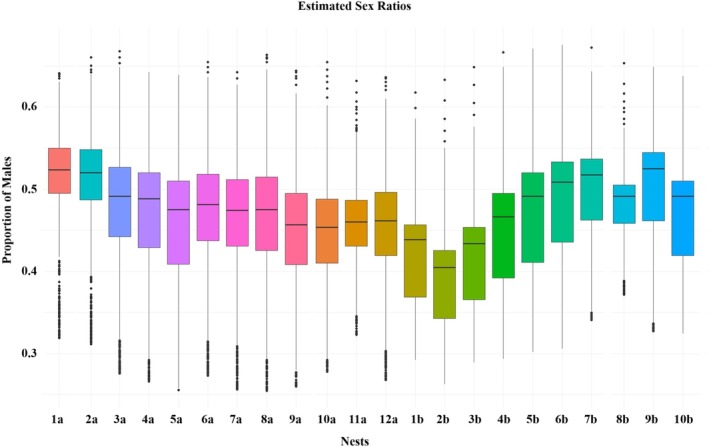 Figure 5
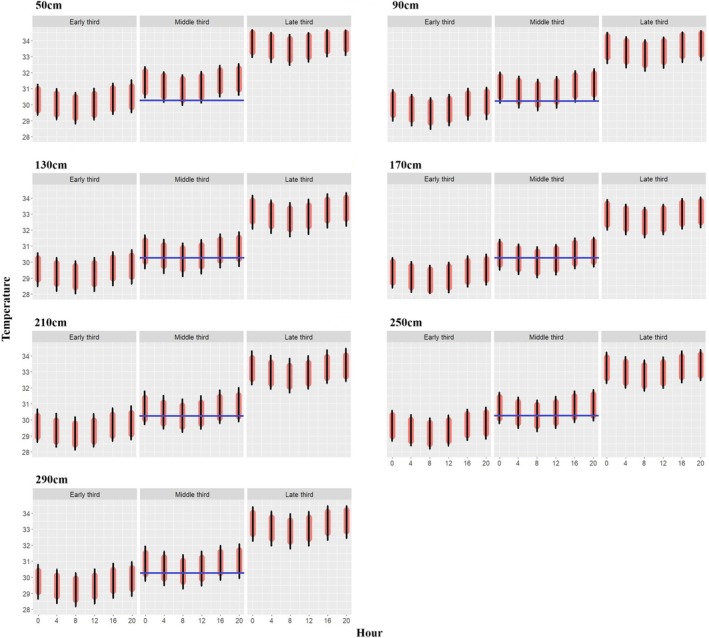 Figure 6
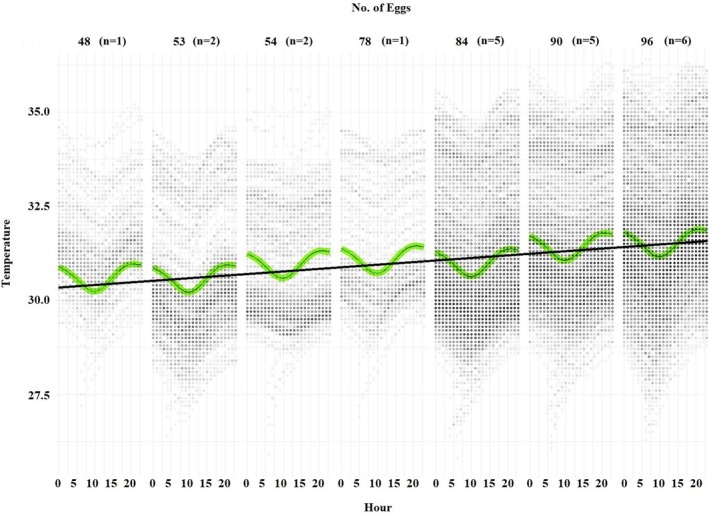 Figure 7
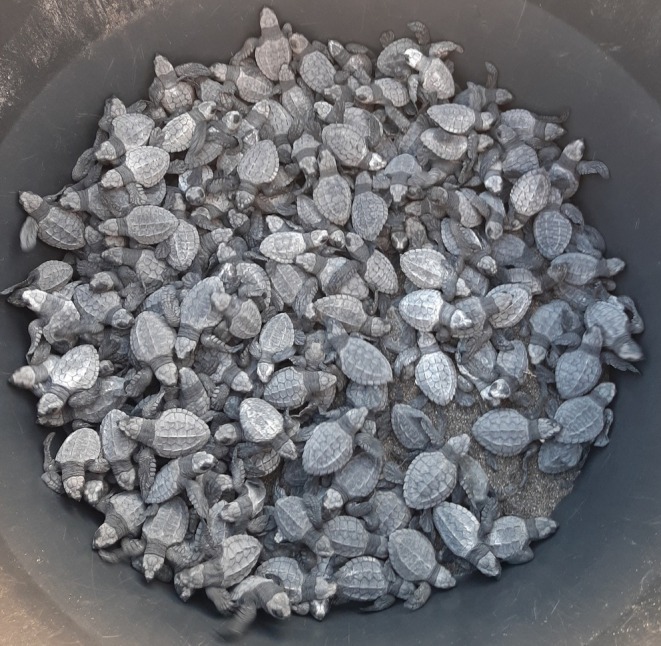 Figure 8
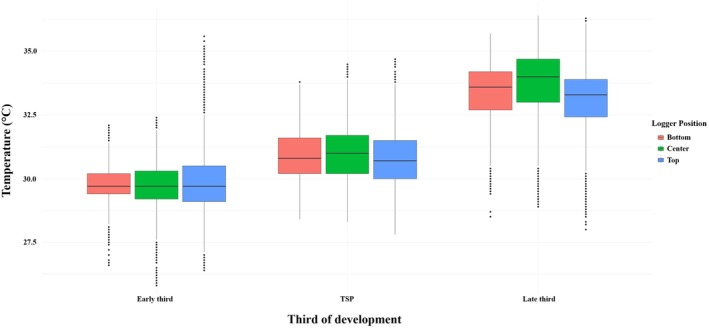 Figure 9
Peer Reviews
No public reviews on file for this paper yet. If you reviewed it on a platform where reviews are public (OpenReview, ICLR, NeurIPS, ICML), you can paste yours below so the community can read it here.
Videos
No videos yet. Explain this paper in a talk, walkthrough, or lecture? Add one.
Taxonomy
TopicsTurtle Biology and Conservation · Physiological and biochemical adaptations · Avian ecology and behavior