Genetically Predicted Serum 25‐Hydroxyvitamin D Concentrations in Related to Type 2 Diabetes Mellitus: A Mendelian Randomization Study
Jin Yang

TL;DR
This study finds that higher genetically predicted levels of vitamin D are linked to a lower risk of type 2 diabetes, using genetic data from over 800,000 people.
Contribution
The study provides causal evidence that higher serum 25-hydroxyvitamin D levels are associated with reduced type 2 diabetes risk using Mendelian randomization.
Findings
Genetically predicted higher serum 25(OH)D levels are consistently associated with reduced risk of T2DM in both UVMR and MVMR analyses.
A 1-SD increase in genetically predicted serum 25(OH)D levels is linked to an odds ratio of 0.67 for T2DM.
Vitamins B6, B9, B12, and C do not show significant associations with T2DM.
Abstract
In several observational studies, vitamins B6, B9, B12, C and 25‐hydroxyvitamin D[25(OH)D] concentrations were associated with type 2 diabetes mellitus (T2DM). Although vitamins play a role in the development of type 2 diabetes mellitus (T2DM), their associations remain unclear. This study employed Mendelian randomisation (MR) to explore the causal relationships between circulating concentrations of vitamins B6, B9, B12, C, 25‐hydroxyvitamin D and T2DM. Single‐nucleotide polymorphisms (SNPs) linked to vitamin B6, vitamin B9, vitamin B12, vitamin C and 25(OH)D levels were used as instrumental variables (IVs) in this study. We have two outcomes related to T2DM derived from two genome‐wide association studies (GWAS). The first study, referenced by PMID: 3417140, encompasses a cohort of 406,831 individuals of European descent. The second study, identified by PMID: 29892013, includes a…
Genes, proteins, chemicals, diseases, species, mutations and cell lines named across the full text — each resolved to its canonical identifier and authoritative record.
Click any figure to enlarge with its caption.
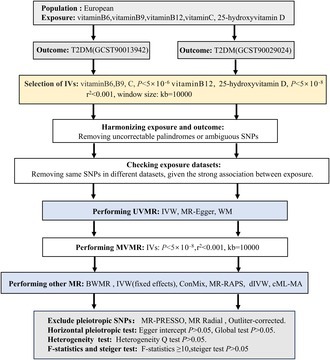 Figure 1
 Figure 2
 Figure 3
 Figure 4
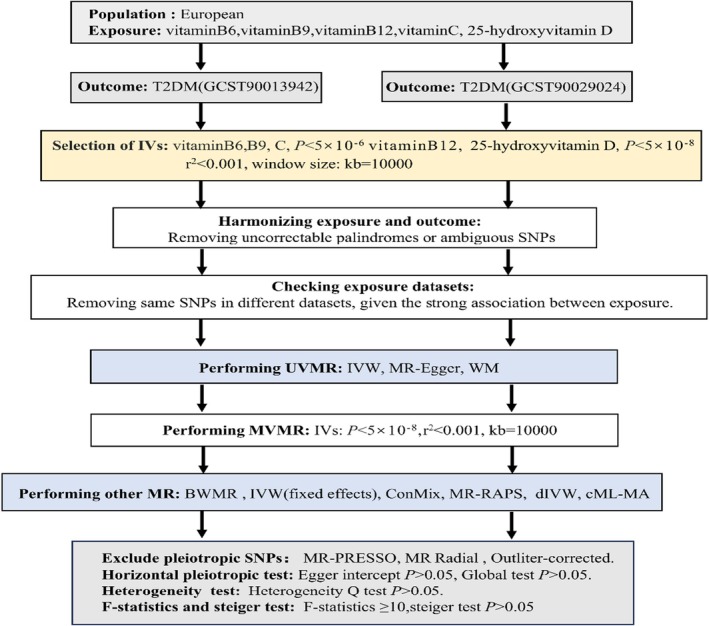 Figure 5
Peer Reviews
No public reviews on file for this paper yet. If you reviewed it on a platform where reviews are public (OpenReview, ICLR, NeurIPS, ICML), you can paste yours below so the community can read it here.
Videos
No videos yet. Explain this paper in a talk, walkthrough, or lecture? Add one.
Taxonomy
TopicsGenetic Associations and Epidemiology · Vitamin D Research Studies · Digestive system and related health