Changes in the Distribution of Botrytis cinerea Pers. Fr. In China Under Climate Change
Qianqian Qian, Zhihang Zhuo, Yaqin Peng, Danping Xu

TL;DR
This study predicts how the distribution of Botrytis cinerea in China will change under future climate conditions using the MaxEnt model.
Contribution
The study identifies key environmental variables and predicts future distribution patterns of Botrytis cinerea in China under climate change.
Findings
The current suitable distribution center of Botrytis cinerea is in Gande County, Qinghai Province.
Future climate conditions may reduce high and low suitable areas but increase medium suitable areas.
Temperature and precipitation variables significantly influence the distribution of Botrytis cinerea.
Abstract
Botrytis cinerea Pers. Fr. is capable of infecting many horticultural plants and agricultural products with gray mold, which causes great losses to the world economy. MaxEnt is a probabilistic model for classification and prediction. In this study, the MaxEnt model was used to predict the current and future potential geographic distribution of B. cinerea in China, and key environmental variables affecting its distribution were identified. The results showed that under the current climatic conditions, the central area of suitable distribution of B. cinerea is in Gande County, Guoluo Tibetan Autonomous Prefecture, Qinghai Province, China (99.63° E, 33.92° N). The highly suitable areas are mainly concentrated in tropical and subtropical regions, including Tianjin, Shandong, Anhui, Hubei, and Henan in China. Under the future climate conditions, the center of the suitable distribution of…
Genes, proteins, chemicals, diseases, species, mutations and cell lines named across the full text — each resolved to its canonical identifier and authoritative record.
Click any figure to enlarge with its caption.
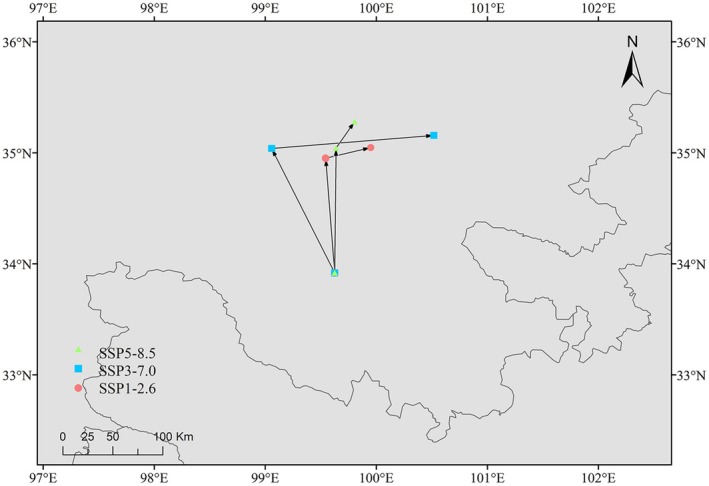 Figure 1
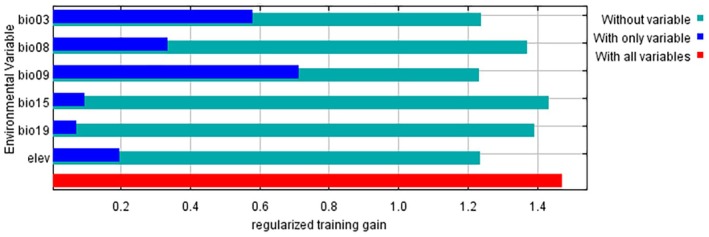 Figure 2
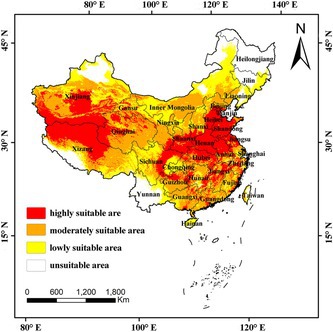 Figure 3
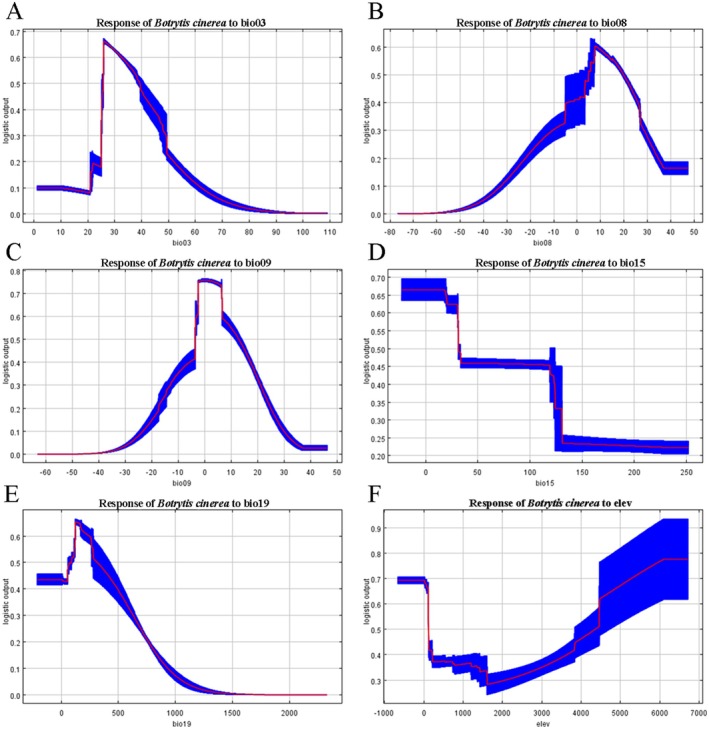 Figure 4
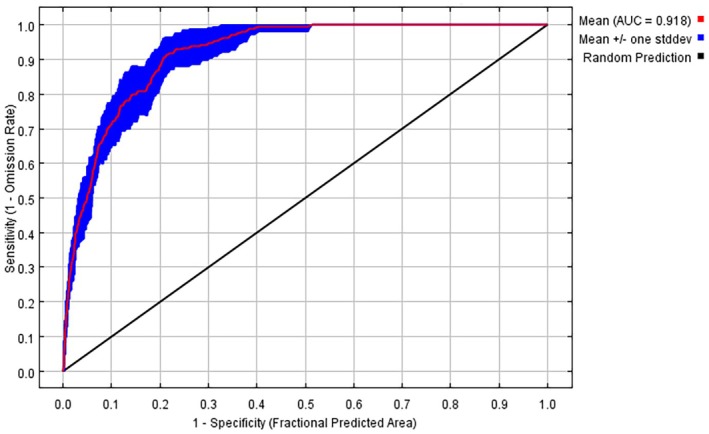 Figure 5
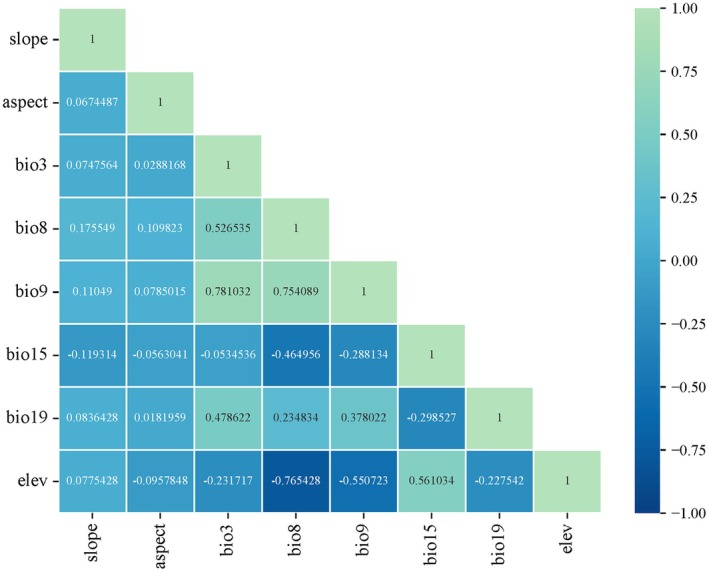 Figure 6
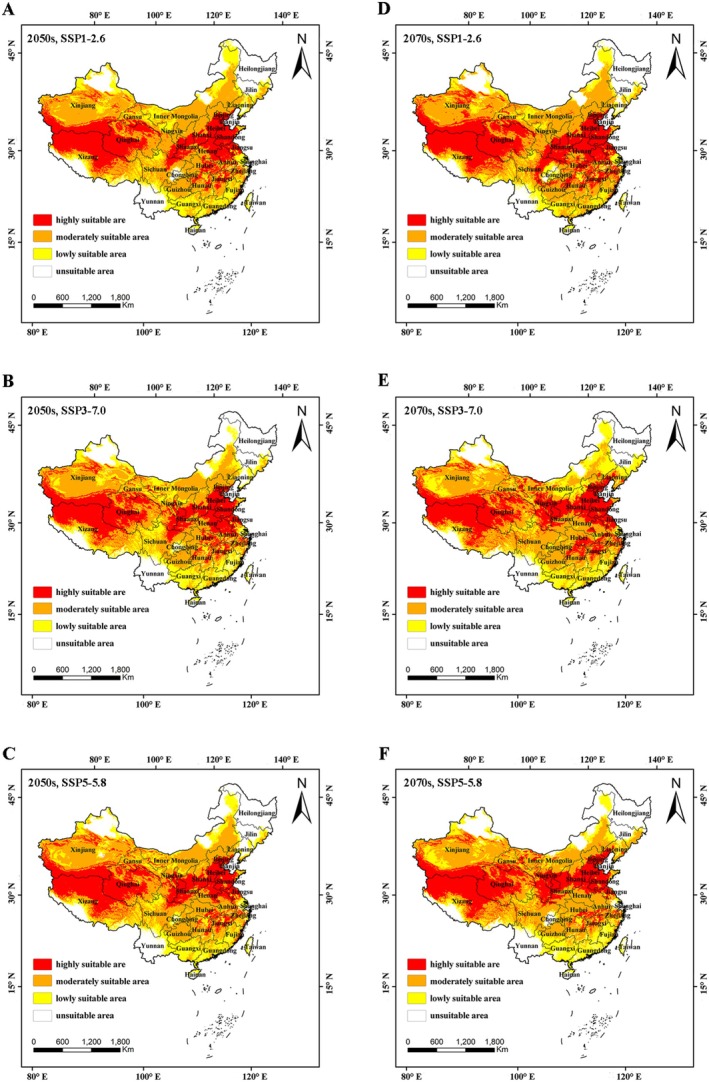 Figure 7
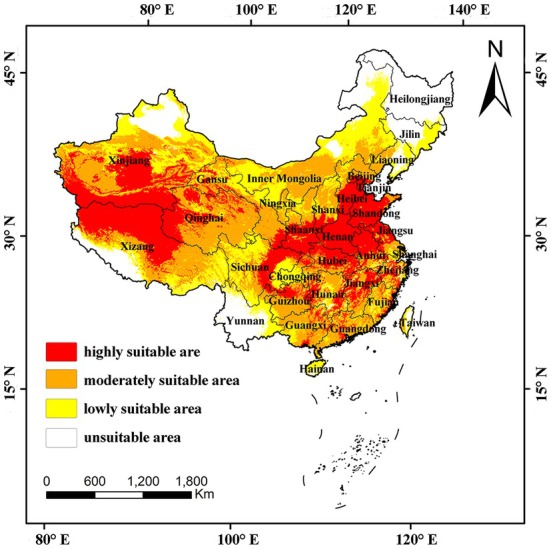 Figure 8
Peer Reviews
No public reviews on file for this paper yet. If you reviewed it on a platform where reviews are public (OpenReview, ICLR, NeurIPS, ICML), you can paste yours below so the community can read it here.
Videos
No videos yet. Explain this paper in a talk, walkthrough, or lecture? Add one.
Taxonomy
TopicsPlant Pathogens and Fungal Diseases · Fungal Plant Pathogen Control · Plant and Fungal Interactions Research