Adversarial attack of sequence-free enhancer prediction identifies chromatin architecture
Jamil Gafur, Olivia W Lang, William K M Lai

TL;DR
This paper shows that enhancers can be accurately predicted using chromatin data alone, and introduces a new method to understand how AI models make these predictions.
Contribution
The novel contribution is a cell-type invariant enhancer prediction platform and the first use of adversarial particle swarm optimization for genomic neural networks.
Findings
Chromatin datasets alone can accurately identify enhancers genome-wide.
A multi-cell-type neural network platform was developed for enhancer prediction without DNA sequence data.
Adversarial particle swarm optimization (APSO) was used to explain genomic neural network predictions.
Abstract
The wide range of cellular complexity created by multicellular organisms is due in large part to the intricate and synergistic interplay of regulatory complexes throughout the eukaryotic genome. These regulatory elements “enhance” specific gene programs and have been shown to operate in diverse networks that are distinct across cell states of the same organism. Attempts to characterize and predict enhancers have typically focused on leveraging information-dense DNA sequence in parallel with epigenomic assays. We examined the viability of enhancer prediction using only a minimal set of epigenomic datasets without direct DNA information. We demonstrate that chromatin datasets are sufficient to identify enhancers genome-wide with high accuracy. By training networks leveraging data from multiple cell types simultaneously, we generated a cell-type invariant enhancer prediction platform that…
Genes, proteins, chemicals, diseases, species, mutations and cell lines named across the full text — each resolved to its canonical identifier and authoritative record.
Click any figure to enlarge with its caption.
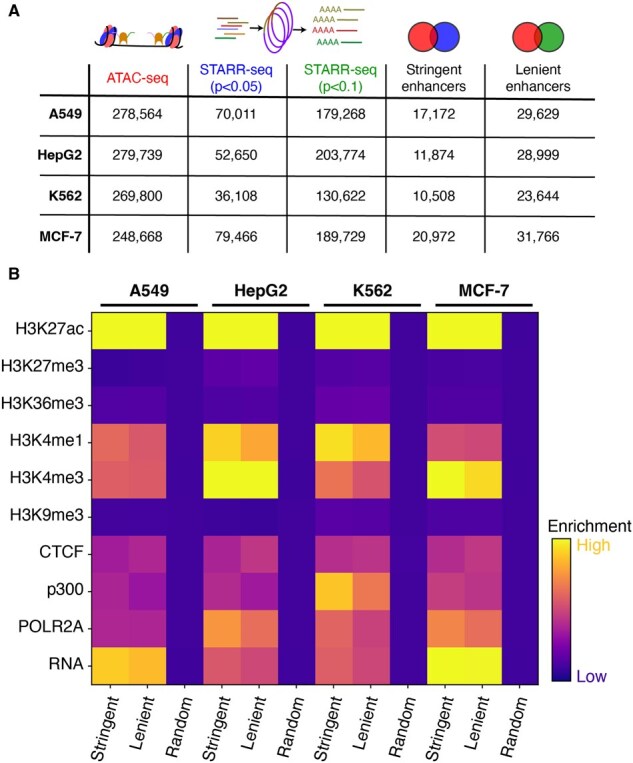 Figure 1
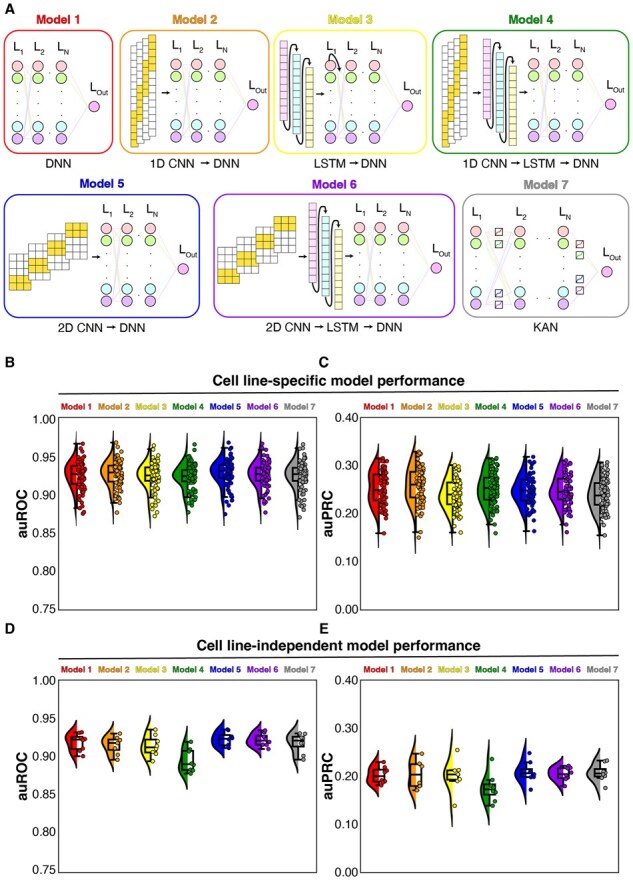 Figure 2
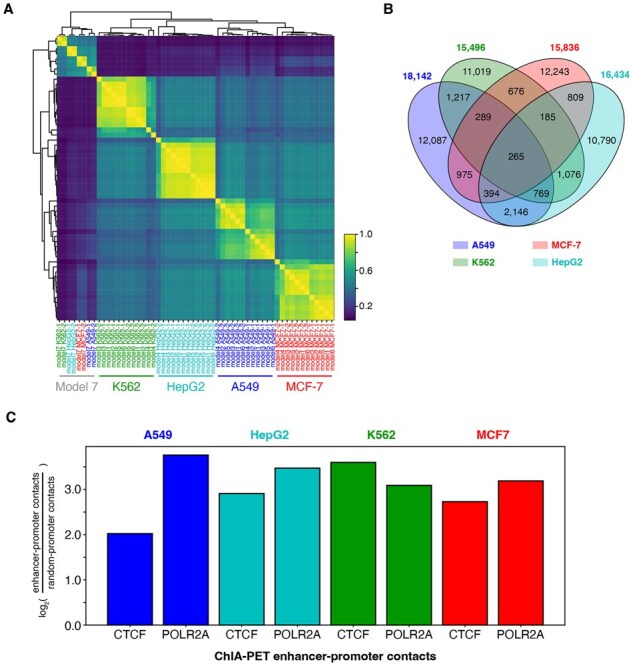 Figure 3
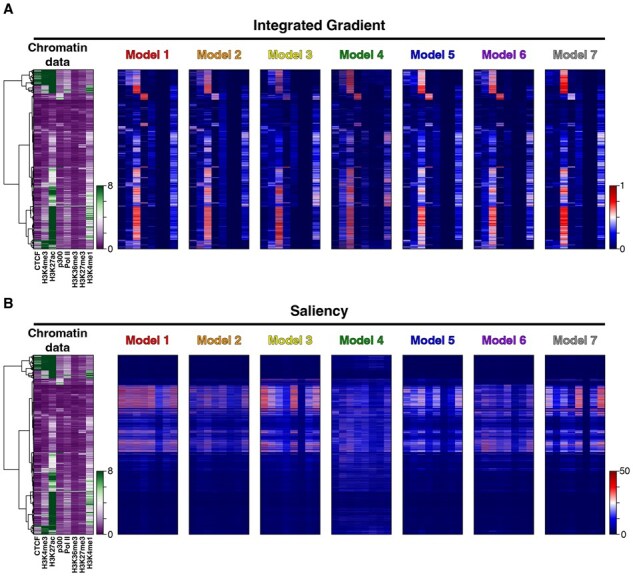 Figure 4
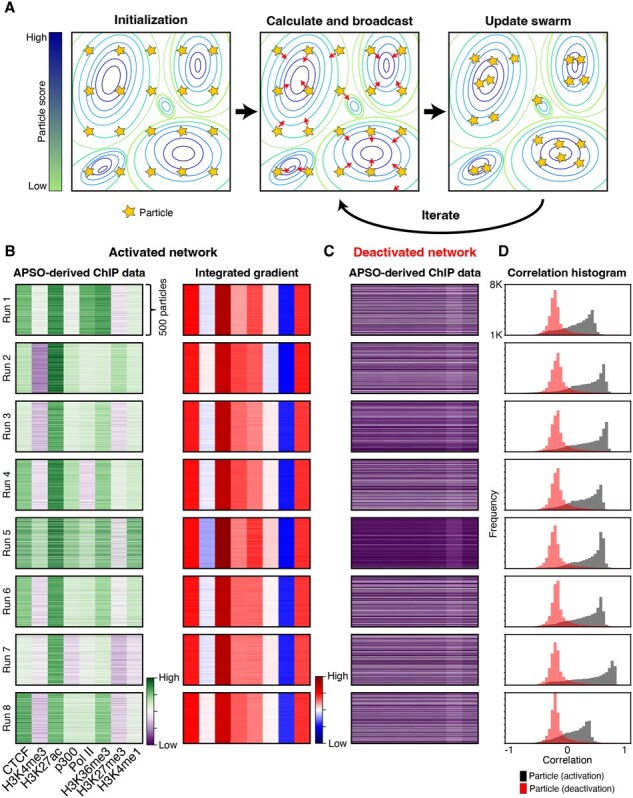 Figure 5
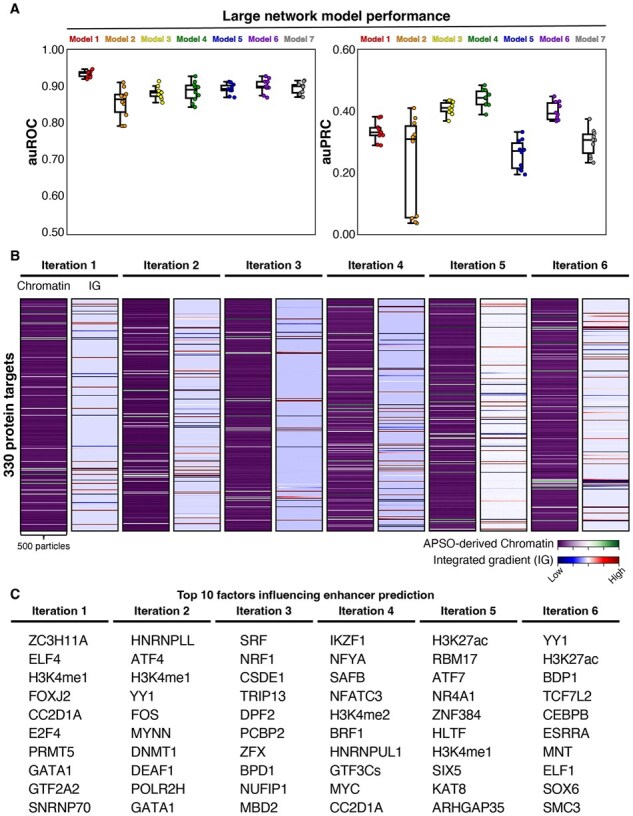 Figure 6
Peer Reviews
No public reviews on file for this paper yet. If you reviewed it on a platform where reviews are public (OpenReview, ICLR, NeurIPS, ICML), you can paste yours below so the community can read it here.
Videos
No videos yet. Explain this paper in a talk, walkthrough, or lecture? Add one.
Taxonomy
TopicsGenomics and Chromatin Dynamics · CRISPR and Genetic Engineering · RNA and protein synthesis mechanisms