Electrocardiographic T-wave Abnormalities and Premature Ventricular Contraction Burden in Patients With Palpitations: A Regional Study From Northeast India
Rajeev Bharadwaj, Suman Kalita, Rudrakshya Sahu, Saif Ahmad, Durlav Banskota, Suraj Mungase

TL;DR
This study explores how ECG markers like Tp-Te interval and QTc dispersion can predict high PVC burden in patients with palpitations, offering a simpler alternative to Holter monitoring.
Contribution
The study identifies specific ECG repolarization markers that strongly correlate with PVC burden in a regional Indian population.
Findings
Tp-Te interval, Tp-Te/QT ratio, and QTc dispersion showed significant positive correlations with PVC burden.
These ECG markers were significantly higher in patients with >1% PVC burden.
T-wave axis and fQRS-T angle did not correlate with PVC burden.
Abstract
Background: Premature ventricular contractions (PVCs), often presenting as palpitations, are common in cardiology outpatient settings. While a high PVC burden is linked to adverse cardiac outcomes, its detection typically requires 24-hour Holter monitoring - an investigation not always feasible in resource-limited settings. Electrocardiographic (ECG) markers of ventricular repolarization, represented by T-wave abnormalities, such as Tp-Te interval, Tp-Te/QT ratio, and QTc dispersion, may serve as accessible surrogate indicators of PVC burden. Objective: To evaluate the correlation between surface ECG-derived repolarization markers and PVC burden and determine which parameters best predict higher PVC burden in patients presenting with palpitations. Methodology: A total of 87 adult patients with palpitations referred to a tertiary care cardiology clinic in Northeast India underwent…
Genes, proteins, chemicals, diseases, species, mutations and cell lines named across the full text — each resolved to its canonical identifier and authoritative record.
Click any figure to enlarge with its caption.
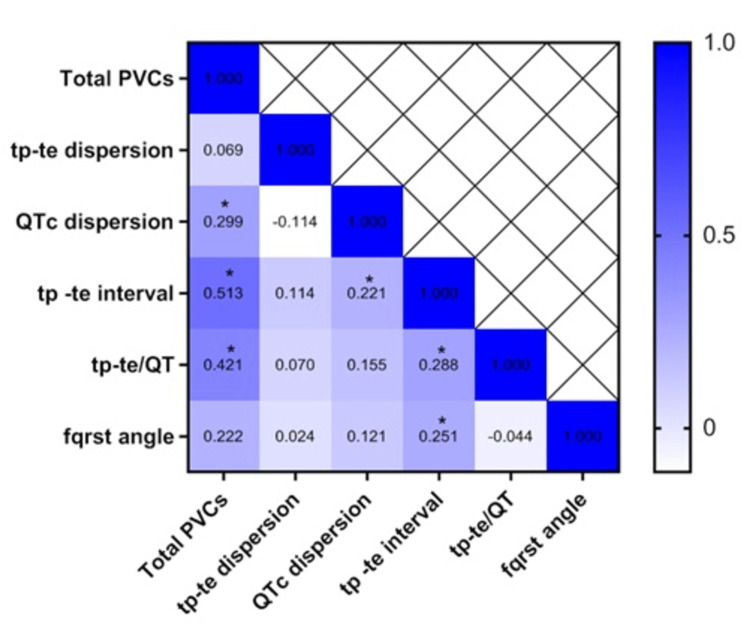 Figure 1
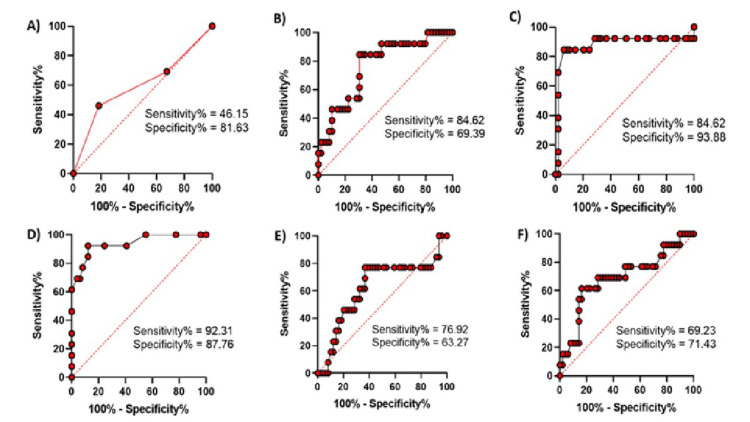 Figure 2
Peer Reviews
No public reviews on file for this paper yet. If you reviewed it on a platform where reviews are public (OpenReview, ICLR, NeurIPS, ICML), you can paste yours below so the community can read it here.
Videos
No videos yet. Explain this paper in a talk, walkthrough, or lecture? Add one.
Taxonomy
TopicsCardiac Arrhythmias and Treatments · Cardiovascular Syncope and Autonomic Disorders · Cardiac electrophysiology and arrhythmias