Evolution of foraging behaviour induces variable complexity-stability relationships in mutualist-exploiter-predator communities
Lin Wang, Ting Wang, Xiao-Wei Zhang, Xiao-Fen Lin, Jia Li, Jin-Bao Liao, Rui-Wu Wang, Samraat Pawar, Tobias Bollenbach, Samraat Pawar, Tobias Bollenbach, Samraat Pawar, Tobias Bollenbach, Samraat Pawar, Tobias Bollenbach

TL;DR
This paper explores how foraging behavior evolution affects the stability of complex ecological networks with mutualistic and antagonistic interactions.
Contribution
The study introduces an adaptive network model to show how foraging adaptations influence complexity-stability relationships in ecological communities.
Findings
Adaptive foraging of top predators can stabilize mutualism but also cause chaotic dynamics under certain conditions.
Complexity-stability relationships can show multiple patterns, including double-peaked forms under high adaptation and competition.
Model predictions align with observed patterns in both freshwater and marine ecological communities.
Abstract
Early ecological theory predicts that complex ecological networks are unstable and are unlikely to persist, despite many empirical studies of such complexity in nature. This inconsistency has fascinated ecologists for decades. To resolve the complexity-stability debate, coupling population dynamics and trait dynamics is considered to be an important way to understand the long-term stability of ecological community assemblages. However, we still do not know how eco-evolutionary feedbacks affect the relationship between complexity and stability in ecologically realistic networks with both antagonistic and mutualistic interactions. Here, we explored an adaptive network model to evaluate how the evolution of foraging preference to determine the relationship between network complexity (i.e., connectance) and stability (i.e., community persistence at steady state) in…
Genes, proteins, chemicals, diseases, species, mutations and cell lines named across the full text — each resolved to its canonical identifier and authoritative record.
Click any figure to enlarge with its caption.
 Figure 1
 Figure 2
 Figure 3
 Figure 4
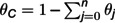 Figure 5
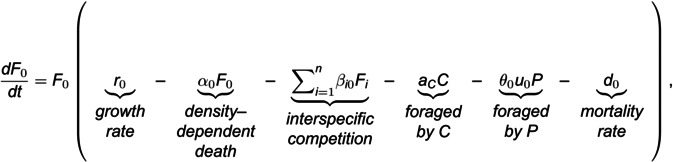 Figure 6
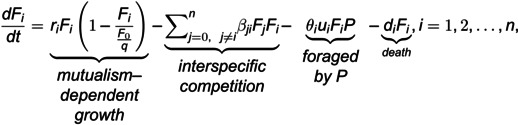 Figure 7
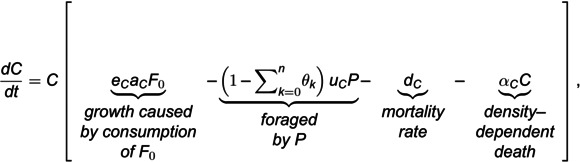 Figure 8
 Figure 9
 Figure 10
 Figure 11
 Figure 12
 Figure 13
 Figure 14
 Figure 15
 Figure 16
 Figure 17
 Figure 18
 Figure 19
 Figure 20
 Figure 21
 Figure 22
 Figure 23
 Figure 24
 Figure 25
 Figure 26
 Figure 27
 Figure 28
 Figure 29
 Figure 30
 Figure 31
 Figure 32
 Figure 33
 Figure 34
 Figure 35
 Figure 36
 Figure 37
 Figure 38
 Figure 39
 Figure 40
 Figure 41
 Figure 42
 Figure 43
 Figure 44
 Figure 45
 Figure 46
 Figure 47
 Figure 48
 Figure 49
 Figure 50
Peer Reviews
No public reviews on file for this paper yet. If you reviewed it on a platform where reviews are public (OpenReview, ICLR, NeurIPS, ICML), you can paste yours below so the community can read it here.
Videos
No videos yet. Explain this paper in a talk, walkthrough, or lecture? Add one.
Taxonomy
TopicsPlant and animal studies · Evolution and Genetic Dynamics · Evolutionary Game Theory and Cooperation