Assessing early detection ability through spatial arrangements in environmental surveillance for poliovirus: A simulation-based study
Toshiaki R. Asakura, Kathleen M. O’Reilly, Terna Nomhwange, Terna Nomhwange, Terna Nomhwange

TL;DR
This study uses simulations to evaluate how the placement of environmental surveillance sites affects early detection of poliovirus in South Africa.
Contribution
The study introduces a simulation-based approach to assess the impact of spatial arrangements of surveillance sites on early detection of poliovirus.
Findings
Strategically positioned surveillance sites can achieve high early detection ability if importation risks are geographically confined.
Dispersed importation risks reduce the effectiveness of environmental surveillance.
Wider surveillance with low sampling frequency outperforms limited-area high-frequency sampling in early detection.
Abstract
Detecting the circulation of poliovirus in its early stages is paramount for swift public health action. While environmental surveillance (ES) is promising for enhancing early pathogen detection, the influence of spatial arrangement of ES sites on early detection remains unclear. Here, we aim to assess the early detection ability of ES by varying the number and location of ES sites using the simulation-based approach utilising geographic and demographic characteristics of South Africa as a case study of a non-endemic country. We developed a stochastic meta-population model among unimmunised children aged under 5 years old, assuming a single introduction of wild poliovirus serotype 1. We constructed six scenarios by combining three importation risk distributions (predicated on population size, approximations of international inbound travel volume and border crossing volume) with two ES…
Genes, proteins, chemicals, diseases, species, mutations and cell lines named across the full text — each resolved to its canonical identifier and authoritative record.
Click any figure to enlarge with its caption.
 Figure 1
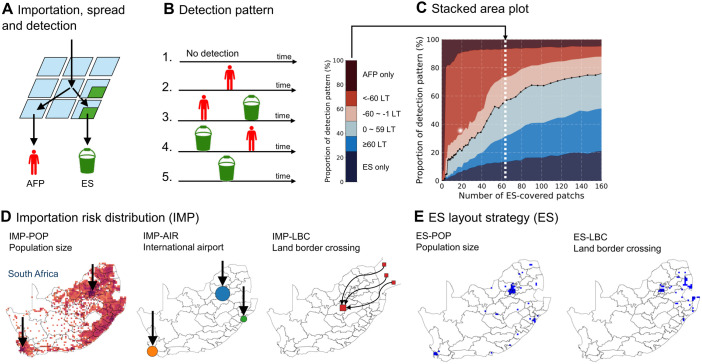 Figure 2
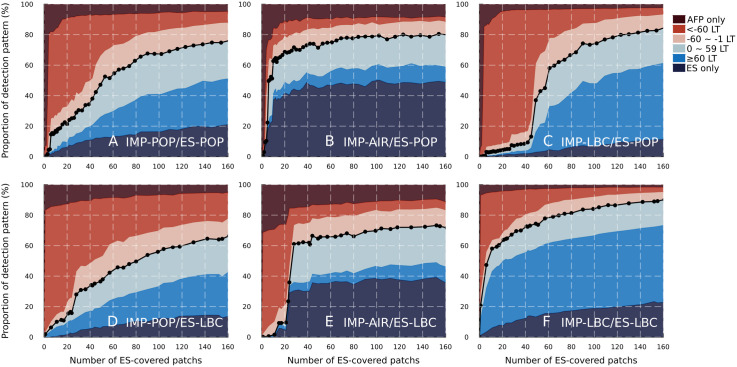 Figure 3
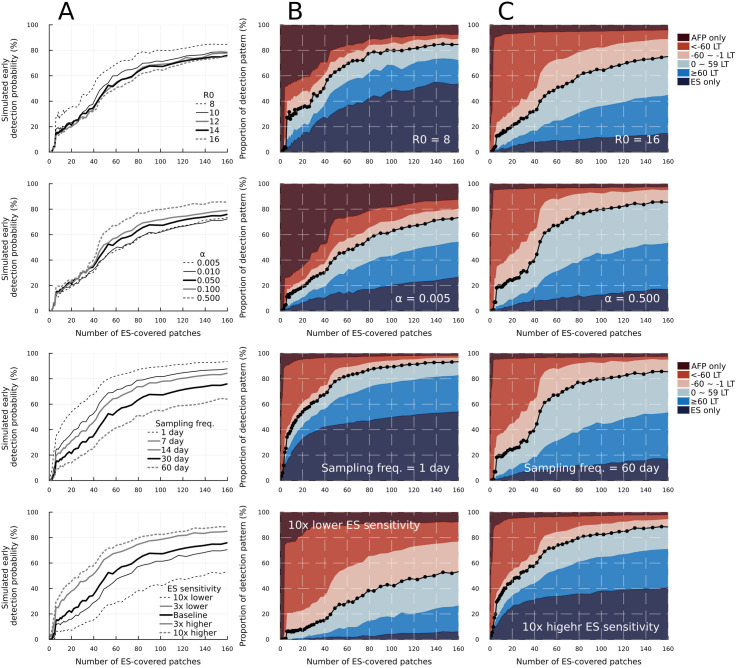 Figure 4
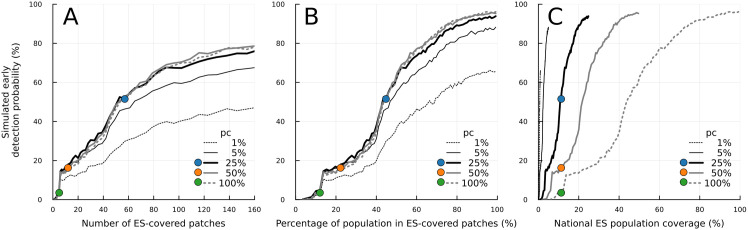 Figure 5
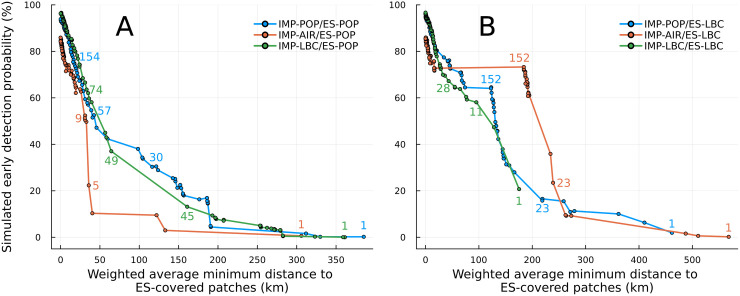 Figure 6
Peer Reviews
No public reviews on file for this paper yet. If you reviewed it on a platform where reviews are public (OpenReview, ICLR, NeurIPS, ICML), you can paste yours below so the community can read it here.
Videos
No videos yet. Explain this paper in a talk, walkthrough, or lecture? Add one.
Taxonomy
TopicsAnimal Disease Management and Epidemiology · Viral Infections and Immunology Research · Respiratory viral infections research