Benefits of public awareness in mitigating cystic echinococcosis risk in Western China: A climate and socio-economic perspective
Fang Yin, Wenrui Meng, Peiwei Fan, Yue Shi, Shuai Chen, Yongchun Liang, Jianyi Yao, Yeping Wang, Chuizhao Xue, Shuai Han, Mengmeng Hao, Qian Wang, Ze Meng, Jun Zhuo, Kai Sun, Yongqing Bai, Tingting Kang, Zhenyu Wang, Lei Liu, Dong Jiang, Liqun Fang, Canjun Zheng, Jiping Dong

TL;DR
The study shows that increasing public awareness can reduce the risk of a parasitic disease in western China, even as climate and socio-economic changes may increase future risks.
Contribution
The novel use of a Bayesian model to project future CE risks under different scenarios and assess the impact of public awareness.
Findings
High-risk regions for CE are currently concentrated in Tibet, Qinghai, Gansu, and Xinjiang.
Increased public awareness could reduce the population at risk by 3.35% in western China by 2030.
Future projections suggest Yunnan, Gansu, and Sichuan will experience heightened CE risks.
Abstract
The prevalence of cystic echinococcosis (CE), a widespread zoonotic disease, imposes a significant public health burden, especially in western China. However, under the background of global change, how to meet the challenge of the future risk of CE remains unclear. As global climate change, land use changes, and socio-economic factors continue to progress, the spread and intensity of CE may potentially worsen, making it crucial to assess and mitigate future risks. By employing Bayesian additive regression trees model to develop risk models for CE in animal hosts (cattle, sheep and dogs) and humans, this study mapped the current distribution of infection risk for CE and projected future risks under the SSP2-4.5, SSP3-7.0, and SSP5-8.5 scenarios. The projections considered both constant and increased rates of public awareness rates regarding CE prevention in the future. Current…
Genes, proteins, chemicals, diseases, species, mutations and cell lines named across the full text — each resolved to its canonical identifier and authoritative record.
Click any figure to enlarge with its caption.
 Figure 1
 Figure 2
 Figure 3
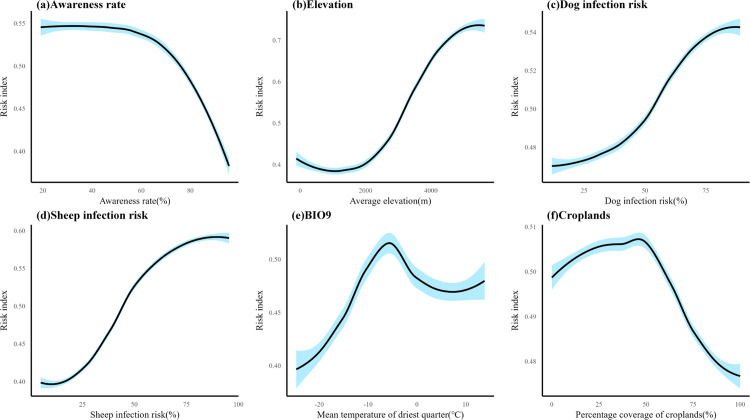 Figure 4
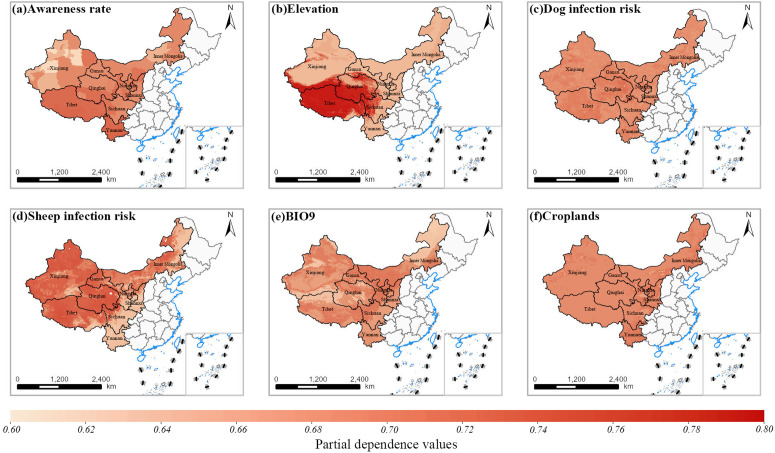 Figure 5
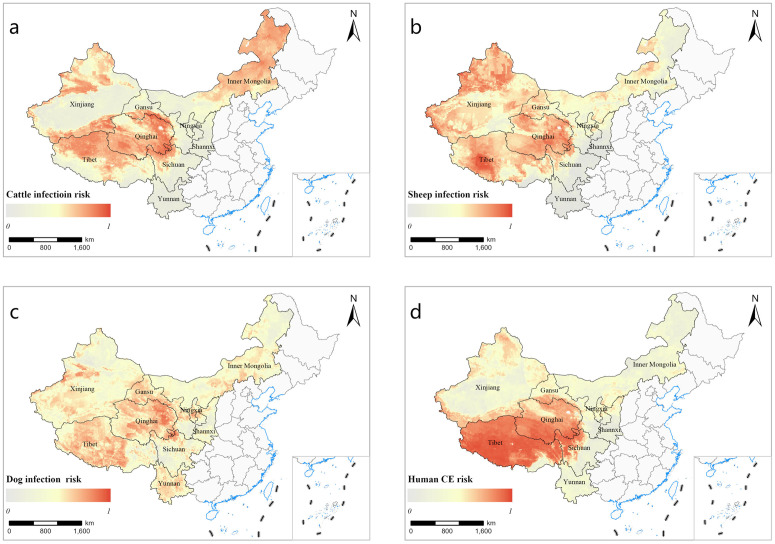 Figure 6
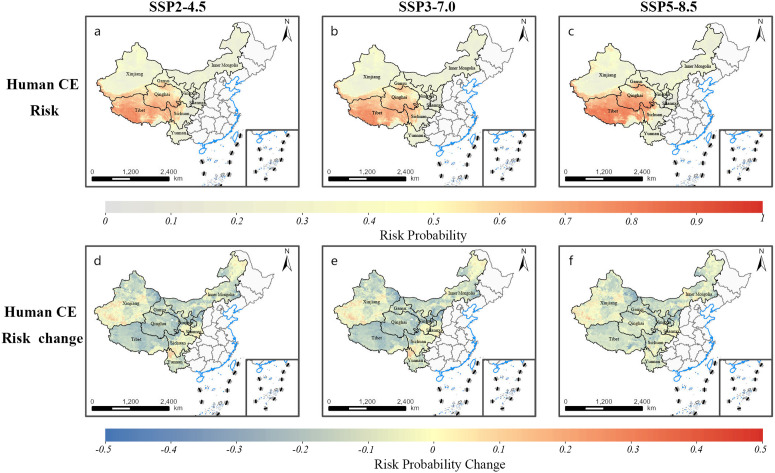 Figure 7
 Figure 8
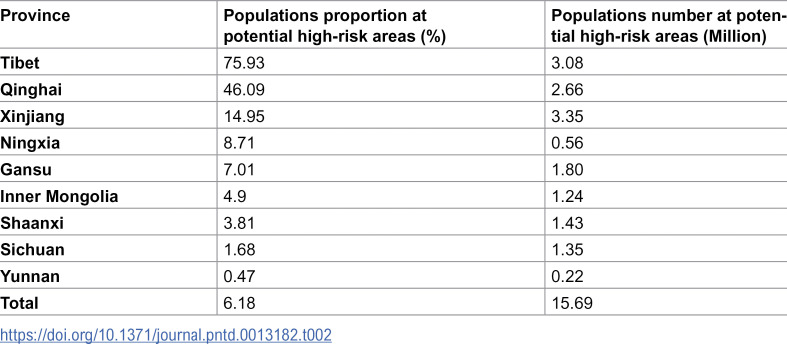 Figure 9
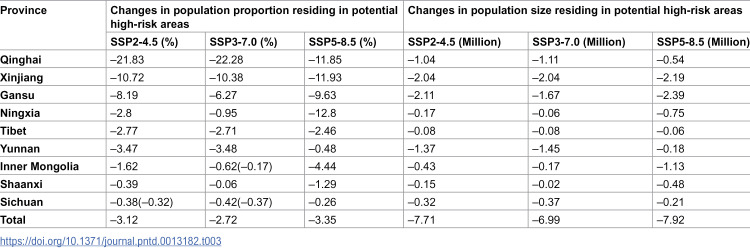 Figure 10
Peer Reviews
No public reviews on file for this paper yet. If you reviewed it on a platform where reviews are public (OpenReview, ICLR, NeurIPS, ICML), you can paste yours below so the community can read it here.
Videos
No videos yet. Explain this paper in a talk, walkthrough, or lecture? Add one.
Taxonomy
TopicsParasitic infections in humans and animals · Climate Change, Adaptation, Migration