C1-linker region of PARG1 RhoGAP promotes the catalytic recognition fold of RhoA substrate
Zen Kouchi, Masaki Kojima, Paul A. Randazzo, Paul A. Randazzo, Paul A. Randazzo, Paul A. Randazzo

TL;DR
This study explores how the C1-linker region of PARG1 helps it recognize and interact with the RhoA protein, using computational modeling.
Contribution
The study reveals the structural role of the C1-linker in stabilizing the RhoA interaction and how mutations disrupt this process.
Findings
The C1-linker region of PARG1 forms a unique interface with RhoA's α3 helix for stable interaction.
Mutations like T622M and I845V reduce RhoA substrate affinity and disrupt catalytic complex stability.
Wild-type PARG1's C1 domain and loop regions modulate RhoA interactions differently than mutant forms.
Abstract
PARG1 (ArhGAP29) belongs to a class of F-BAR proteins that contain a GTPase activating (GAP) domain that stimulates the GTP-to-GDP conversion of RhoGTPases. In this study, the substrate-recognition mechanism of human PARG1 was structurally modeled in computational approaches. Docking analysis using HDOCK showed that the predicted RhoGAP domain containing the N-terminal C1 region harbored structural determinants only for RhoA recognition with its catalytic loop and the α4- and α9–10 helices of the GAP domain. Molecular dynamics of wild-type PARG1-RhoA complex revealed that the predicted C1 structure depicted unique interface for the α3 helix of RhoA, leading to stable interaction with the RhoA substrate. Interestingly, RhoA interacted with the C1-GAP domains with missense mutations such as p.Thr622Met (T622M) and p.Ile845Val (I845V) differently, but the several interface residues in the…
Genes, proteins, chemicals, diseases, species, mutations and cell lines named across the full text — each resolved to its canonical identifier and authoritative record.
Click any figure to enlarge with its caption.
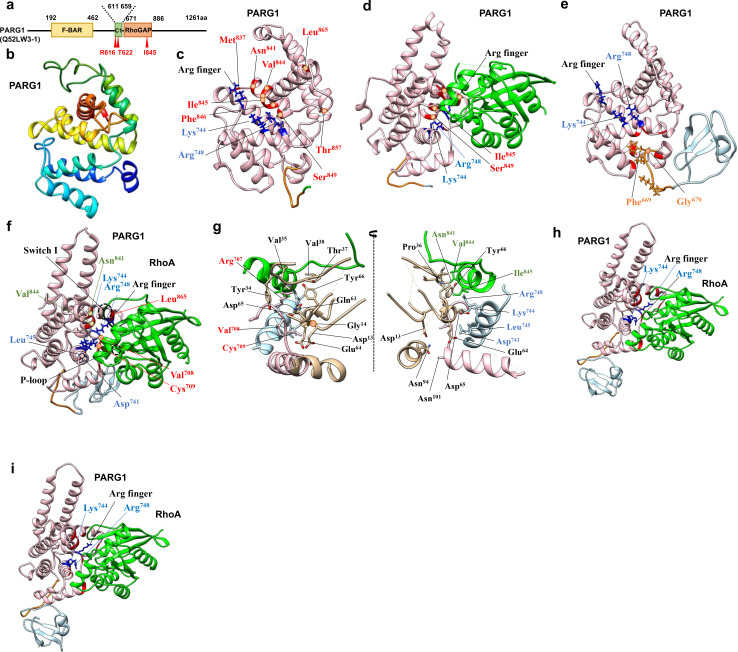 Figure 1
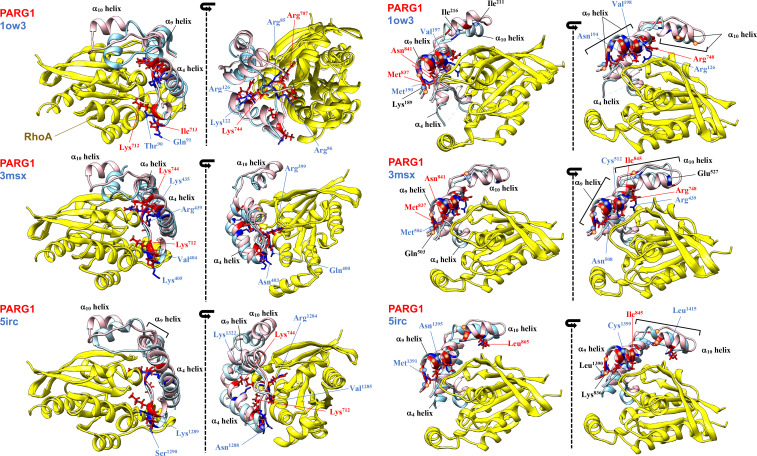 Figure 2
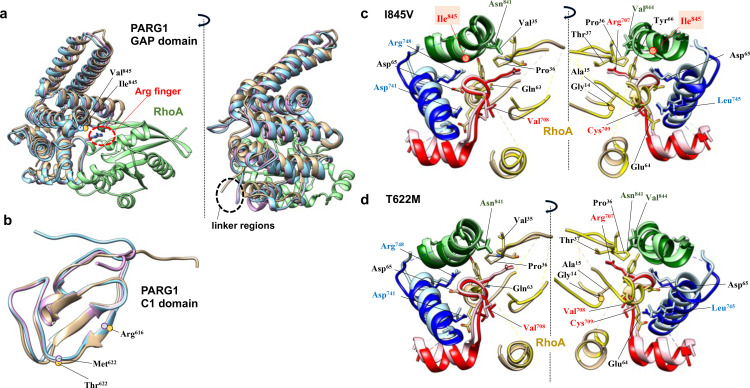 Figure 3
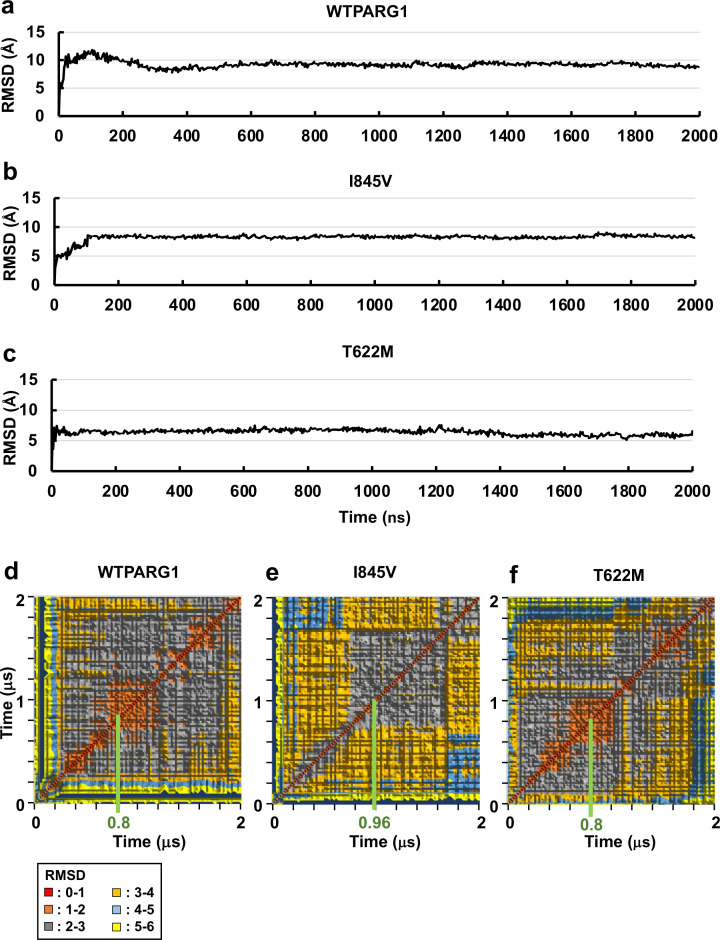 Figure 4
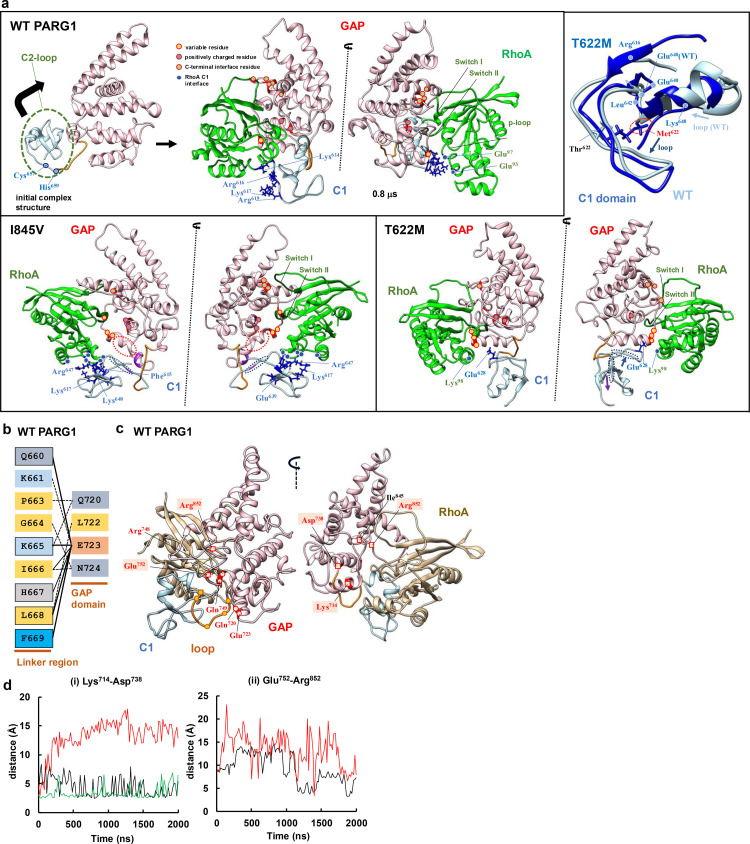 Figure 5
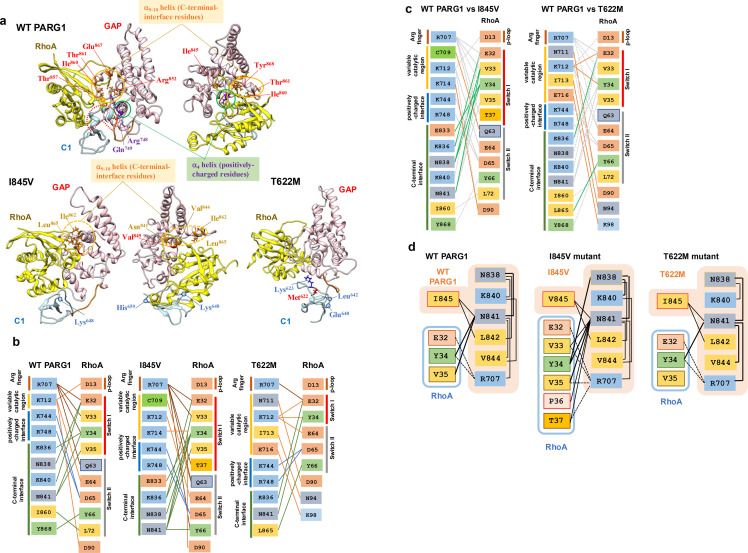 Figure 6
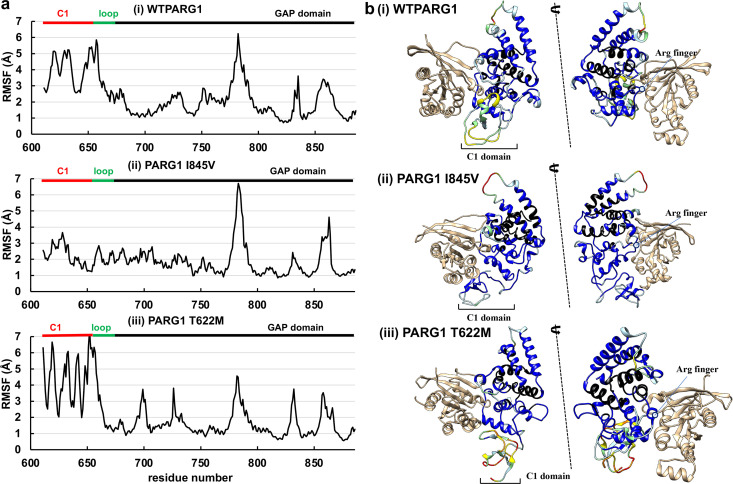 Figure 7
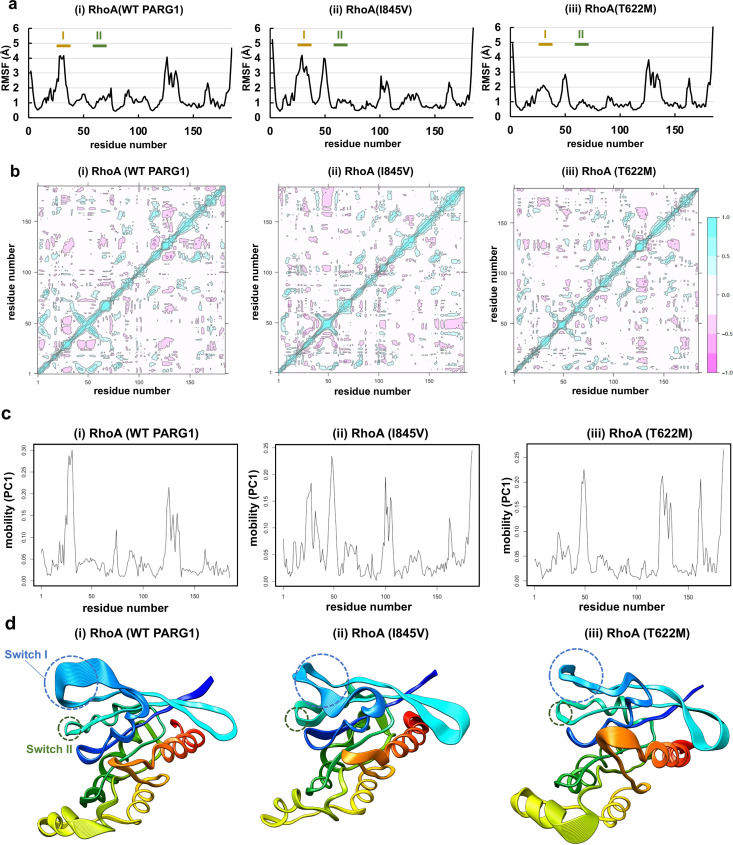 Figure 8
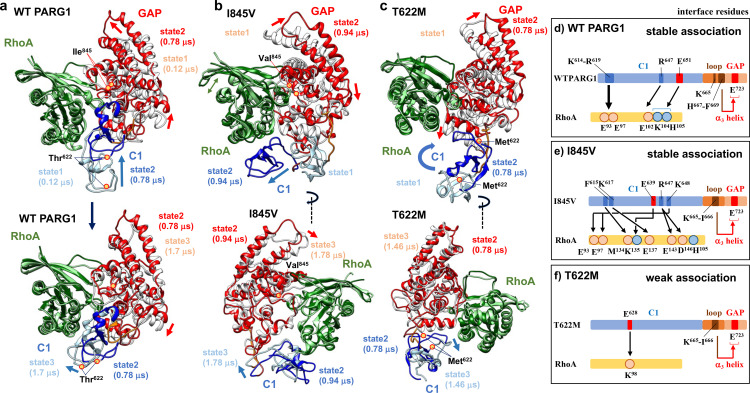 Figure 9
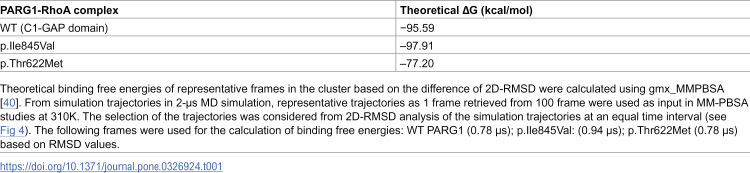 Figure 10
Peer Reviews
No public reviews on file for this paper yet. If you reviewed it on a platform where reviews are public (OpenReview, ICLR, NeurIPS, ICML), you can paste yours below so the community can read it here.
Videos
No videos yet. Explain this paper in a talk, walkthrough, or lecture? Add one.
Taxonomy
TopicsUbiquitin and proteasome pathways · 14-3-3 protein interactions · Microtubule and mitosis dynamics