Genetic diversity of Murray Valley encephalitis virus 1951–2020 identified via phylogenetic and evolutionary analyses
Timo Ernst, Alice Michie, Chisha Sikazwe, Jay Nicholson, Avram Levy, I.-Ly Joanna Chua, John S. Mackenzie, David W. Smith, Allison Imrie

TL;DR
This study reveals the genetic diversity and evolution of Murray Valley encephalitis virus in Australia and Papua New Guinea over nearly 70 years.
Contribution
The study identifies a new sub-lineage of MVEV and shows its geographic spread, enhancing understanding of the virus's enzootic focus and evolution.
Findings
MVEV genetic diversity is higher than previously recognized, with sub-lineage G1B predominant in Western Australia.
A new sub-lineage, G1C, was identified and circulated in the 1990s before reappearing in 2003.
MVEV transmission is more widespread and frequent than previously understood, with WA as the likely enzootic focus.
Abstract
Murray Valley encephalitis virus (MVEV) is a mosquito-borne orthoflavivirus endemic to Australia that can cause fatal neurological disease. The enzootic focus of MVEV is believed to reside in northern Western Australia (WA). We sequenced whole genomes of 70 MVEV sampled over 51 years, 1969–2020, from locations across Australia and Papua New Guinea (PNG) and identified greater MVEV diversity than previously recognized. Genotype 1 (G1) demonstrated greatest intra-genotype diversity and was predominant over the sampling period with sub-lineage G1B circulating in WA and seeding activity across Australia. G1A included viruses sampled across northern WA, as well as the Northern Territory (NT). A newly identified sub-lineage G1C circulated in northern WA in 1993 and was detected again in 2003. G2 viruses were distributed across the Kimberley and Pilbara regions of northern WA, and in the NT.…
Genes, proteins, chemicals, diseases, species, mutations and cell lines named across the full text — each resolved to its canonical identifier and authoritative record.
Click any figure to enlarge with its caption.
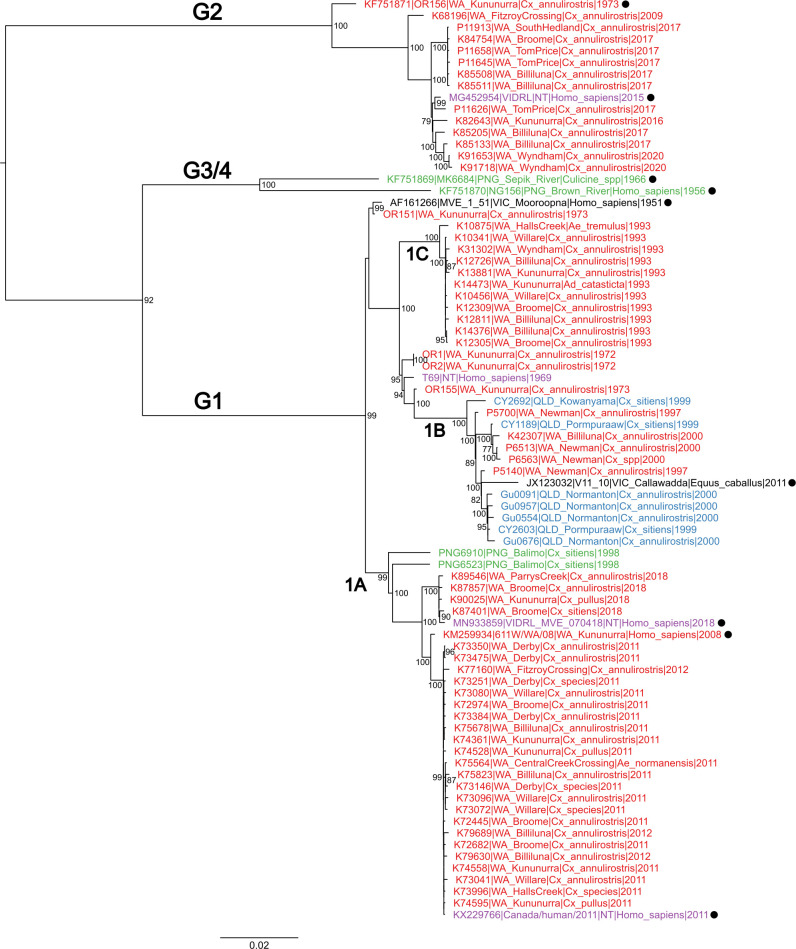 Figure 1
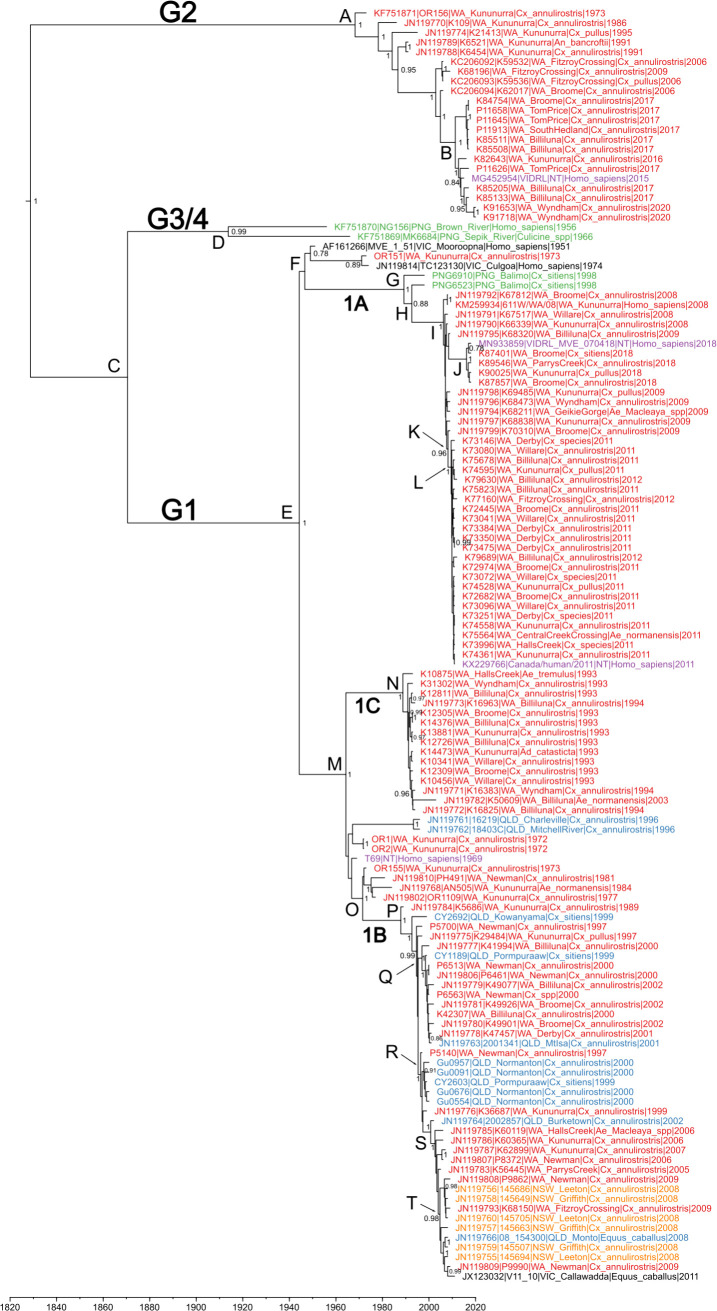 Figure 2
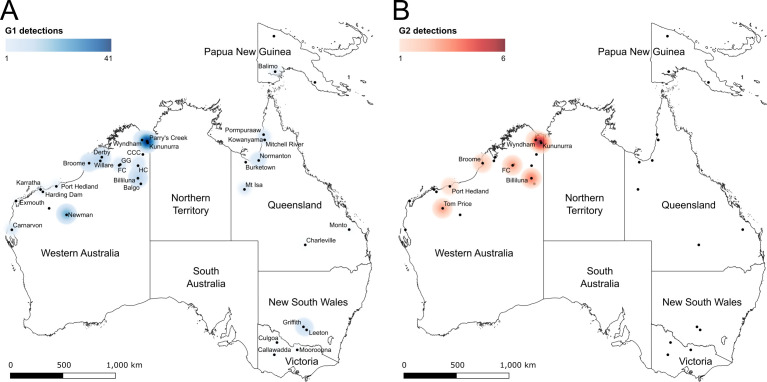 Figure 3
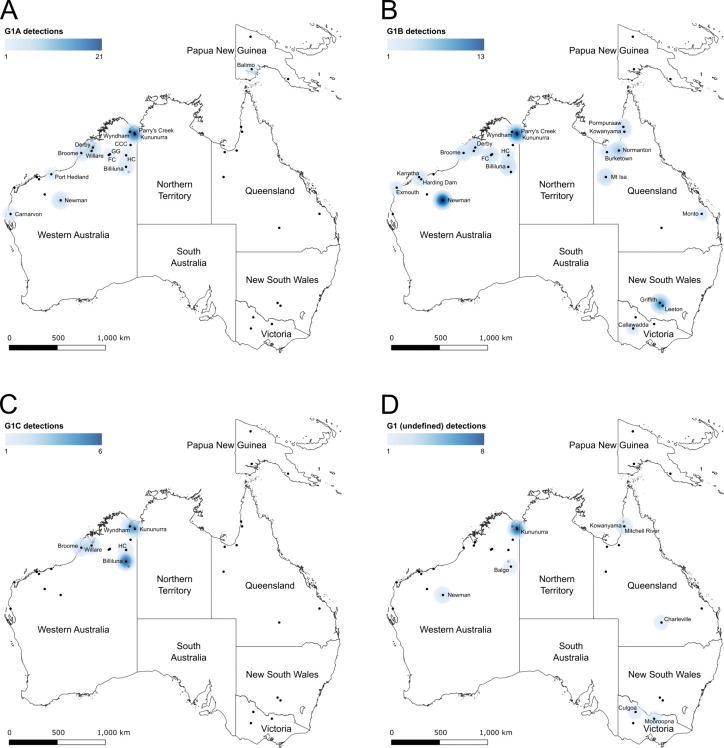 Figure 4
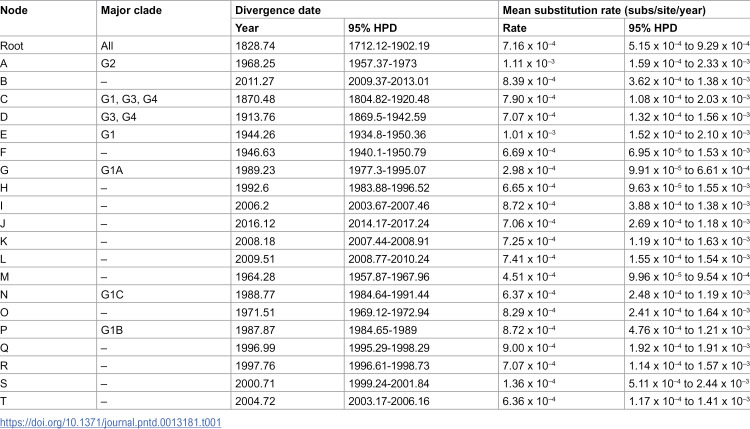 Figure 5
Peer Reviews
No public reviews on file for this paper yet. If you reviewed it on a platform where reviews are public (OpenReview, ICLR, NeurIPS, ICML), you can paste yours below so the community can read it here.
Videos
No videos yet. Explain this paper in a talk, walkthrough, or lecture? Add one.
Taxonomy
TopicsMosquito-borne diseases and control · Plant Virus Research Studies · Viral Infections and Vectors