Evaluation of the social and economic impact of extreme weather events in people living with HIV in KwaZulu-Natal, South Africa (S3E project): Protocol for a mixed-method study
Saeideh Babashahi, Kingsley Orievulu, Ekeminiabasi Eyita-Okon, Dominic Kniveton, Collins Iwuji, Zahra Al-Khateeb, Zahra Al-Khateeb

TL;DR
This study examines how floods affect people living with HIV in South Africa, focusing on social and economic impacts and potential policy solutions.
Contribution
The study introduces a novel mixed-methods approach to assess flood impacts on people living with HIV and co-develop policy interventions.
Findings
Floods disproportionately affect people living with HIV in terms of treatment adherence and economic losses.
A priority list of policy interventions will be co-developed to mitigate flood impacts on this vulnerable group.
The study uses mixed-methods to better understand the socioeconomic effects of extreme weather events on PLHIV.
Abstract
The impacts of extreme weather events (EWEs), such as droughts and floods, continue to be felt inequitably and disproportionately, with vulnerable communities experiencing diverse effects. While more is known about the direct impacts of EWEs on the general population, there is limited quantified evidence regarding the indirect socioeconomic impacts of climate-driven EWEs on vulnerable sub-populations such as people living with HIV (PLHIV). Globally, South Africa has the largest number of PLHIV, who by the nature of their medical needs and the stigma around their disease burden, have different vulnerability profiles to the wider population. KwaZulu-Natal province, which recorded the second-highest burden of HIV in South Africa, has been hit hard by recurrent floods in recent years. This study aims to evaluate the social and economic impacts of recent floods on PLHIV in the province and…
Genes, proteins, chemicals, diseases, species, mutations and cell lines named across the full text — each resolved to its canonical identifier and authoritative record.
Click any figure to enlarge with its caption.
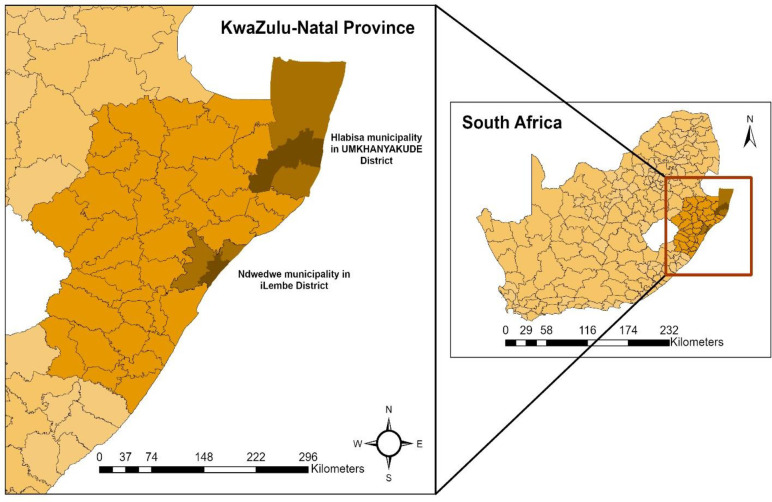 Figure 1
Peer Reviews
No public reviews on file for this paper yet. If you reviewed it on a platform where reviews are public (OpenReview, ICLR, NeurIPS, ICML), you can paste yours below so the community can read it here.
Videos
No videos yet. Explain this paper in a talk, walkthrough, or lecture? Add one.
Taxonomy
TopicsClimate Change and Health Impacts · demographic modeling and climate adaptation · Agricultural risk and resilience